Guides
Cuenca, Spain: Hanging Houses & Cycling the Serranía
Discover Cuenca's Hanging Houses in Spain by bike: Huécar gorge cliffs, Parador de Cuenca, Michelin dining at Casas Colgadas, and mountain routes.
Cadencia team · · 5 min read
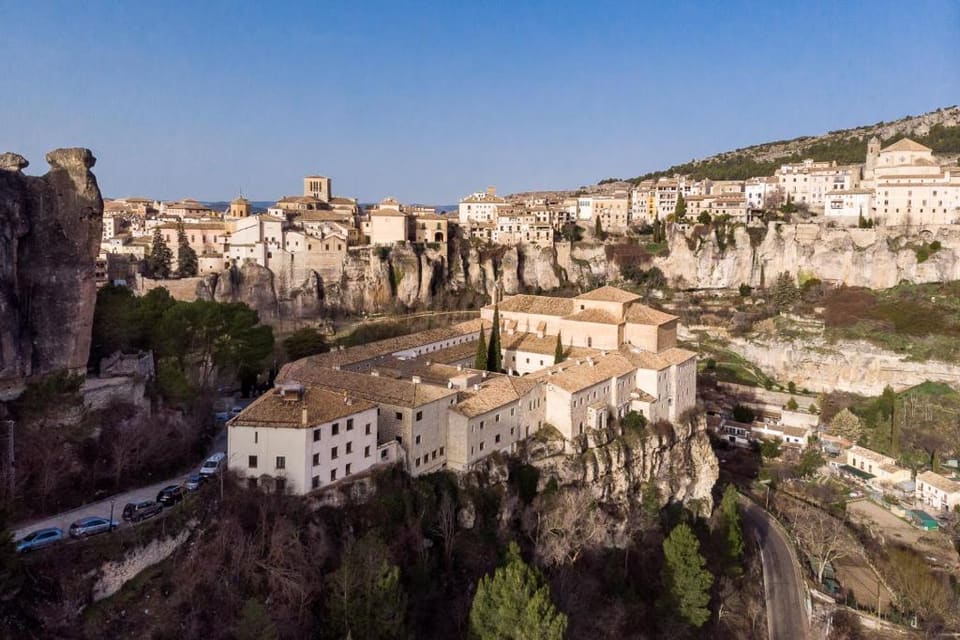
Cuenca, Spain, and its Hanging Houses deliver one of Europe's most arresting urban spectacles, where medieval timber balconies jut directly over the vertical limestone cliffs of the Huécar gorge. For discerning cyclists, this UNESCO World Heritage city is also the natural gateway to empty mountain passes across the Serranía de Cuenca and Alto Tajo.
Above the Huécar gorge: the story of the Hanging Houses
Perched on a narrow wedge of rock carved by the Júcar and Huécar rivers, Cuenca's walled old quarter grew upwards because horizontal space simply ran out. Known locally as the Casas Colgadas, the surviving fourteenth- and fifteenth-century dwellings cling to the eastern cliff edge with corbelled wooden galleries suspended tens of metres above the ravine. Three historic houses remain today: Casa de la Sirena and the two Casas del Rey. Inside their restored rooms sits the Spanish Museum of Abstract Art, creating an extraordinary dialogue between medieval stone arches, gorge views, and bold twentieth-century canvases. Walking the cobbled ridge after a morning ride lets you take in the Gothic cathedral, colourful facades around the Plaza Mayor, and silent viewpoints looking straight down into the forested canyon floor.
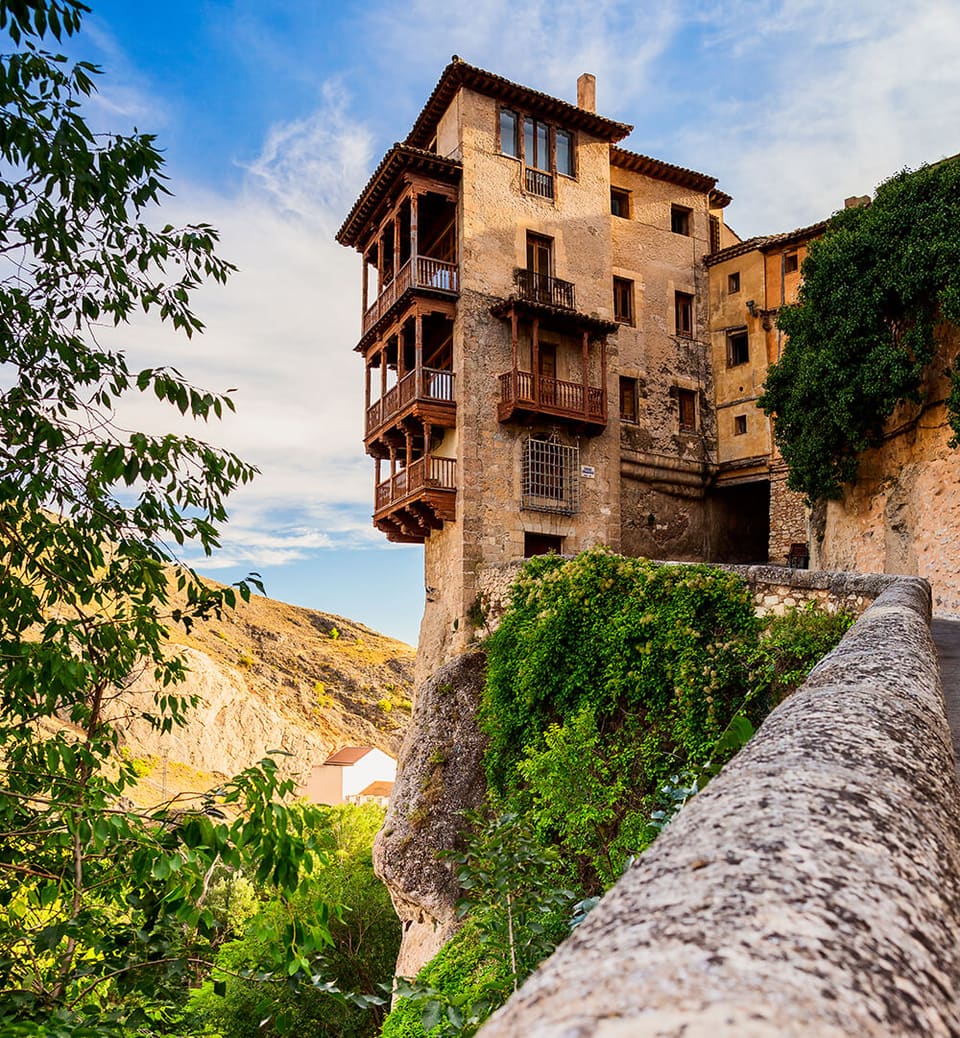
Parador de Cuenca and crossing the San Pablo bridge
Directly opposite the Hanging Houses stands the Parador de Cuenca, housed inside the sixteenth-century Convent of San Pablo. Staying here gives cyclists an unrivalled balcony over the cliffside silhouette as floodlights warm the limestone rock at dusk. Connecting the Parador's cloister to the old town is the iron footbridge of San Pablo, spanning the Huécar ravine some sixty metres above the riverbed. Crossing on foot before dinner offers the classic head-on perspective of the wooden balconies without a single car in sight. Practicality matches atmosphere for riders: the Parador sits quietly outside the tight medieval traffic restrictions, making morning roll-outs into the mountains smooth and stress-free while support vans handle luggage and bike prep effortlessly.
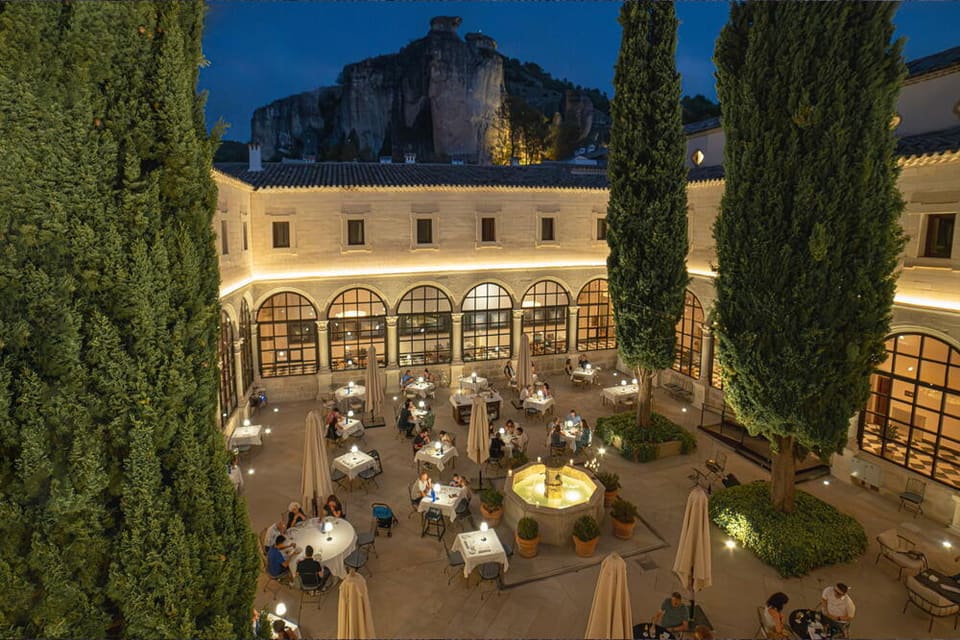
Michelin-starred cuisine inside Casas Colgadas
Few cycling holidays anywhere in Europe let you dine literally inside a city's most famous medieval monument. Inside the Hanging Houses themselves, chef Jesús Segura leads the Michelin-starred restaurant Casas Colgadas, celebrating the wild produce, game, trout, fungi, and heritage grains of the Cuenca sierra. On Cadencia Travel Experience itineraries anchored in the city, this Michelin-starred dinner becomes an unforgettable centrepiece rather than an afterthought. After hours pedalling quiet pine valleys and limestone canyons, sitting beside deep stone embrasures overlooking the illuminated gorge brings territory and gastronomy into perfect alignment.
- Hyper-local pantry: dishes draw directly from the surrounding Serranía forests, rivers, and highland pastures you cross earlier in the day.
- Unhurried walk home: finishing dinner means a calm five-minute stroll back across the San Pablo footbridge to your room at the Parador de Cuenca.
- Curated by locals: the Cadencia team coordinates timings and private bookings so travellers enjoy the table effortlessly.
Three cycling journeys that start or finish in Cuenca
Because high-speed AVE trains connect Madrid with Cuenca in less than one hour, international travellers can step off the train and start climbing quiet limestone roads almost immediately. Cadencia builds three distinct itineraries around this UNESCO city, each compatible with road bikes, gravel bikes, and e-bikes.
| Cadencia journey | Direction & format | Distance & elevation | Signature highlights |
|---|---|---|---|
| Serranía de Cuenca to Molina de Aragón | Linear · Private (5 days / 4 nights) | 198 km · +5,290 m | Parador de Cuenca, Casas Colgadas dinner, Ventano del Diablo, Ciudad Encantada, Río Cuervo, Peralejos de las Truchas, Parador de Molina de Aragón |
| Serranía de Cuenca | Loop · Private (3 days / 2 nights) | 231 km · +5,860 m | Parador de Cuenca, 2 nights in Beteta, Priego (birthplace of Luis Ocaña), Hoz de Beteta, Solán de Cabras, farewell dinner at Casas Colgadas |
| From Sigüenza to Cuenca via the Mar de Castilla | Linear · Scheduled | 320 km · +6,360 m | Medieval Sigüenza, La Alcarria, turquoise reservoirs of Mar de Castilla, grand finish in UNESCO Cuenca |
Each route highlights a different side of inland mountain cycling. Road purists love tracing the training roads of 1973 Tour de France champion Luis Ocaña around Priego, while explorers drawn to deeper solitude relish riding north towards the wild canyons of the Alto Tajo Natural Park.
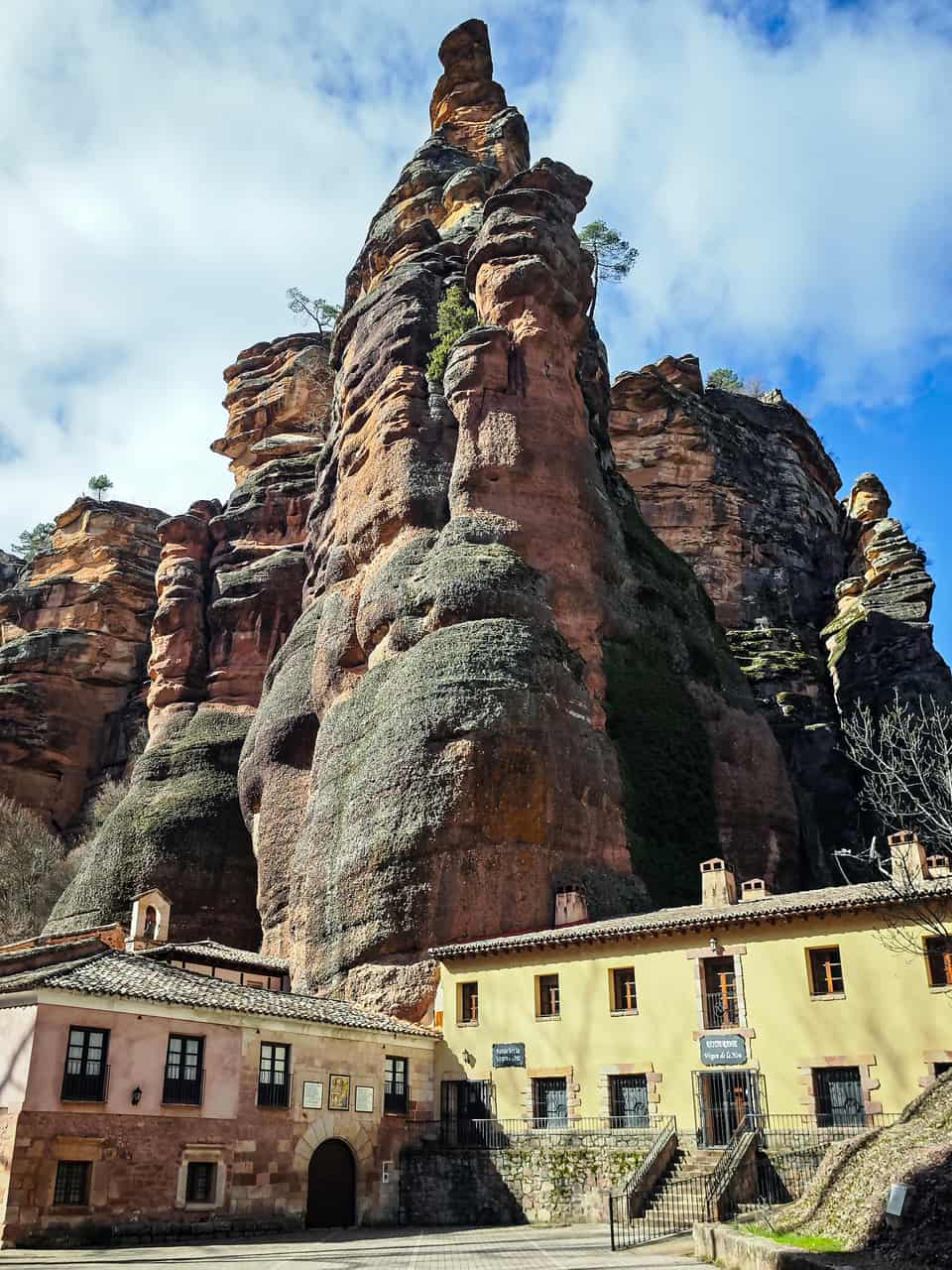
Leaving the old town for limestone canyons and red sandstone
Leaving Cuenca by bicycle feels astonishingly fast: within ten minutes of rolling past the Júcar gorge, urban streets vanish into sheer limestone walls, soaring griffon vultures, and quiet pinelands. On the five-day crossing from Cuenca to Molina de Aragón, riders climb past the dramatic cliff terrace of Ventano del Diablo, weave near the sculpted karst spires of Ciudad Encantada, and visit the mossy travertine cascades at the source of the Río Cuervo. Two consecutive nights in Peralejos de las Truchas eliminate mid-trip repacking while unlocking quiet stages through the heart of the river canyons. The finale climbs into the red-sandstone territory of Molina de Aragón, concluding at the Parador de Molina de Aragón, newly opened in 2025. For a deeper dive into the mountain passes and karst landscapes around the city, explore our dedicated Serranía de Cuenca guide, browse all nine curated cycling journeys, or start planning your dates via our contact page.
Frequently asked questions
What makes Cuenca's Hanging Houses unique in Spain?
Cuenca's Casas Colgadas date back to the fourteenth and fifteenth centuries and feature timber balconies cantilevered directly over the sheer rock wall of the Huécar gorge. Today they house both the Spanish Museum of Abstract Art and chef Jesús Segura's Michelin-starred restaurant.
How easy is it to reach Cuenca from Madrid for a cycling holiday?
High-speed AVE trains run frequently from Madrid Atocha to Cuenca Fernando Zóbel station in under sixty minutes. Cadencia Travel Experience meets travellers at the station with private transfers straight to the Parador de Cuenca.
Can I ride an e-bike on the mountainous routes around Cuenca?
Every Cadencia itinerary starting or finishing in Cuenca welcomes road bikes, gravel bikes, and e-bikes. Electric assistance makes routes with 5,290 to 6,360 metres of climbing accessible and enjoyable for riders of varied fitness levels without shortening the scenic passes.
Which Cuenca cycling route is best for a short break versus a full crossing?
Cyclists with a long weekend thrive on the private three-day Serranía de Cuenca loop (231 km, +5,860 m) linking Beteta, Priego, and Casas Colgadas. Travellers seeking a deeper linear expedition prefer the five-day Cuenca to Molina de Aragón crossing (198 km, +5,290 m) or the scheduled Sigüenza to Cuenca journey (320 km, +6,360 m).