Guides
Serranía de Cuenca Spain: Cycling Limestone Gorges
Explore the Serranía de Cuenca in Spain by bike: limestone canyons, pine plateaus, Luis Ocaña's home roads, and quiet mountain stages from Cuenca.
Cadencia team · · 7 min read
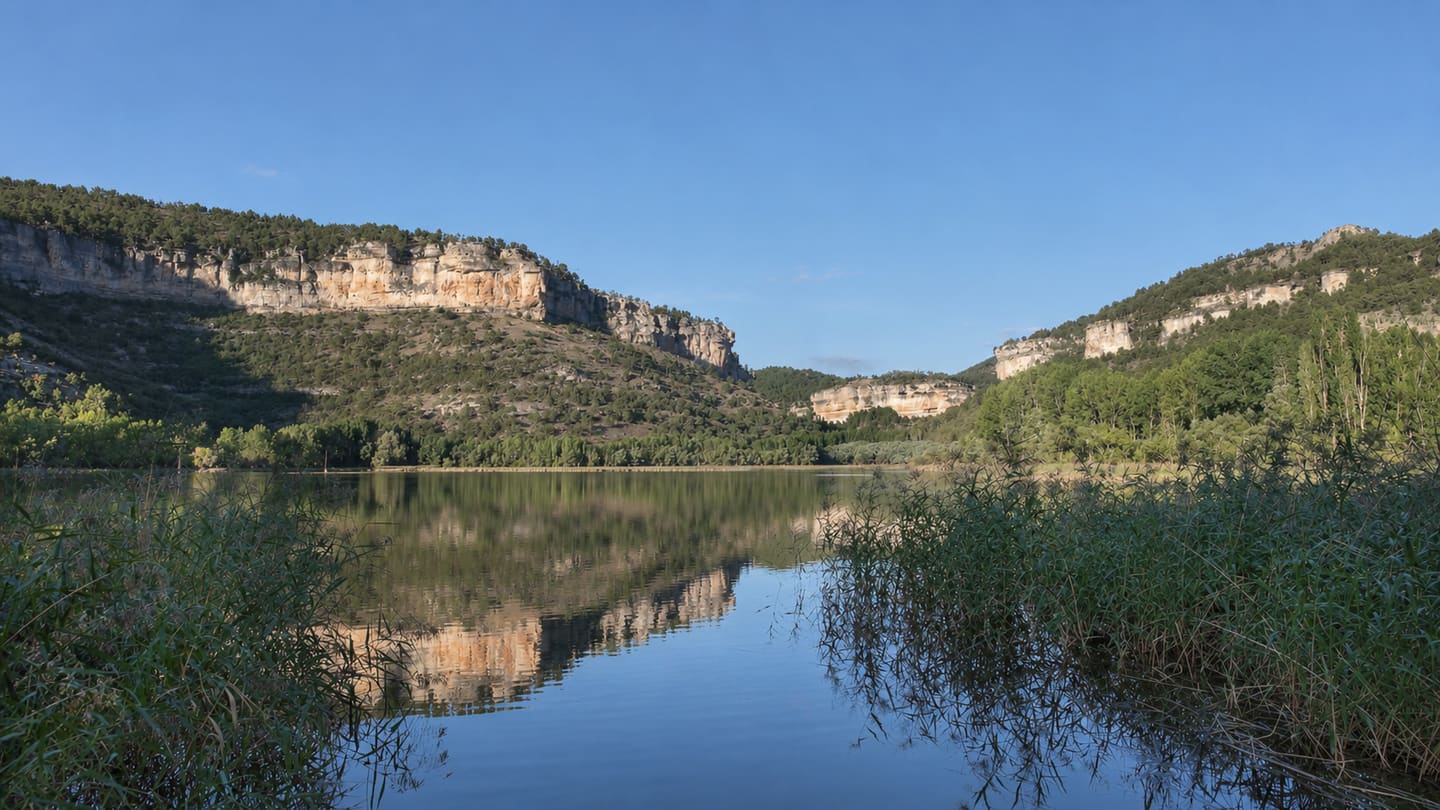
The Serranía de Cuenca in Spain is an upland labyrinth of limestone canyons, highland pine forests, and empty ribbon roads located two hours east of Madrid. Cyclists who arrive expecting flat Castilian plains instead climb past 1,400 metres through carved river gorges, UNESCO heritage architecture, and quiet mountain villages that reward steady pedalling.
Where the Serranía de Cuenca lies and why cyclists come
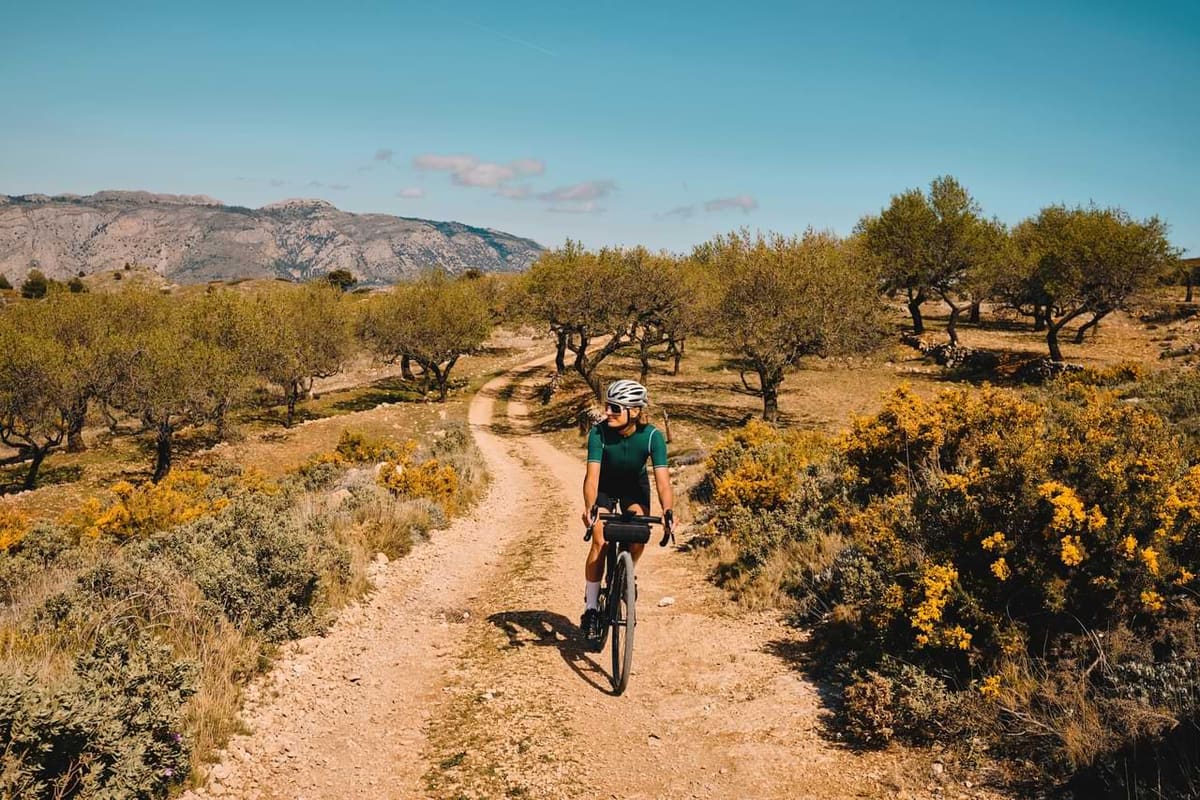
Rising between the central Castilian plateau and the Iberian System mountains, the Serranía de Cuenca forms the mountainous northern half of Cuenca province in Castilla-La Mancha. High-speed trains connect Madrid Atocha to Cuenca in under an hour, yet within ten kilometres of the historic centre, tarmac climbs straight into deep river valleys where traffic practically disappears. Cycling here feels markedly different from Spain's coastal ranges. Instead of packed weekend pelotons, the Serranía offers steady ascents up wide valleys and rolling pine plateaus. Riders often go thirty minutes without passing a car, hearing only wind in the pines and water over limestone.
Local knowledge determines which backroads stay freshly surfaced, where fountains flow in summer, and how to pair tarmac gorges with compact gravel tracks.
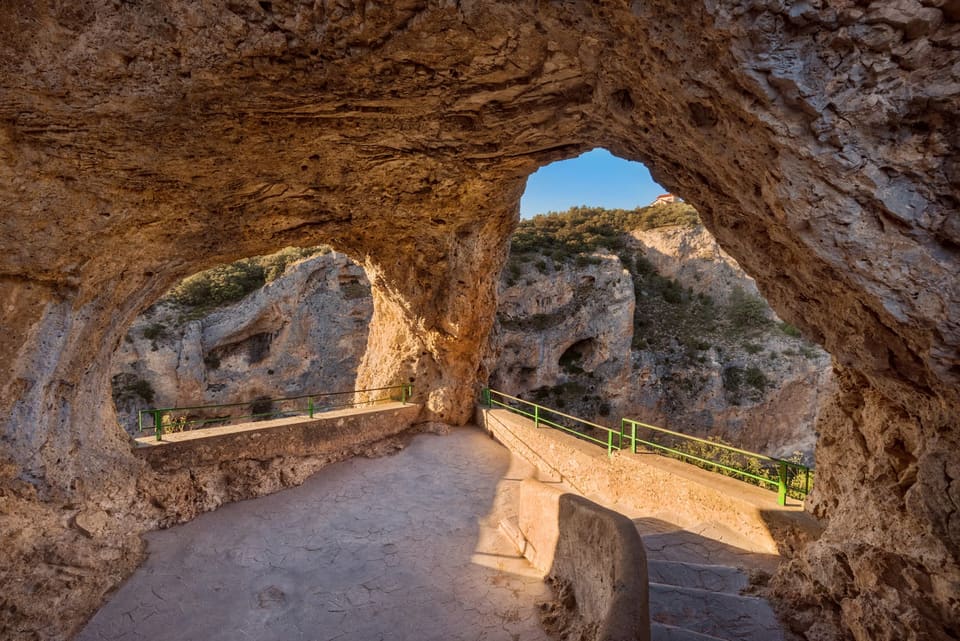
Geology in motion: gorges, karst formations and high pine forests
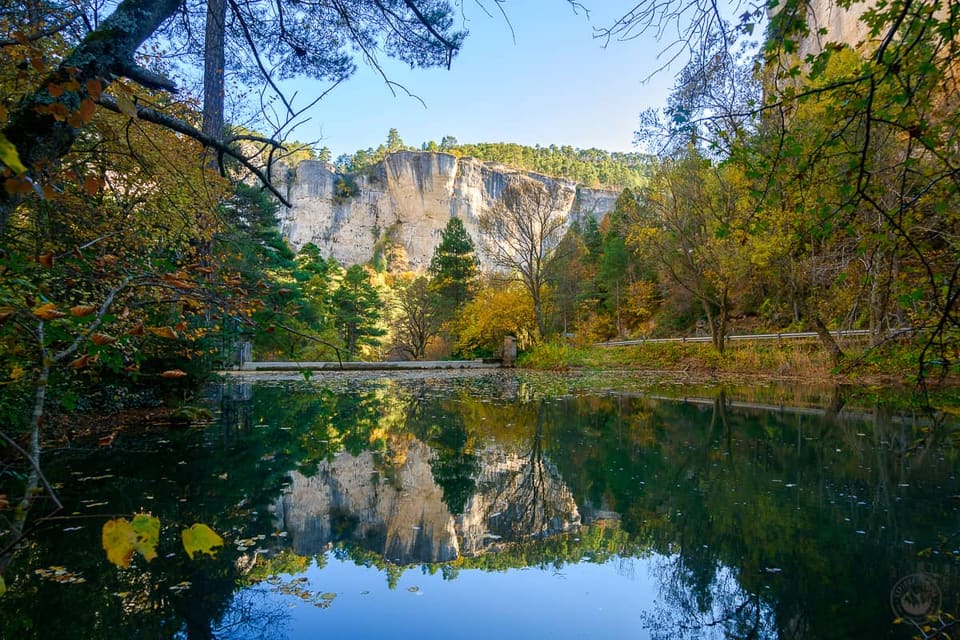
Water dissolving porous dolomite and limestone created the signature landforms of the Serranía de Cuenca Natural Park. Rivers such as the Júcar, Huécar, Escabas, and Cuervo slice vertical corridors called hoces through the plateau, leaving pale rock balconies overhanging emerald pools. Key geological landmarks sit beside or just off the riding line:
- Ventano del Diablo: A limestone gallery perched above the Júcar canyon with wide river views and circling vultures.
- Ciudad Encantada: A surreal karst meadow where erosion sculpted natural stone arches and bridges beneath pine shade.
- Hoz de Beteta: A six-kilometre vertical gorge carved by the Guadiela River, lined with overhanging walls and cool mountain air.
- Nacimiento del Río Cuervo: Moss-draped travertine cascades where the Cuervo River springs directly from the rock, vivid in spring.
- Solán de Cabras valley: A sheltered thermal canyon famous since Roman times for its mineral springs and forested slopes.
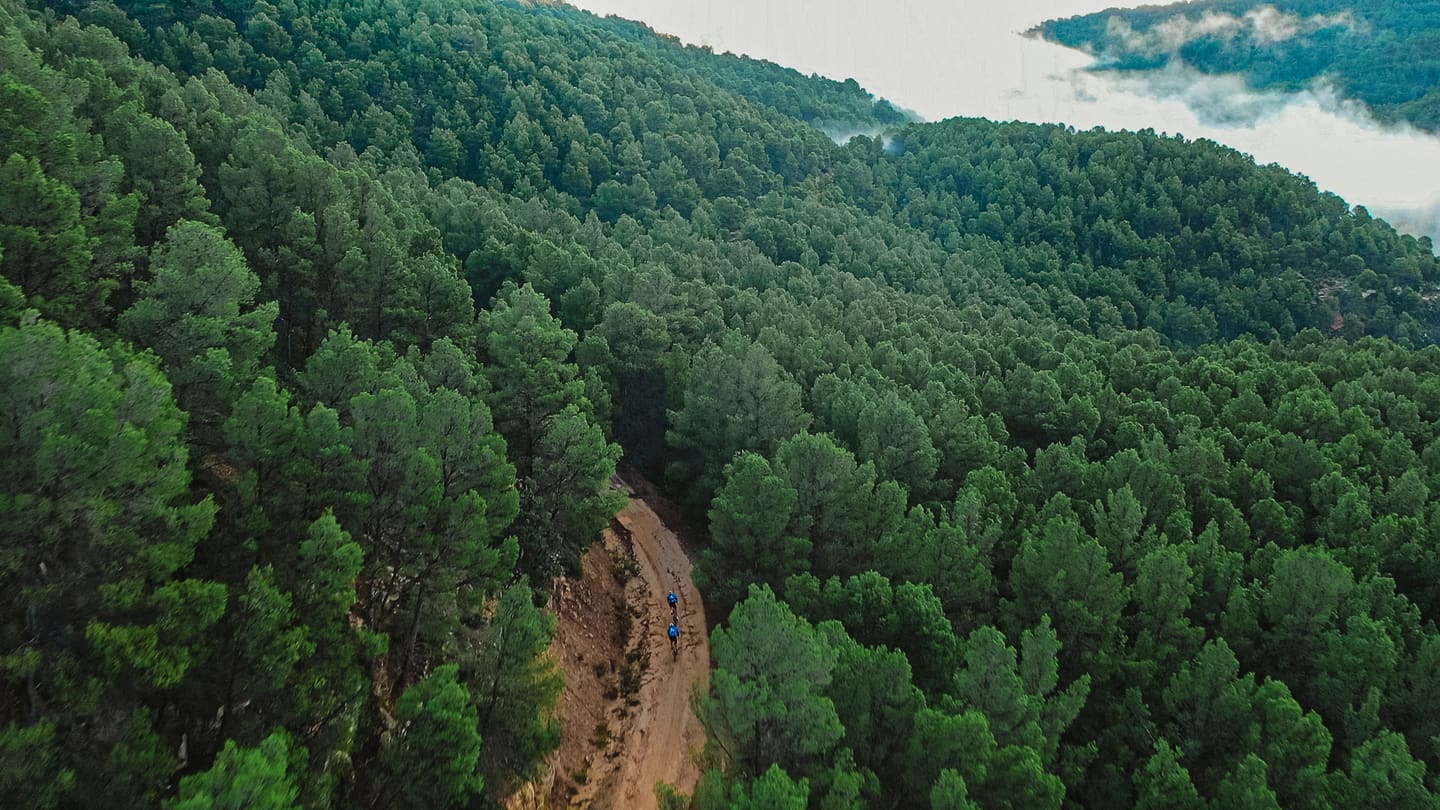
Elevated between 1,000 and 1,600 metres, the pine canopy holds a crisp mountain microclimate even when southern Spain swelters. Morning departures in May, June, or September begin with arm warmers before warming gently by midday.
Two ways to ride the Serranía de Cuenca
Cadencia Travel Experience structures the Serranía around three distinct multi-day journeys, allowing international travellers to choose between a focused three-day mountain loop, a point-to-point highland crossing into Guadalajara, or a longer scheduled journey from medieval Sigüenza into Cuenca.
| Journey | Format & Direction | Distance | Elevation Gain | Duration | Bike Options |
|---|---|---|---|---|---|
| Serranía de Cuenca | Private loop (Cuenca to Cuenca) | 231 km | +5,860 m | 3 days / 2 nights | Road · Gravel · E-bike |
| Serranía de Cuenca to Molina de Aragón | Private linear (Cuenca to Molina) | 198 km | +5,290 m | 5 days / 4 nights | Road · Gravel · E-bike |
| From Sigüenza to Cuenca via the Mar de Castilla | Scheduled linear (Sigüenza to Cuenca) | 320 km | +6,360 m | Multi-stage | Road · Gravel · E-bike |
The flagship Serranía de Cuenca loop packs 231 kilometres and +5,860 metres of climbing into three intensive days, pairing two nights in Beteta with iconic climbs through Priego, Hoz de Beteta, and Solán de Cabras. Travellers who prefer a slower pace with geological stops along the way often gravitate towards the five-day Serranía de Cuenca to Molina de Aragón crossing, which links Ventano del Diablo, Ciudad Encantada, the source of the Río Cuervo, and two restorative nights in Peralejos de las Truchas before reaching the Parador de Molina de Aragón. Riders seeking even wilder karst canyons immediately to the north can combine Cuenca with our guide to Alto Tajo Natural Park, whose 200-metre gorges sit right on the watershed border with Guadalajara.
Luis Ocaña, timber rafters and mountain village heritage
Cycling heritage runs deep through Cuenca's valleys. Priego, a pottery and wickerwork town at the gateway to the Hoz de Beteta, is the birthplace of Luis Ocaña, winner of the 1970 Vuelta a España and the 1973 Tour de France. Riding out of Priego shows immediately where Ocaña built his relentless climbing rhythm. Beyond cycling history, the canyons preserve the legacy of the gancheros, the timber rafters who floated felled Scots pine trunks down the Guadiela, Escabas, and Tagus rivers towards Toledo and Aranjuez using iron-tipped poles called bicheros. Today you cross those same gorges peacefully over stone bridges, stopping for coffee on quiet village plazas in Beteta or Peralejos de las Truchas.
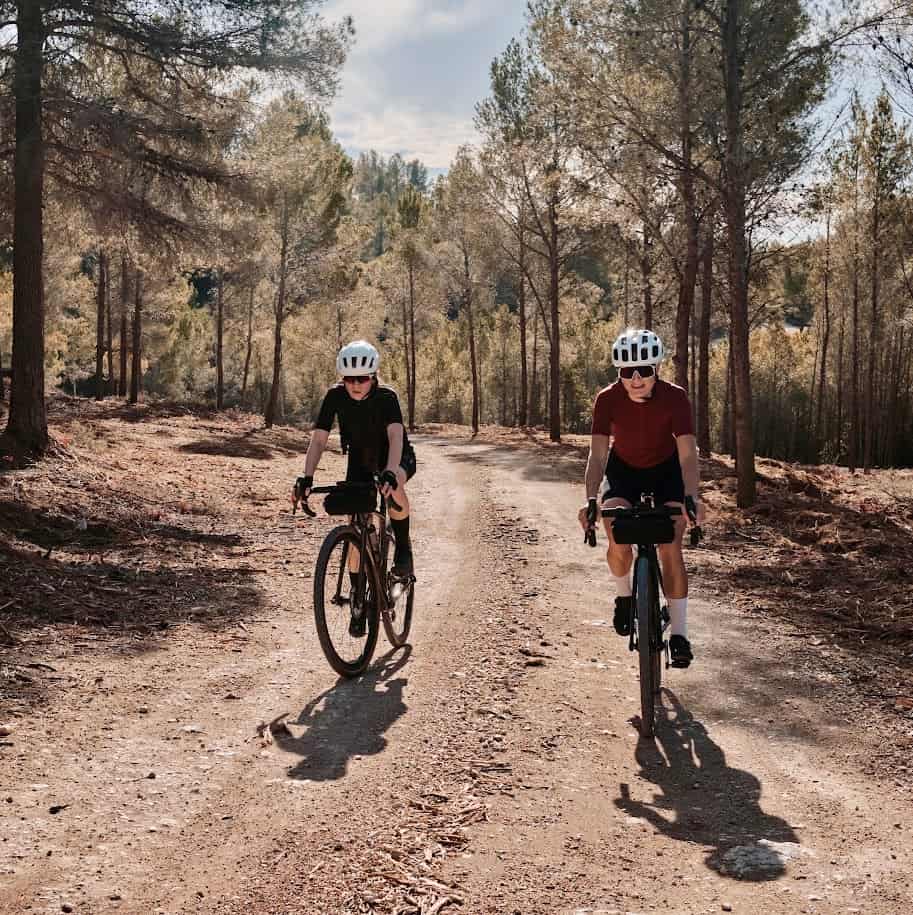
Choosing your bike, tyres and season for Cuenca's highlands
Surface versatility is a defining strength of the Serranía. Every Cadencia itinerary in Cuenca works smoothly on a road bike, gravel bike, or e-bike, with tracks matched to your group's tyre width.
- Road bikes: Mountain tarmac across Hoz de Beteta, Priego, and Uña is smooth and lightly trafficked. Compact gearing with 28 to 32 mm tyres handles +5,000-metre cumulative elevation comfortably.
- Gravel bikes: Packed forestry tracks roll through the pine woods on predictable hardpack with occasional loose limestone; 40 to 45 mm tubeless tyres balance speed and grip.
- E-bikes: Road and gravel e-bikes open Cuenca's big climbing days to mixed-ability couples and small groups.
Weighing up both setups? Compare them in our breakdown of gravel bike vs road bike for touring. Spring (late April to June) brings surging waterfalls at the Río Cuervo and green meadows. Autumn (September to early November) delivers crisp visibility and golden poplars reflected in the gorges, while July and August remain rideable at altitude with early morning starts.
Cuenca as base: Parador nights and Casas Colgadas dining
Every great mountain tour needs a memorable place to begin and conclude, and Cuenca's UNESCO-listed old town delivers one of Spain's most dramatic urban silhouettes. Perched on a rocky spur between the Huécar and Júcar gorges, the historic quarter rises in narrow cobbled lanes and vertiginous medieval facades. Cadencia's Serranía journeys anchor the experience at the Parador de Cuenca, housed in the sixteenth-century Convent of San Pablo directly across the Huécar gorge from the city's famous cliffs. Crossing the San Pablo footbridge at dusk leads straight to the Casas Colgadas, where chef Jesús Segura holds a Michelin star and serves contemporary Manchego cuisine rooted in highland game, river trout, and wild herbs. Read more about the city's architecture and dining heritage in our guide to Cuenca and its Hanging Houses.
Private luggage transfers, a dedicated support vehicle, and local route guiding mean you ride unburdened from hotel door to mountain ridge. Browse our full collection of curated cycling journeys in Spain or contact our team to tailor dates, bike selection, and daily stage distance around your group.
Frequently asked questions
How demanding is cycling in the Serranía de Cuenca?
Mountain stages in the Serranía de Cuenca feature steady cumulative elevation rather than extreme gradients, averaging 4 to 7 percent on most paved passes. The three-day loop totals 231 km and +5,860 m of climbing, while the five-day linear journey spreads 198 km and +5,290 m across gentler daily stages, and e-bikes remain available on every departure.
How do international travellers reach Cuenca from Madrid?
High-speed AVE trains run frequently from Madrid Atocha to Cuenca Fernando Zóbel station in roughly 55 minutes, making Cuenca one of the easiest mountain cycling destinations in Spain to reach without a hire car. Private airport or city transfers can also be coordinated directly from Madrid Barajas to the Parador de Cuenca.
What is the best month to cycle the Serranía de Cuenca?
May, June, September, and October offer the finest riding weather across the Cuenca highlands, combining mild daytime temperatures with crisp mountain visibility. Spring highlights peak water flow at the Nacimiento del Río Cuervo, whereas October colours the river canyons in deep autumn gold.
Can mixed-ability riders share the same Serranía de Cuenca trip?
Mixed-ability couples and groups ride together smoothly across the Serranía by pairing road or gravel bikes with high-range e-bikes. Support vehicle assistance runs alongside private and scheduled departures, allowing every traveller to enjoy the gorges, villages, and shared dinners without stress.