Guides
La Alcarria Spain: Cycling Lavender Plateaus & Castles
Discover La Alcarria in Spain by bicycle: medieval Sigüenza, Brihuega lavender fields, the Mar de Castilla reservoirs, and quiet Castilian climbs.
Cadencia team · · 6 min read
La Alcarria in Spain is a sun-washed plateau of limestone ravines, medieval hilltop towns, purple lavender fields, and turquoise inland reservoirs lying just an hour east of Madrid. Made famous by Nobel laureate Camilo José Cela, the region rewards cyclists with rolling climbs, empty gravel lanes, and deeply authentic Castilian villages.
What defines La Alcarria as a cycling landscape
Geographically, La Alcarria spans southern Guadalajara and northern Cuenca, sitting roughly 900 to 1,100 metres above sea level. Rivers such as the Tajuña, Ungría, and Tagus have carved deep, fertile valleys into the flat chalky tableland, creating a rhythmic succession of short climbs and sweeping descents. Riders expecting endless flat plains quickly discover that La Alcarria is genuinely hilly in the best possible way. Ascents rarely exceed four or five kilometres, yet stringing plateau-to-valley transitions together builds honest elevation gain without the intimidating length of Alpine passes.
Traffic stays remarkably light once you leave the Madrid corridor behind. Wide views open across rosemary-scented scrubland, olive groves, and cereal fields stitched together by stone walls and white limestone farm tracks.
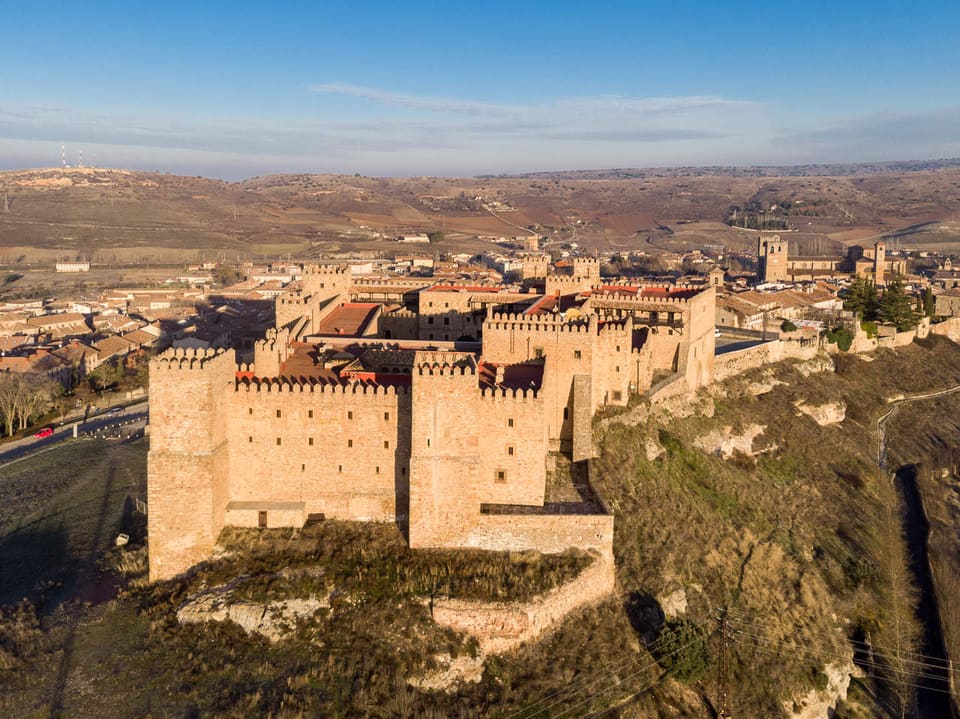
Following the literary trail from Sigüenza to Brihuega
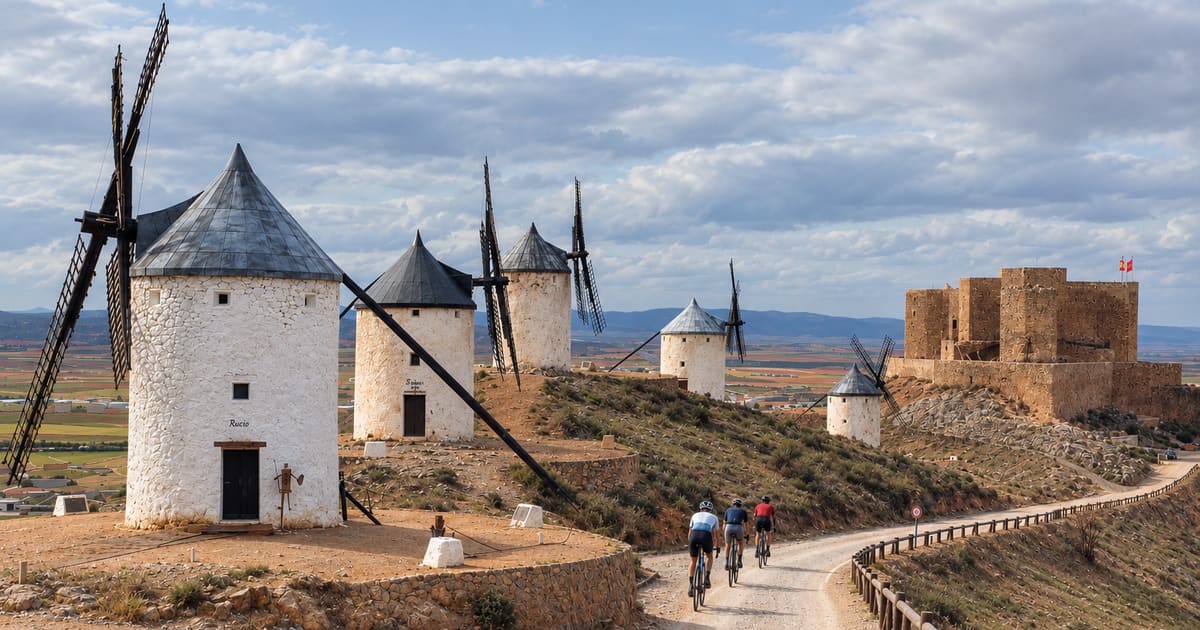
In 1946, Spanish writer Camilo José Cela walked across these hills and published Viaje a la Alcarria, capturing a timeless landscape of stone fountains, rosemary honey, and unhurried village plazas. Today, travelling the same valleys by bicycle preserves that exact intimate pace while covering enough ground to connect its finest towns in a single journey.
- Sigüenza: A medieval episcopal town on the northern rim of the Alcarria, crowned by a twelfth-century fortress and anchored by a fortified Gothic cathedral and arcaded Plaza Mayor.
- Brihuega: Known as the Garden of La Alcarria, Brihuega pairs medieval ramparts, subterranean Arab caves, and an eighteenth-century royal cloth factory with surrounding hillsides planted in fragrant lavender.
- Cifuentes: A historic crossroads where natural springs feed the town's medieval moat beneath Don Juan Manuel's hilltop castle.
- Trillo: A thermal river town straddling the Tagus with a graceful sixteenth-century bridge and the Real Balneario Carlos III de Trillo, ideal for soaking tired legs after a big day in the saddle.
Moving between these towns on quiet county roads and white gravel tracks feels like paging through Spanish history without crowds or tourist coaches.
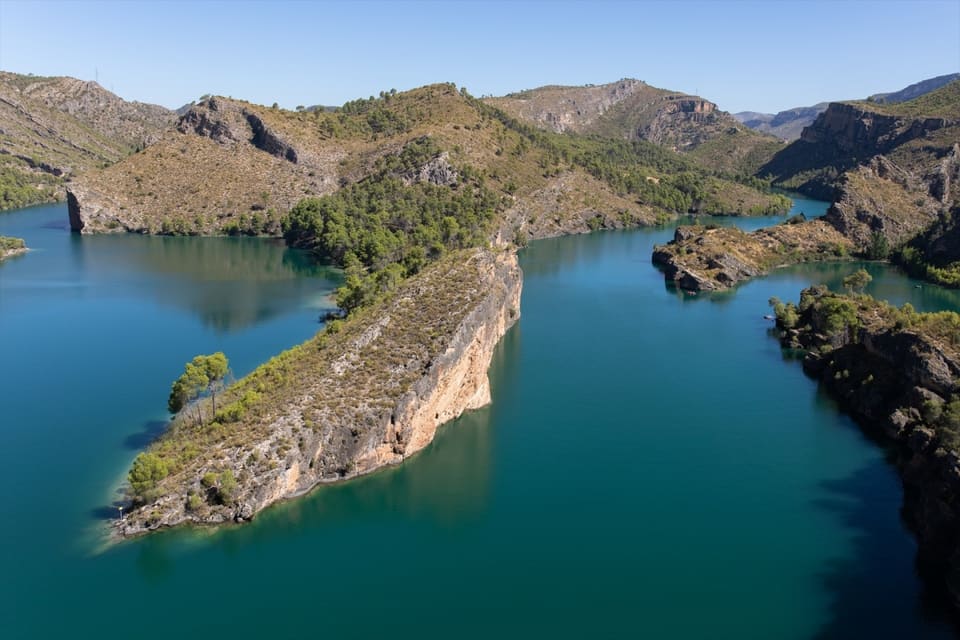
Crossing the Mar de Castilla: Entrepeñas and Buendía reservoirs
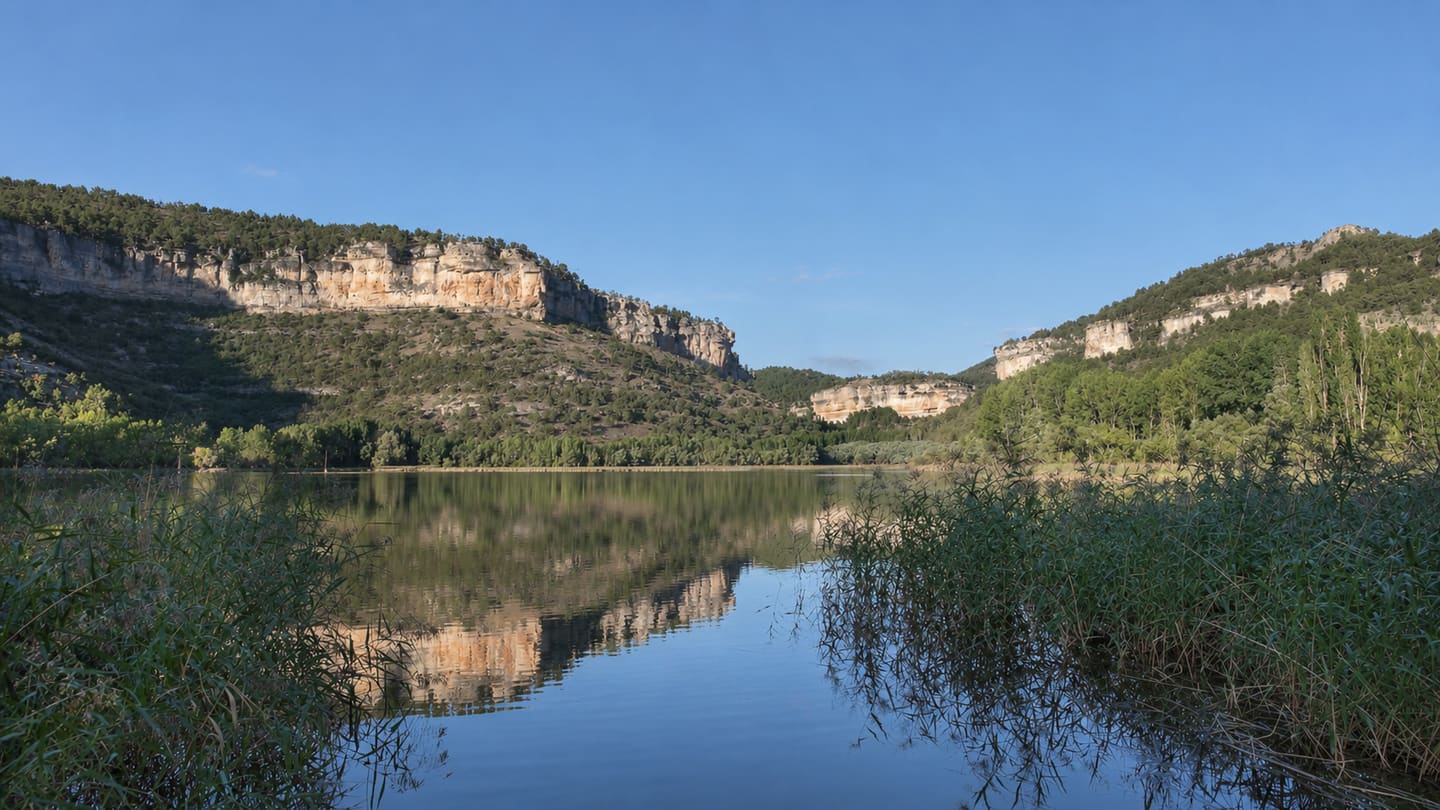
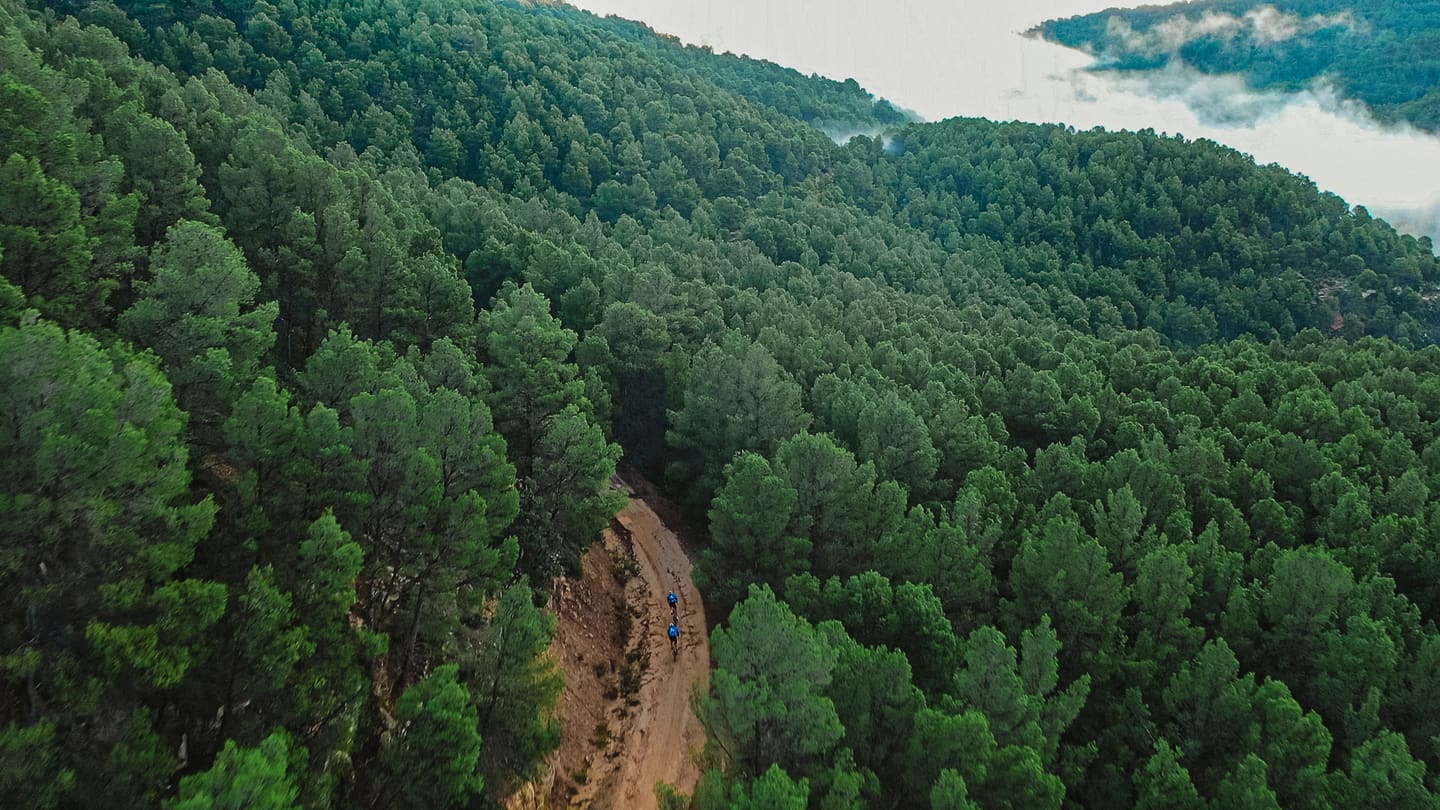
Halfway between Guadalajara's plateaus and the Serranía de Cuenca, the landscape opens suddenly onto the Mar de Castilla (the Sea of Castile). Created by the neighbouring Entrepeñas and Buendía reservoirs along the Tagus and Guadiela rivers, the basin paints startling ribbons of turquoise water beneath pale limestone bluffs and Mediterranean pines. Cycling along the peninsulas and dams of Entrepeñas delivers some of central Spain's most unexpected coastal-feeling panoramas. Roads hug steep limestone ledges high above the water, dipping down to stone bridges before climbing back onto pine-scented ridges with sweeping views across submerged valleys. Mid-morning stops near the reservoirs reveal complete stillness: ospreys and griffon vultures ride the thermals while small fishing coves shimmer far below the tarmac.
Comparing Alcarria itineraries: weekend loop or full crossing
Cadencia Travel Experience links La Alcarria through two signature journeys, alongside neighbouring road options in the adjoining Alto Tajo. Choosing between them depends on whether you want a compact weekend escape from Madrid or a full multi-day crossing into UNESCO-listed Cuenca.
| Journey | Format & Route | Distance | Elevation Gain | Duration | Bike Options |
|---|---|---|---|---|---|
| Alcarria Tour | Private loop (Brihuega to Brihuega) | 174 km | +2,500 m | Weekend loop | Road · Gravel · E-bike |
| From Sigüenza to Cuenca via the Mar de Castilla | Scheduled linear (Sigüenza to Cuenca) | 320 km | +6,360 m | Multi-stage | Road · Gravel · E-bike |
| Alto Tajo by Road | Private loop (Trillo to Trillo) | 218 km | +2,950 m | 4 days / 3 nights | Road · E-bike |
The Alcarria Tour loops 174 kilometres (+2,500 m) out of Brihuega through Cifuentes, Trillo, and the Entrepeñas reservoir, making it one of the most rewarding short escapes when cycling near Madrid. Travellers with a full week often choose our scheduled linear crossing From Sigüenza to Cuenca via the Mar de Castilla, linking 320 kilometres and +6,360 metres from Sigüenza's castle across the reservoirs and straight into the dramatic canyon highlands of Serranía de Cuenca.
Road tarmac, white gravel tracks and the best months to ride
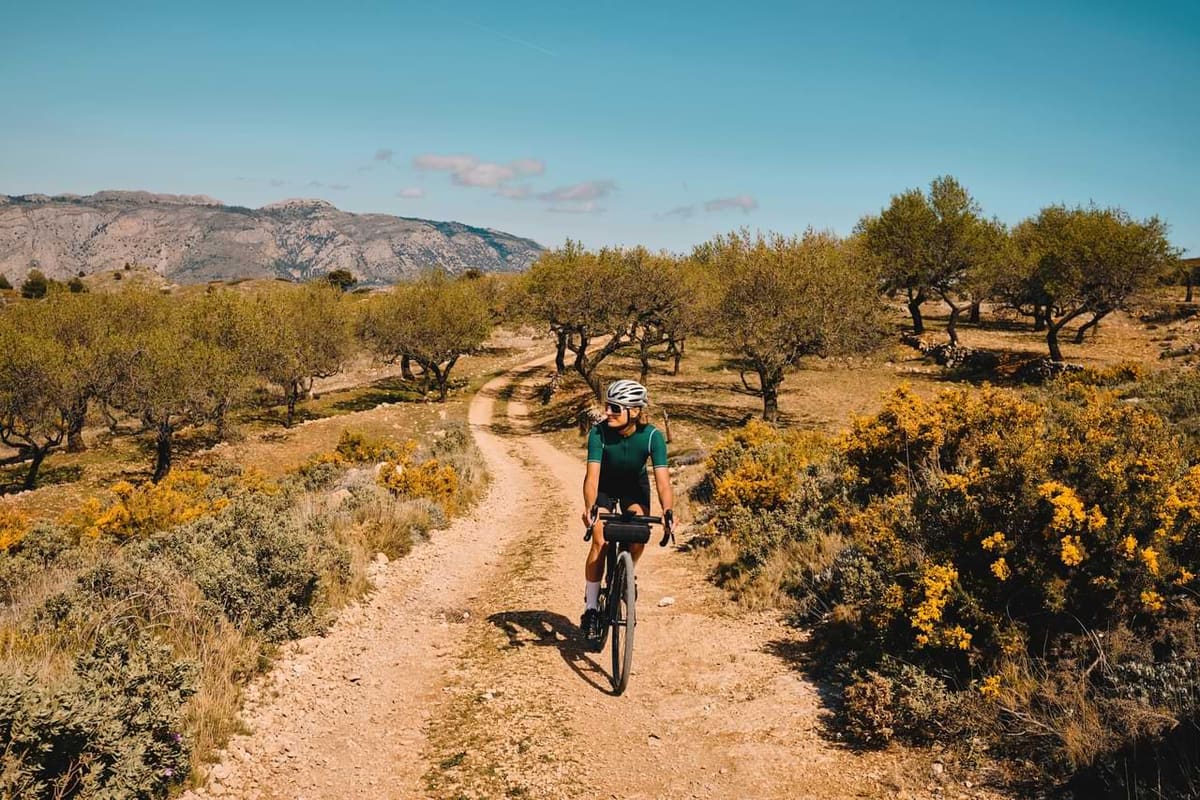
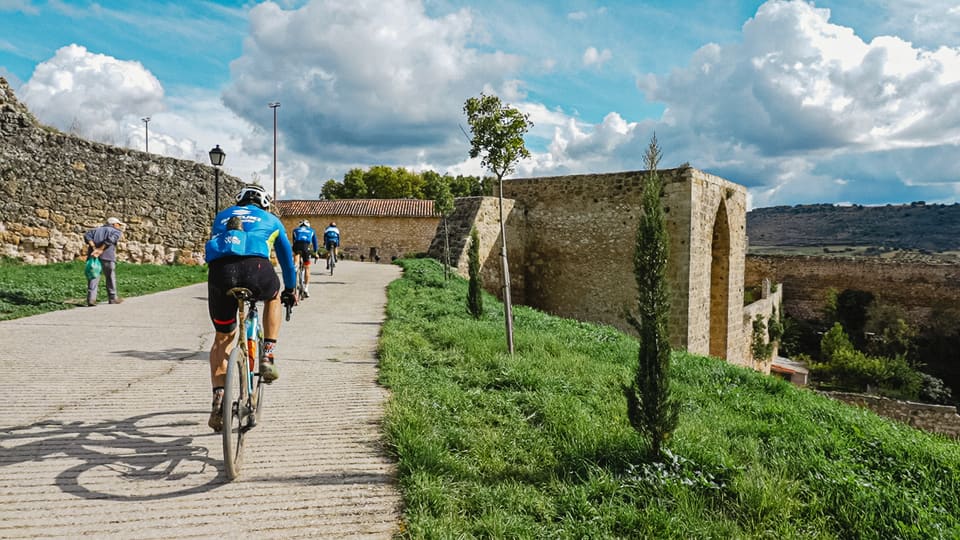
La Alcarria shines equally on narrow tarmac lanes and well-packed gravel tracks. Secondary paved roads carry minimal traffic and connect nearly every hilltop hamlet, while agricultural tracks roll across the limestone plateaus with smooth hardpack that rewards 40 mm gravel tyres. If unpaved exploration is your main draw, browse our broader guide to gravel cycling in Spain. Seasonal timing shapes the character of every ride across Guadalajara:
- May and June: Lush green cereal fields, blooming wild thyme and rosemary, pleasant mornings, and full reservoir levels across the Mar de Castilla.
- Late June to late July: Peak lavender bloom around Brihuega turns the high plateaus purple and fills the air with scent. Starting early keeps temperatures cool before afternoon sun arrives.
- September and October: Golden stubble fields, crisp plateau skies, grape and honey harvests, and mild daytime riding weather ideal for long linear stages.
Winter mornings can be crisp and frosty at 1,000 metres elevation, making spring through late autumn the prime cycling calendar.
Honey, lavender and unhurried Castilian village life
Gastronomy in La Alcarria reflects the dry, aromatic hills you pedal across all day. Denominación de Origen Miel de la Alcarria (rosemary, thyme, and lavender honey) sits on breakfast tables alongside rustic bread, local sheep's cheese, and slow-roasted Castilian lamb. Evening meals unfold at a genuinely local pace rather than a resort schedule. After climbing out of the Tajuña valley or looping above Entrepeñas, sitting down on a stone terrace in Brihuega or Sigüenza feels earned in the simplest, purest way.
Every Cadencia departure includes local route curation by our team, luggage transfers between handpicked stays, and dedicated support so you travel light from first pedal stroke to final espresso. Explore all Cadencia cycling journeys in Spain or get in touch with our team to plan a private weekend loop or join our scheduled Sigüenza to Cuenca departure.
Frequently asked questions
How far is La Alcarria from Madrid for a cycling trip?
Brihuega lies roughly one hour by road from Madrid Barajas Airport, while Sigüenza sits around 90 minutes away by car or direct regional train. That proximity lets international cyclists transition from landing in Madrid to riding silent lavender hills on the very same afternoon.
When do the lavender fields bloom in Brihuega?
Lavender around Brihuega usually begins colouring the fields in late June, reaches peak bloom across the first three weeks of July, and is harvested between late July and early August depending on spring rainfall. Early morning rides in July capture both vivid colour and cool air.
Is La Alcarria better suited to a road bike or a gravel bike?
Both setups work seamlessly across La Alcarria because paved backroads and smooth limestone farm tracks run side by side throughout the region. Road bikes shine on the flowing ascents between Sigüenza, Trillo, and Cuenca, whereas gravel bikes and e-bikes unlock quiet agricultural tracks directly alongside Brihuega's lavender plateaus.
What makes the Sigüenza to Cuenca journey different from the Alcarria Tour?
The Alcarria Tour is a private 174 km weekend loop starting and finishing in Brihuega, focused on lavender hills, Cifuentes, Trillo, and Entrepeñas. From Sigüenza to Cuenca via the Mar de Castilla is a scheduled 320 km linear crossing with +6,360 m of climbing that links medieval Guadalajara, both inland reservoirs, and the limestone gorges of Cuenca.