Deep dives
Don Quixote Route in Spain: Cycling Toledo to Almagro
Cycle the Don Quixote route in Spain across 365 km and 6 stages from Toledo to Almagro via Consuegra windmills, Argamasilla de Alba and Ruidera.
Cadencia team · · 6 min read
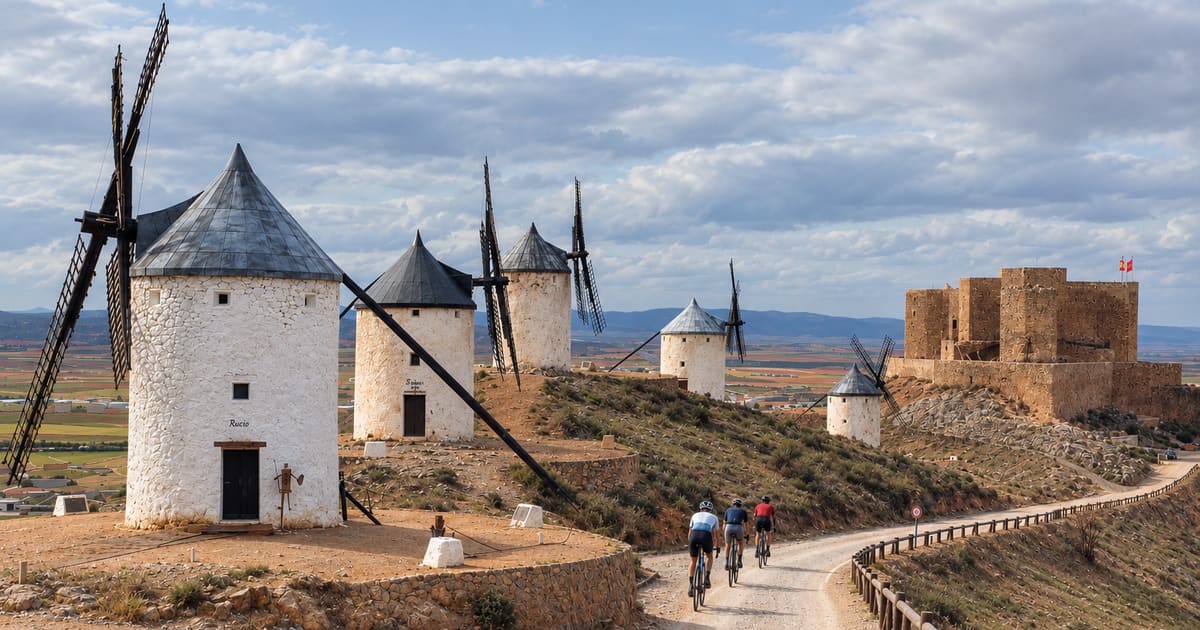
The Don Quixote route in Spain comes alive at bicycle speed across 365 kilometres and six linear stages from Toledo to Almagro. Riding through La Mancha links whitewashed hilltop windmills in Consuegra, Cervantes's legendary prison at Cueva de Medrano, the turquoise cascades of Lagunas de Ruidera and the sixteenth-century theatre town of Almagro.
Why cycling is the finest way to trace Cervantes's La Mancha
Driving across La Mancha at motorway speed reduces Miguel de Cervantes's landscape to a passing blur. Travelling by bicycle restores the scale at which Don Quixote and Sancho Panza crossed these horizons: twenty kilometres an hour beneath vast Castilian skies, where hilltop castles emerge slowly above saffron fields, olive groves and rows of low bush vines. Gentle gradients make the itinerary remarkably welcoming. Across 365 km of linear riding, total elevation gain stays at a modest +2,120 m, averaging roughly 350 metres of climbing per stage. Riders spend less energy battling steep switchbacks and more time absorbing Moorish stonework, Renaissance squares, roadside wineries and unhurried lunches.
Cultural depth matches the approachable terrain. Every stop along In the Footsteps of Don Quixote connects tangible history with Europe's founding modern novel, turning a week of cycling into a living narrative across Castile.
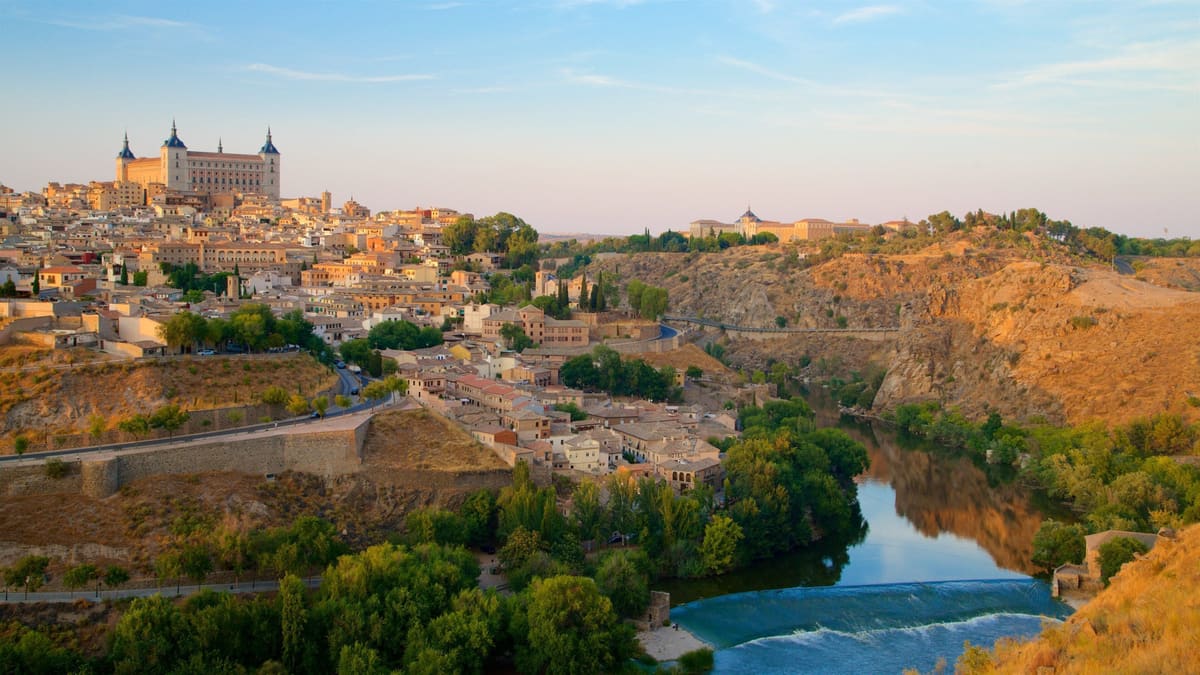
Stage-by-stage highlights from Toledo to Almagro
Cadencia runs this 6-stage scheduled journey linearly from north to south so riders never retrace ground, finishing each afternoon in a distinct historic town.
| Key Landmark | Province & Character | What Makes It Unmissable on Two Wheels |
|---|---|---|
| Toledo | Imperial UNESCO city above the Tagus | Dramatic departure past medieval bridges, Alcázar and Mirador del Valle |
| Consuegra | Hilltop ridge of Calderico | Twelve restored whitewashed windmills beside a medieval hilltop fortress |
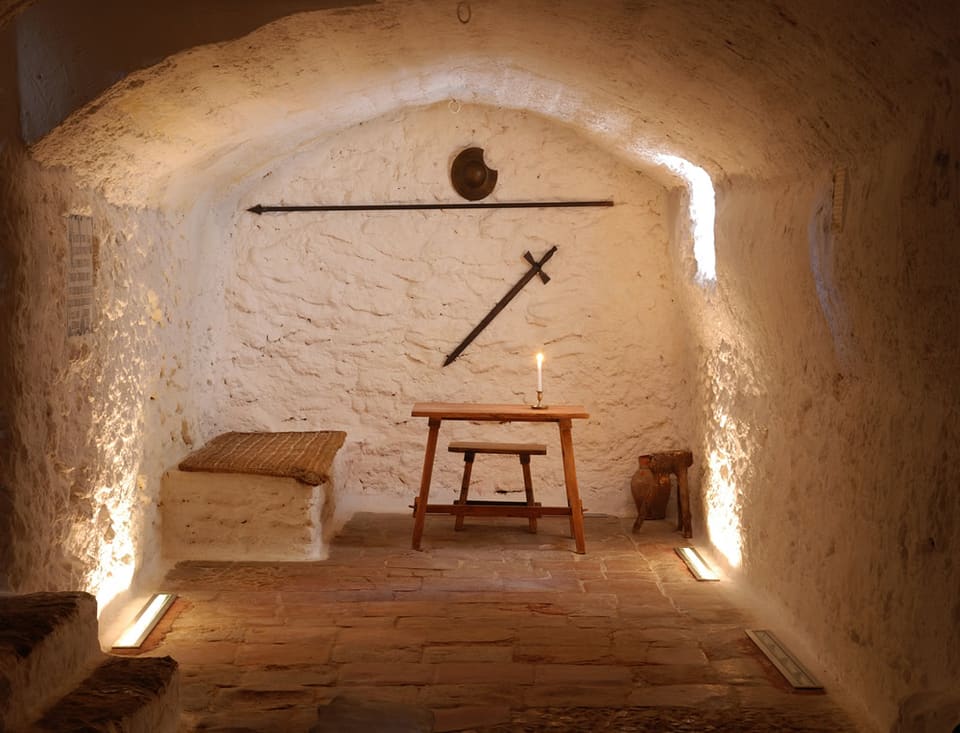
| Argamasilla de Alba | Literary heart of La Mancha | Visit to Cueva de Medrano, traditional site where Cervantes began writing |
| Lagunas de Ruidera | Natural Park of cascading karst lakes | Fifteen turquoise lagoons connected by waterfalls and shaded riverside tracks |
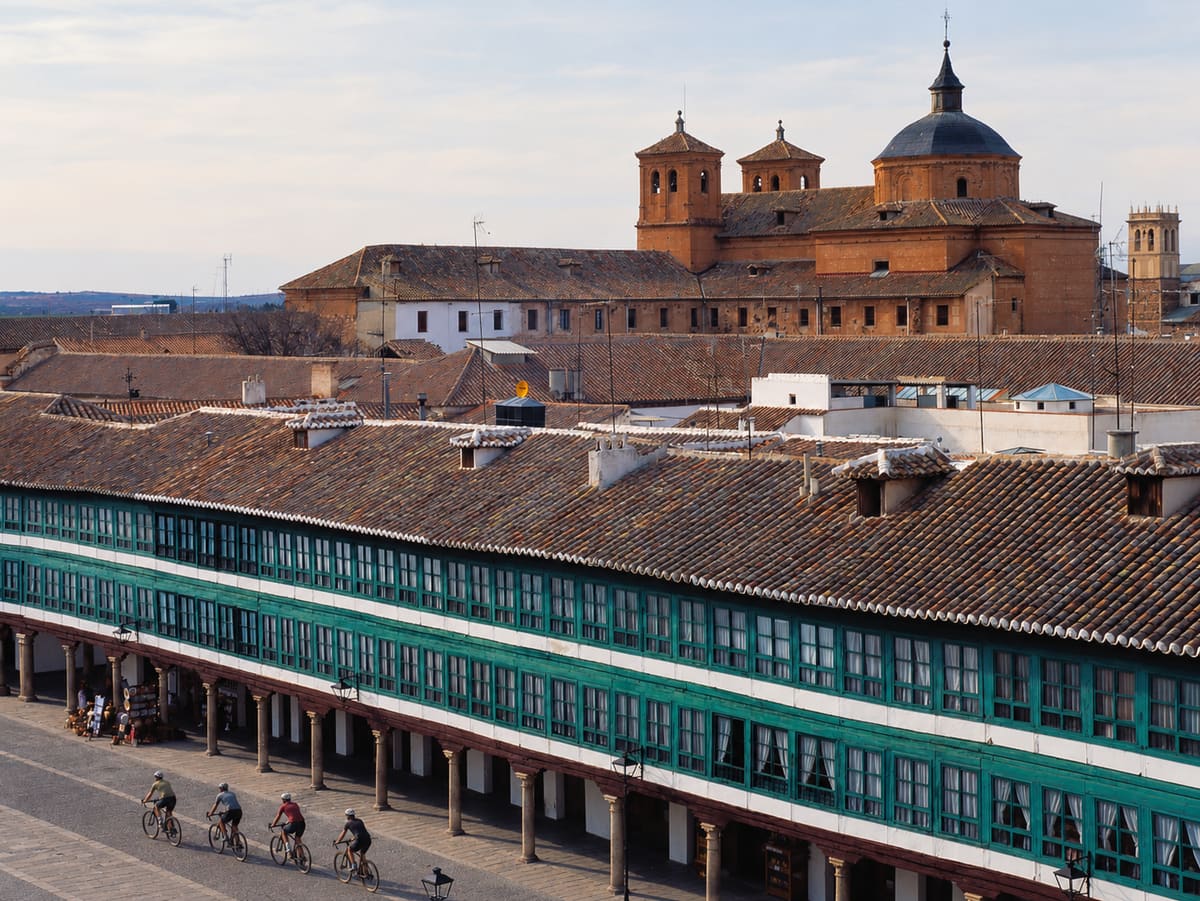
| Almagro | Historic capital of Campo de Calatrava | Green-galleried Plaza Mayor and Spain's preserved Golden Age Corral de Comedias |
Toledo sets an atmospheric opening note with its maze of Gothic, Mudéjar and Jewish heritage perched over the gorge of the Tagus. Riding south, the ochre plains open wide until the stone ridge of Consuegra rises on the horizon like a fleet of white sails. Explore the history of the ridge in our feature on the Consuegra windmills in Spain.
Literary shrines and turquoise oasis lakes
Midway across the plain, Argamasilla de Alba brings the story into sharp focus. Local tradition holds that Miguel de Cervantes was imprisoned inside the vaulted cellar of Cueva de Medrano, where the opening chapters of Don Quixote first took shape. Stepping down into the cool stone chamber after a sunlit morning in the saddle bridges four centuries effortlessly.
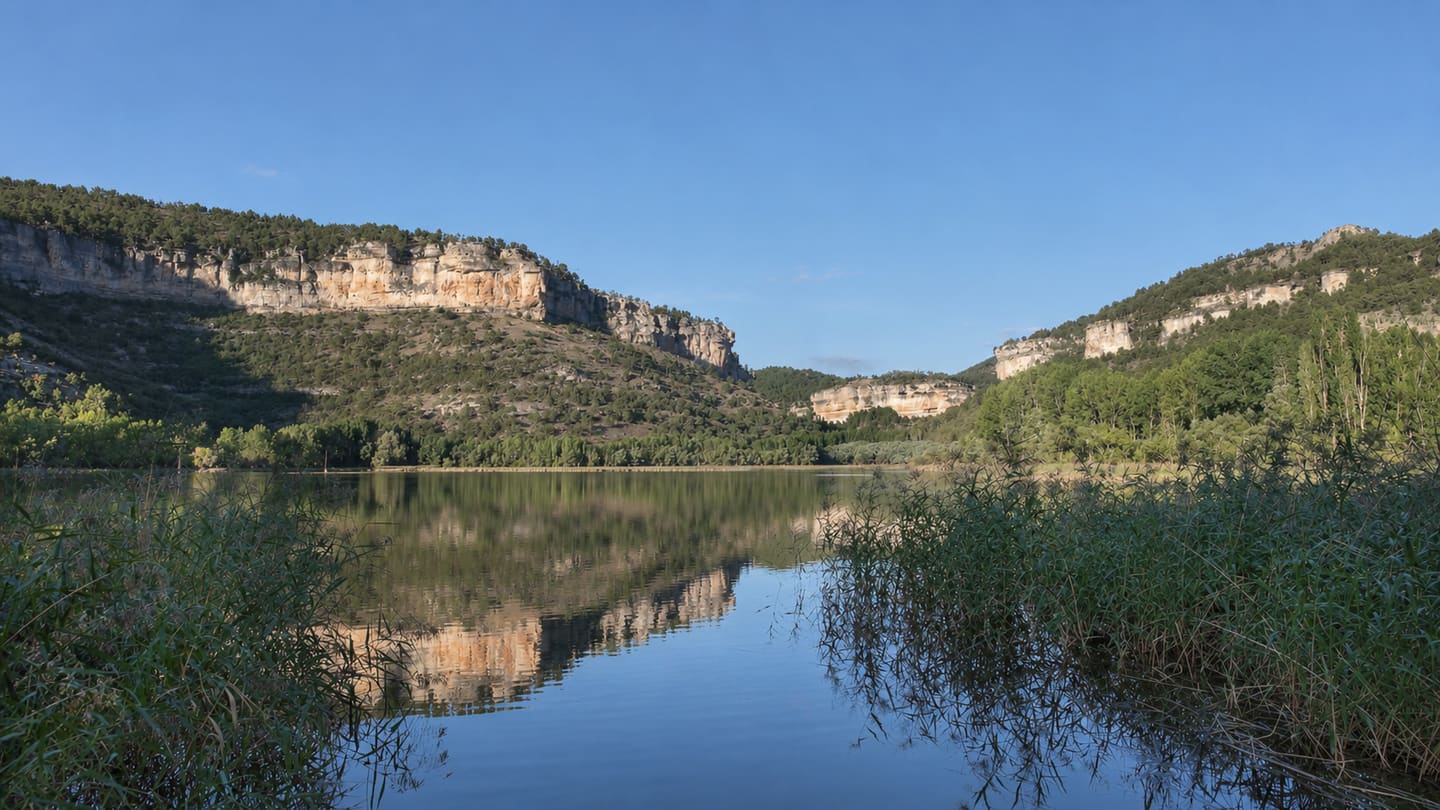
Just when riders expect endless dry steppe, La Mancha delivers its greatest geographical surprise: the Lagunas de Ruidera. Fifteen emerald and turquoise lakes tumble across natural travertine barriers in a chain of waterfalls and reed-lined pools that inspired the Cave of Montesinos episode in the novel. Plan extra photo stops with our dedicated guide to Lagunas de Ruidera in Spain.
Almagro, volcanic horizons and Manchego gastronomy
The sixth stage rolls west toward Almagro, jewel of the ancient Campo de Calatrava. Arriving by bike onto Almagro's elongated Plaza Mayor, framed by two tiers of green glazed wooden galleries, feels like riding onto a seventeenth-century stage set. Steps away stands the Corral de Comedias, the only Golden Age open-air theatre in Spain preserved intact in its original structure.
Manchego cuisine rewards every kilometre along the route. Aged sheep's milk Queso Manchego, saffron-scented stews, slow-braised pisto manchego, roasted peppers and characterful regional reds express the soil you just rode across. Learn more about the vineyards and grape varieties lining your stages in our guide to Castilla-La Mancha wine. Travellers who fall in love with southern La Mancha's castles, wetlands and volcanic ridges can also extend their exploration on our private 7-day, 6-night Ciudad Real Loop, covering 291 km and +2,070 m through Campo de Calatrava, Almagro and Tablas de Daimiel.
Terrain, bike choice and best seasons for La Mancha
Road, gravel and e-bike options are all fully supported on In the Footsteps of Don Quixote, letting travellers choose their preferred riding feel without sacrificing any landmark.
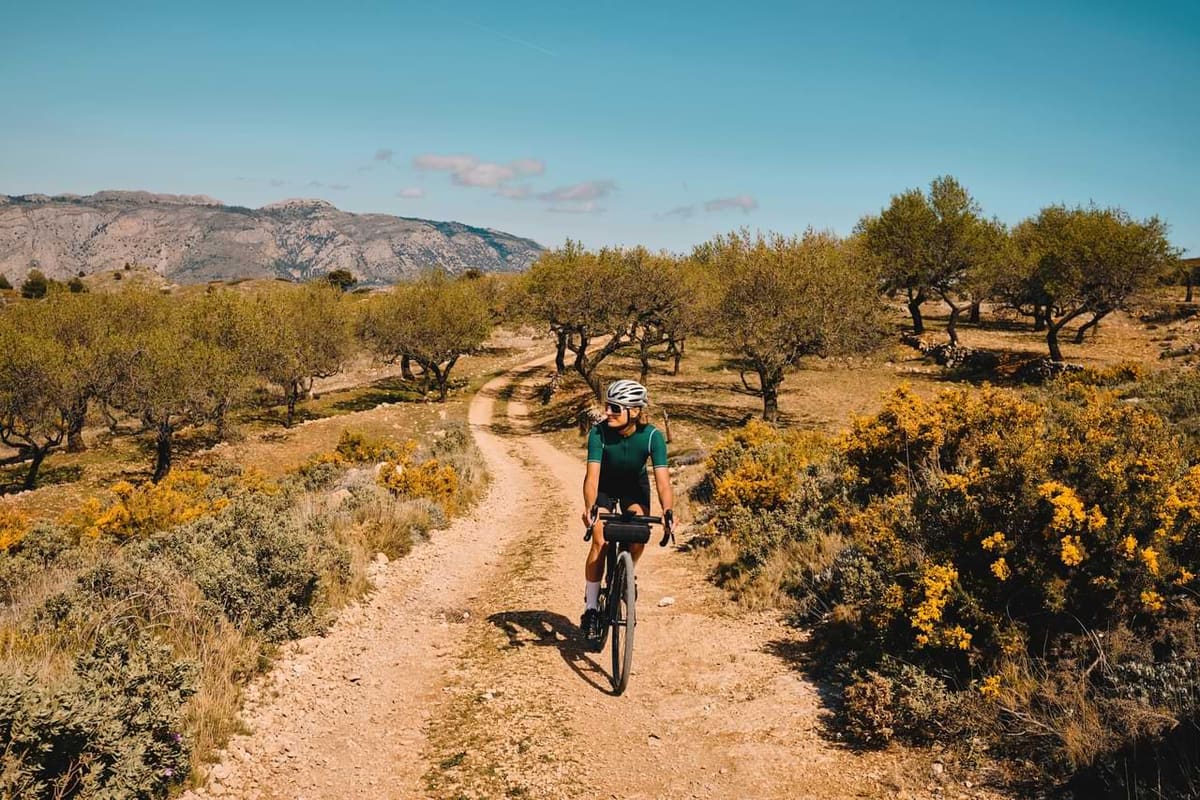
- Gravel bikes: Ideal for ochre farm tracks, quiet cañadas reales and lakeside dirt paths around Ruidera, running 40 mm fast-rolling tyres.
- Road bikes: Smooth secondary provincial tarmac parallels the full Toledo to Almagro corridor with minimal traffic and effortless rolling speed.
- E-bikes: Particularly popular with couples and cultural travellers who want breeze-assisted afternoons when La Mancha's famous plain wind picks up.
- Best months to ride: April, May and early June bring vivid green cereal fields, poppies and mild days between 18 and 25 degrees Celsius. September and October offer golden vineyard foliage, harvest energy and crisp blue skies. July and August are best avoided on the central plains due to midday summer heat.
For broader planning across Spanish regions, browse our overview of cycling holidays in Spain or compare all nine routes on our curated journeys page.
Riding the route with Cadencia's scheduled departures
Because In the Footsteps of Don Quixote is a linear 365 km journey across multiple provinces, independent logistics quickly grow complex: returning bikes to Toledo, transferring luggage between boutique towns and finding shaded midday stops across quiet plains. Cadencia Travel Experience operates scheduled departures curated by our team, uniting small international groups with daily luggage transfers, mechanical support, local cultural insight and handpicked accommodation from Toledo to Almagro. Private departures on custom dates are equally straightforward to arrange. Send your preferred travel window via our contact page to reserve your saddle.
Frequently asked questions
How difficult is cycling the Don Quixote route from Toledo to Almagro?
With 365 km spread across 6 stages and only +2,120 m of cumulative climbing, the Toledo to Almagro journey is classified as accessible to moderate. Daily distances average around 60 kilometres on rolling terrain, making it ideal for leisure cyclists, couples and first-time multi-day tourers.
Is the route paved or off-road?
Cadencia offers both quiet secondary tarmac tracks for road cyclists and hard-packed ochre rural paths for gravel riders along the same Toledo to Almagro corridor. Both options visit every major cultural stop, including Consuegra, Argamasilla de Alba and Lagunas de Ruidera.
How do travellers reach Toledo and return to Madrid from Almagro?
Toledo lies just thirty-three minutes by high-speed train from Madrid Atocha station, while Ciudad Real near Almagro connects back to Madrid by high-speed rail in under an hour. Cadencia coordinates smooth logistics so transfers at both ends feel effortless.
Can I ride the Don Quixote route on an e-bike?
High-range road and gravel e-bikes are available on every scheduled and private departure of In the Footsteps of Don Quixote. Pedal assistance proves especially welcome on short hilltop climbs to Consuegra's windmills or whenever headwinds cross the open plain.