Guides
Lagunas de Ruidera Spain: Cycling the Turquoise Oasis
Cycle the Lagunas de Ruidera in Spain: fifteen travertine lagoons linked by waterfalls in La Mancha, Cervantine caves, and quiet spring riding.
Cadencia team · · 7 min read
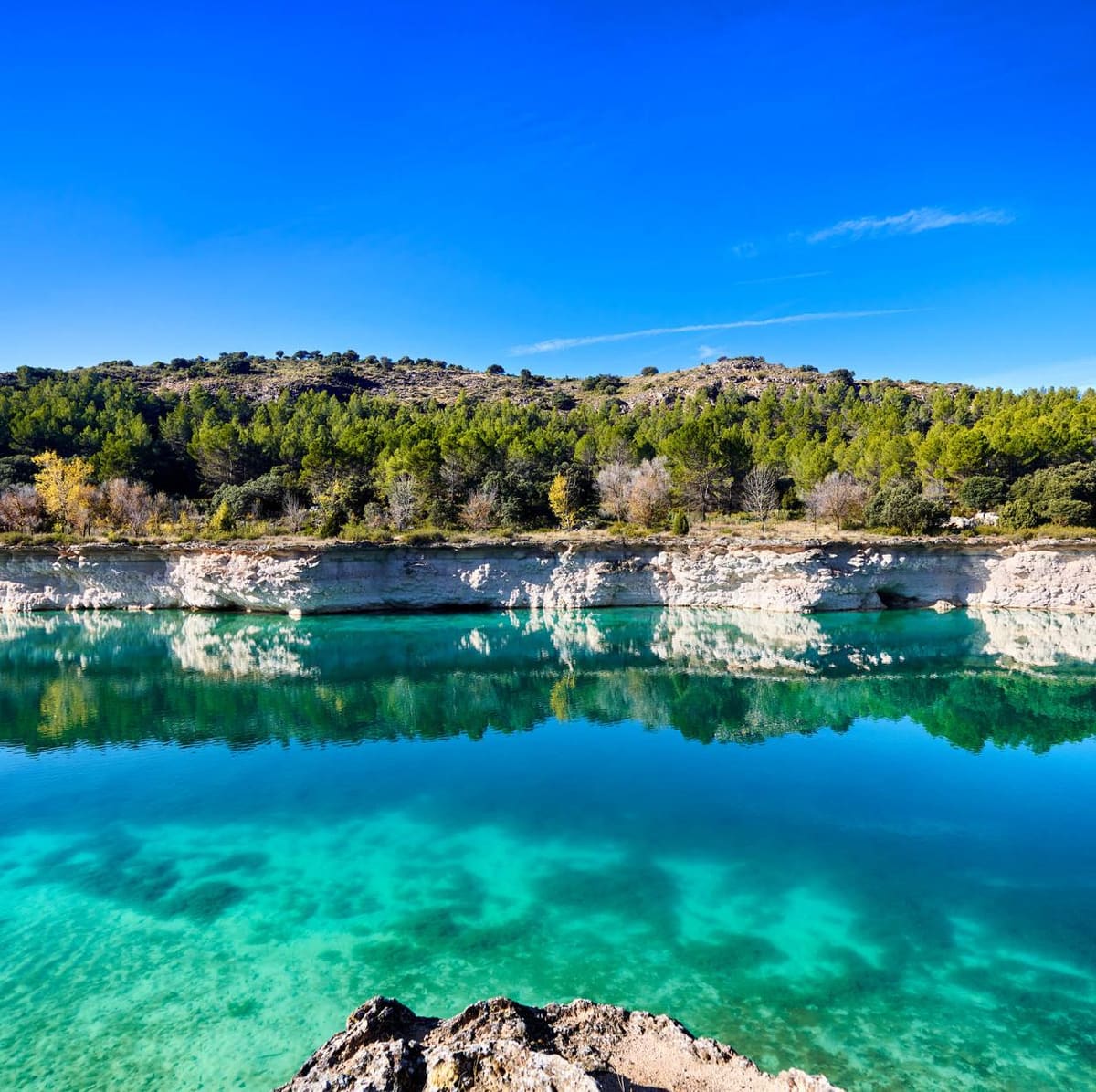
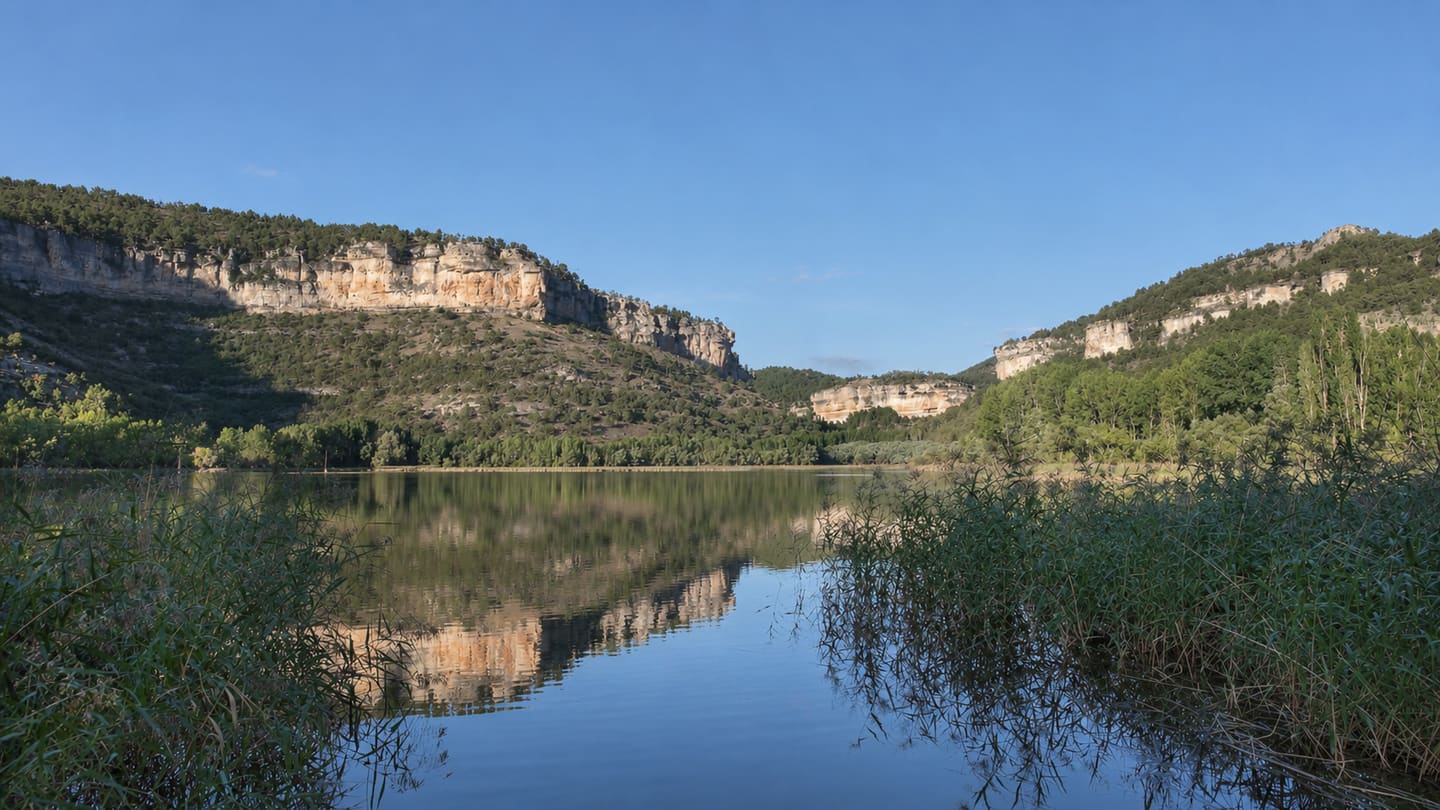
Lagunas de Ruidera in Spain is a 30-kilometre chain of fifteen turquoise lagoons linked by waterfalls and travertine cascades in the middle of sun-drenched La Mancha. For cyclists touring Castilla-La Mancha, rolling down from dry red plains and vineyards into shaded lakeside roads lined with poplars and reeds feels like discovering a hidden Iberian oasis.
Fifteen turquoise lagoons in the heart of La Mancha
Straddling the provinces of Ciudad Real and Albacete, the Parque Natural de las Lagunas de Ruidera sits at the upper source of the Alto Guadiana river basin. Rather than a single lake, the valley steps downward over 120 metres in elevation from the high Laguna Blanca down through Conceja, Tomilla, Tinaja, San Pedro, Lengua, Salvadora, Santos Morcillo, Batana, Colgada, del Rey, Morenilla, Coladilla, and Cenagosa. Underground karst aquifers push mineral-rich water up through fractured limestone shelves. Over millennia, calcium carbonate precipitated along each step to build natural travertine dams, creating vivid turquoise pools separated by foaming waterfalls such as El Hundimiento.
Riding into this green corridor after hours spent pedalling across golden wheatfields, holm oak pastures, and crimson soils produces one of the sharpest sensory contrasts anywhere in European cycle touring. Air cools noticeably beneath the reeds, dragonflies skim across glass-clear shallows, and the sound of running water replaces the dry wind of the plateau.
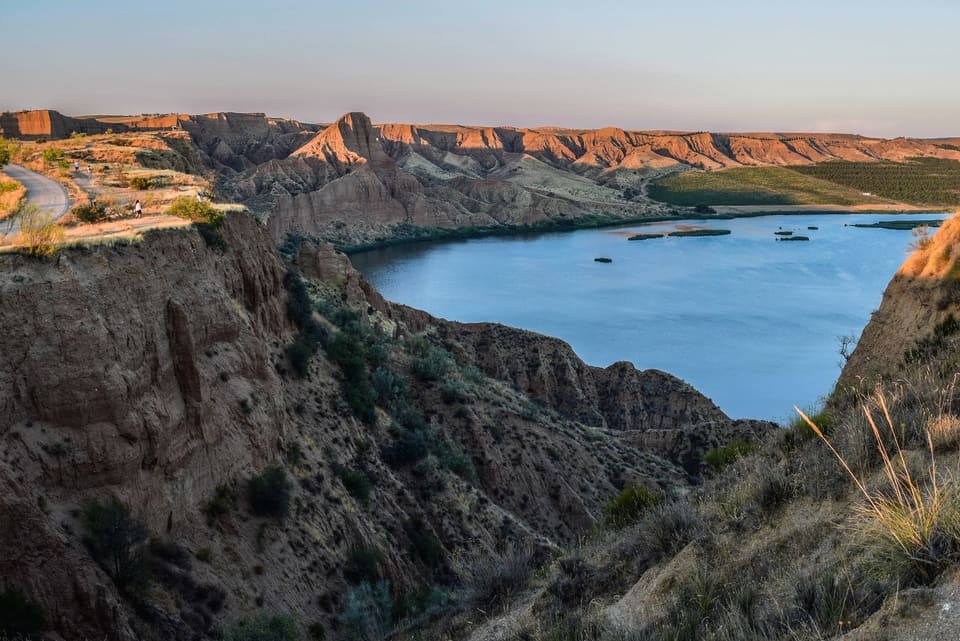
How travertine waterfalls shape the riding corridor
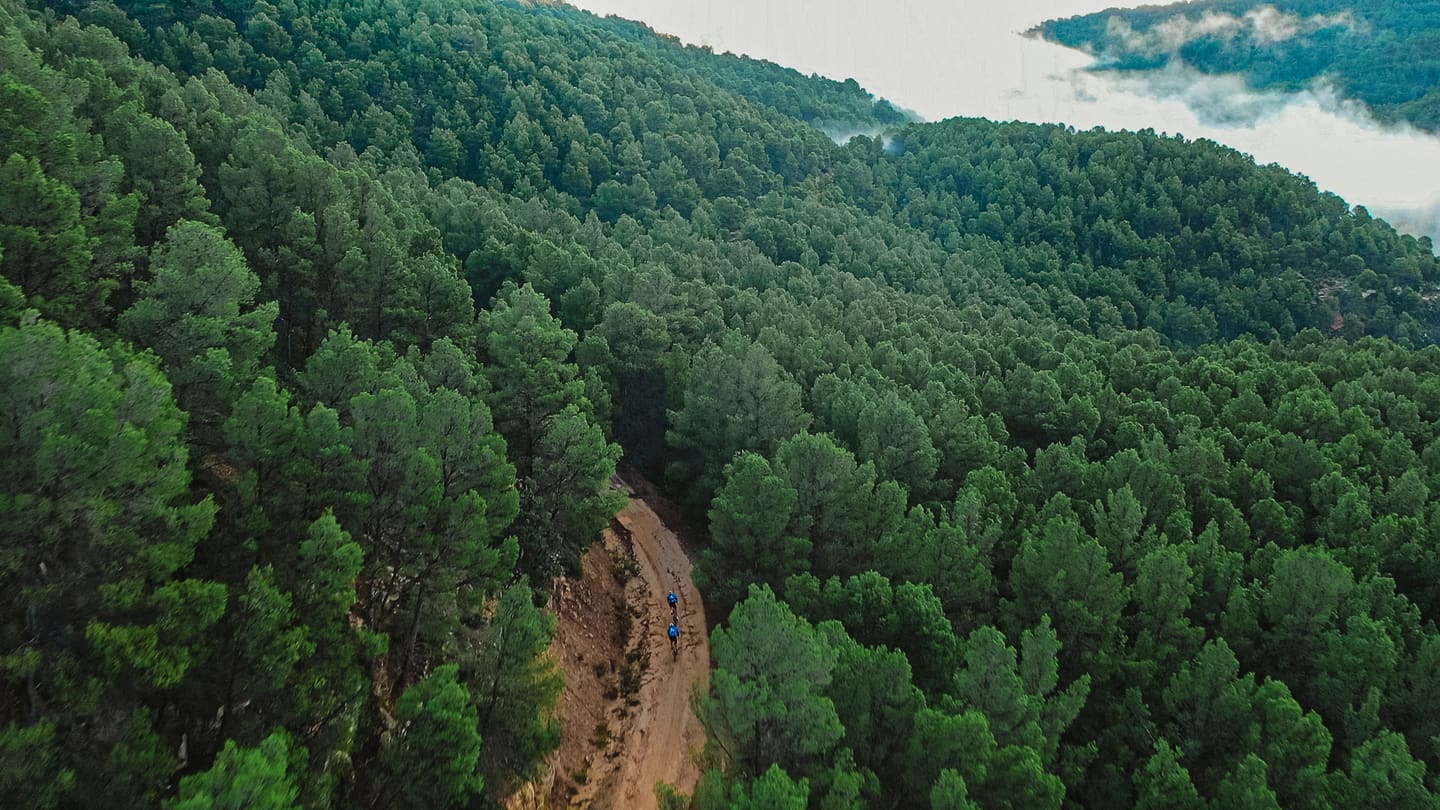
Cycling through the Lagunas de Ruidera Natural Park follows an unusually rewarding profile. A quiet single-lane paved road and parallel gravel trails weave directly beside the water's edge, linking viewpoint terraces, wooden footbridges, and small sandy coves with gentle rolling gradients. Key stretches along the valley stand out from the saddle:
- Upper lagoons (Blanca, Conceja, and Tomilla): Quieter, more open waters ringed by reed beds and limestone bluffs, ideal for birdwatching and unhurried photography.
- Middle cascades (San Pedro, Lengua, and Batana): Dramatic stepped ledges where turquoise water tumbles directly over mossy travertine ledges just metres from the cycling line.
- Lower basin (Laguna Colgada and Laguna del Rey): Deep sapphire water framed by Ruidera village and the crashing drops around El Hundimiento waterfall, where you can pause for coffee overlooking the mist.
Total climbing through the lagoon corridor itself remains mild, making the park accessible to leisure cyclists, couples, and families on road bikes, gravel bikes, or e-bikes alike.
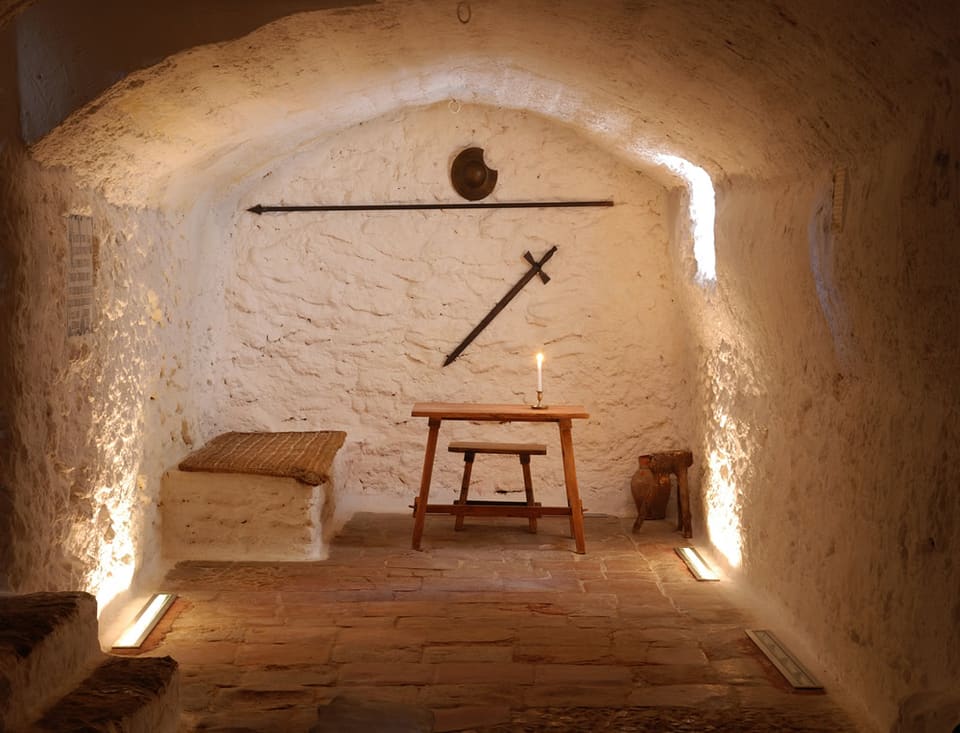
Cervantes, Cueva de Medrano and the Montesinos legend
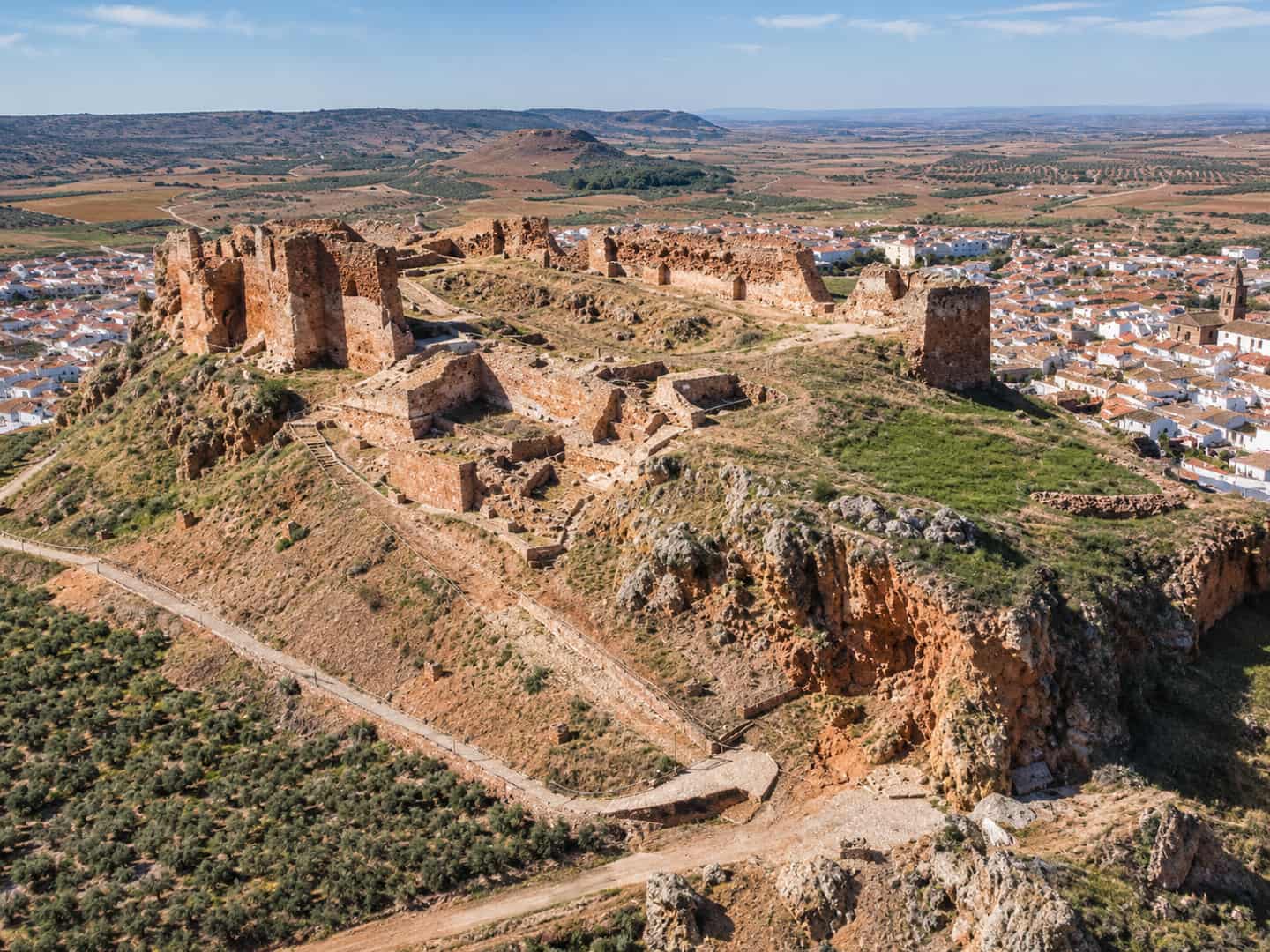
Literature and landscape intertwine tightly around Ruidera. Miguel de Cervantes knew these lagoons well and set one of the most dreamlike episodes of Don Quixote inside the Cueva de Montesinos, a karst cavern hidden in the limestone hills above the upper lakes where the knight descends by rope into an enchanted underworld. Just downstream from the park lies Argamasilla de Alba, home to the Cueva de Medrano, the vaulted cellar house where local tradition holds Cervantes was imprisoned and began drafting his masterpiece. Nearby stands the hilltop silhouette of Castillo de Peñarroya guarding the reservoir where the Alto Guadiana leaves the valley towards the broad Manchego plains.
Linking these literary sites by bike gives every kilometre narrative depth. Rather than viewing historic monuments through a coach window, travellers pedal across the exact dry plains, oak groves, and limestone springs that inspired Spain's most celebrated novel. Explore how the full literary crossing unfolds in our guide to the Don Quixote route in Spain.
Multi-day cycling journeys that connect Lagunas de Ruidera
Cadencia Travel Experience weaves the Lagunas de Ruidera and neighbouring wetlands into three complementary journeys across southern Castilla-La Mancha, letting international travellers pair the turquoise oasis with windmills, volcanic plains, or dramatic river gorges.
| Journey | Format & Direction | Distance | Elevation Gain | Duration | Bike Options |
|---|---|---|---|---|---|
| In the Footsteps of Don Quixote | Scheduled linear (Toledo to Almagro) | 365 km | +2,120 m | 6 stages | Road · Gravel · E-bike |
| From Valdepeñas to Alcalá del Júcar | Private linear (Valdepeñas to Alcalá) | 377 km | +6,590 m | Multi-stage | Road · Gravel · E-bike |
| Ciudad Real Loop | Private loop (Ciudad Real to Ciudad Real) | 291 km | +2,070 m | 7 days / 6 nights | Road · Gravel · E-bike |
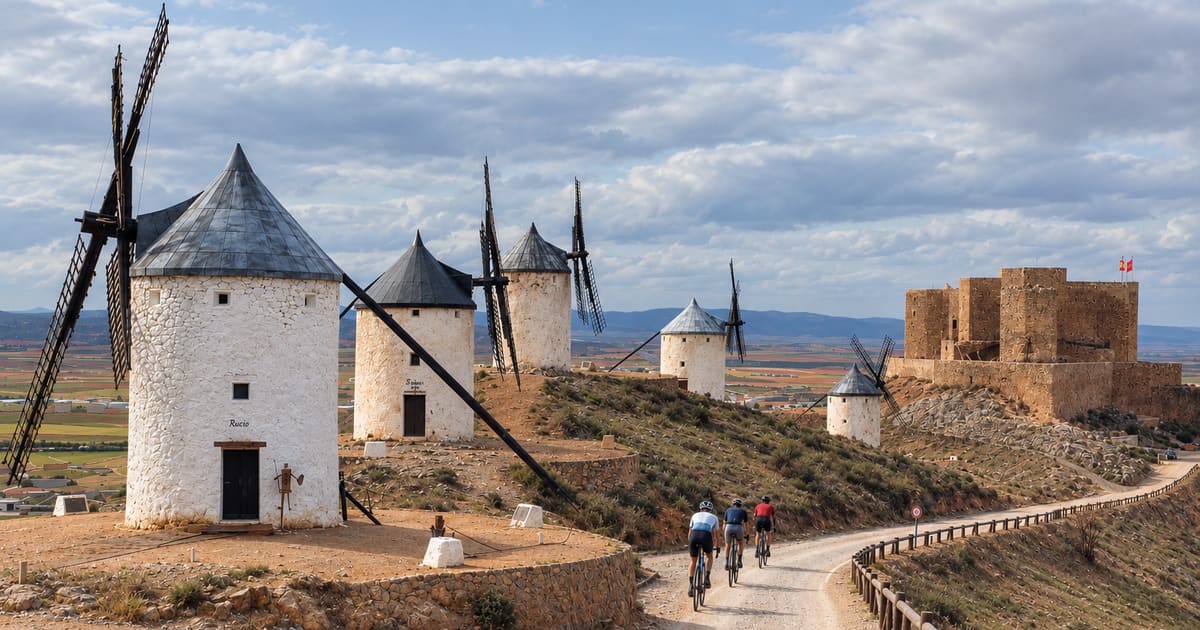
Our scheduled In the Footsteps of Don Quixote brings riders south from Toledo past the whitewashed ridges of Consuegra's windmills, through Argamasilla de Alba and Cueva de Medrano, and straight into the cool turquoise calm of Ruidera before finishing in Almagro. Riders chasing bigger climbs and wilder southeastern canyons gravitate towards the private crossing From Valdepeñas to Alcalá del Júcar, which pairs Valdepeñas vineyards with Ruidera's waterfalls, Río Mundo Natural Park, and the cliff-carved village of Alcalá del Júcar across 377 kilometres and +6,590 metres. Meanwhile, travellers intrigued by La Mancha's sister wetlands and volcanic heritage often choose the relaxed seven-day Ciudad Real Loop through Calatrava castles, Almagro, and Tablas de Daimiel National Park.
Timing your ride: avoiding summer crowds and catching peak flow
Seasonal timing makes an enormous difference at Lagunas de Ruidera. During July and August, weekend swimmers from across central Spain fill the main lakeside beaches and narrow parking bays, turning midday tarmac busy beneath strong sun.
- Spring (April to June): Unquestionably the peak window for cycling. Winter and spring rains feed the underground aquifer so waterfalls roar between the lagoons, wild poppies line the gravel lanes, and lakeside roads stay peaceful from Monday through Friday.
- Autumn (September to early November): Warm golden light, clear turquoise water, vine leaves turning crimson across surrounding La Mancha, and quiet lakeside terraces after summer crowds depart.
- Midweek riding: Even in late June or early September, scheduling lagoon stages on weekdays guarantees serene tarmac and empty viewpoints.
The Cadencia team plans departures around these exact seasonal rhythms so guests experience Ruidera in quiet morning light rather than peak holiday traffic.
Gravel tracks, lakeside tarmac and e-bike comfort
Riding conditions around Ruidera suit virtually every touring setup. The lakeside spine is smoothly paved, letting road bikes glide effortlessly from cascade to cascade while climbing gently towards Ossa de Montiel or descending towards Argamasilla de Alba. Gravel bikes fitted with 38 to 45 mm tyres unlock the white limestone farm tracks radiating out through surrounding holm oak woods, red-earth vineyards, and the approaches to Castillo de Peñarroya. E-bikes add effortless range on breezy afternoon crossings across open plains without removing the tactile pleasure of pedalling.
Pack lightweight breathable layers, refillable bidons, and polarised sunglasses to cut the bright glare off turquoise water and pale limestone tracks. Because Cadencia handles luggage transfers, mechanical support, and curated accommodation throughout every trip, you ride completely unencumbered. Browse all Cadencia cycling journeys in Spain or contact our team to weave Lagunas de Ruidera into a custom spring or autumn itinerary.
Frequently asked questions
Are the Lagunas de Ruidera suitable for beginner or leisure cyclists?
Gentle gradients along the lagoon valley make Lagunas de Ruidera one of the most approachable cycling landscapes in Spain. Multi-day journeys such as In the Footsteps of Don Quixote (+2,120 m across 365 km) and the Ciudad Real Loop (+2,070 m across 291 km) keep daily elevation mild, and e-bikes are available on every departure.
Can you swim in the Lagunas de Ruidera during a cycling trip?
Designated bathing zones exist across several lagoons, including Laguna del Rey, Colgada, and Santo Morcillo, where clear spring-fed waters offer a refreshing stop in late spring or early autumn. Always check local park signage, as protected nesting areas remain strictly off-limits to swimmers.
How far are the Lagunas de Ruidera from Madrid?
Lagunas de Ruidera lies roughly two and a half hours south of Madrid by road, or easily reached via high-speed train to Ciudad Real or Toledo before beginning a guided multi-day tour. Starting from Toledo on our scheduled Don Quixote journey turns the transfer south into an unforgettable six-stage ride.
When are the waterfalls at Lagunas de Ruidera most impressive?
Springtime between April and June typically displays the strongest cascades across the travertine barriers, especially following wet winter months when the Alto Guadiana aquifer runs high. Autumn also delivers crystal-clear turquoise colour and peaceful lakeside riding without summer beach traffic.