Guides
Tablas de Daimiel National Park by Bike: Wetlands & Castles
Cycle to Tablas de Daimiel National Park in Spain: river-table wetlands, birdwatching boardwalks, volcanic Campo de Calatrava, and Almagro.
Cadencia team · · 6 min read
Tablas de Daimiel National Park is the last surviving inland river-table wetland in Europe, formed where the Guadiana and Gigüela rivers overflow gently across flat Manchego plains in Ciudad Real. Pairing a visit to these serene reed boardwalks with quiet cycling through medieval Calatrava castles, dormant volcanoes, and Almagro creates one of Spain's most distinctive low-gradient bike holidays.
What makes Tablas de Daimiel National Park unique in Europe
Located less than two hours south of Madrid via high-speed train to Ciudad Real, Parque Nacional de las Tablas de Daimiel owes its existence to an extraordinary hydrological meeting. Brackish seasonal waters flowing down the Gigüela merge with fresh groundwater rising through the Guadiana springs, spreading out over a shallow basin with virtually no slope. That gentle flooding creates what local geography calls tablas (river tables): mirror-calm sheets of water dotted with sawgrass islands (masiega), tamarisk groves (tarayes), and dense reed channels. Protected as both a Spanish National Park and a UNESCO Biosphere Reserve, the sanctuary serves as a vital stopover along migratory bird corridors between northern Europe and sub-Saharan Africa.
Approaching this aquatic labyrinth by bicycle magnifies its wonder. Hours of rolling past terracotta vineyards, ancient olive groves, and dry volcanic cones end suddenly in birdsong, cool air, and reflections of wide Castilian skies.
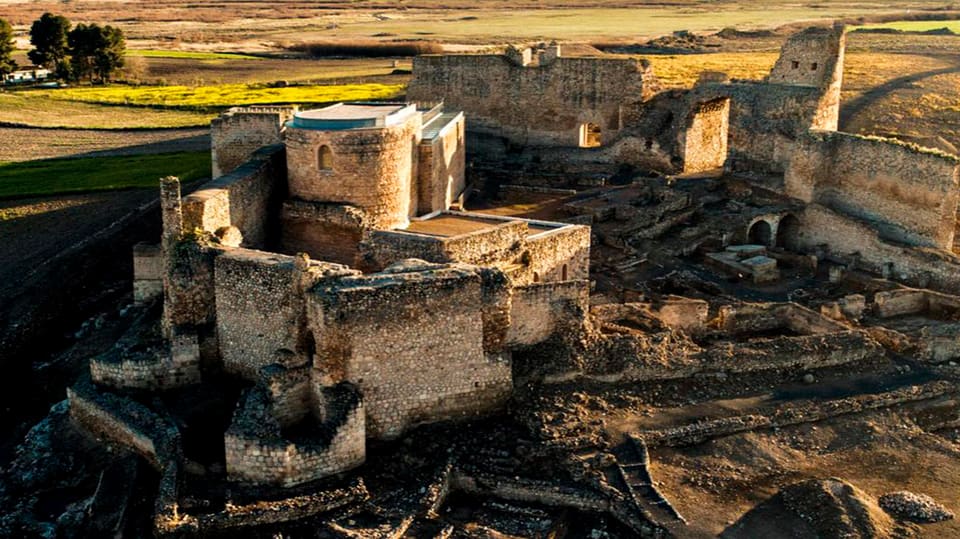
Riding the approaches: flat horizons, volcanic hills and Calatrava fortresses
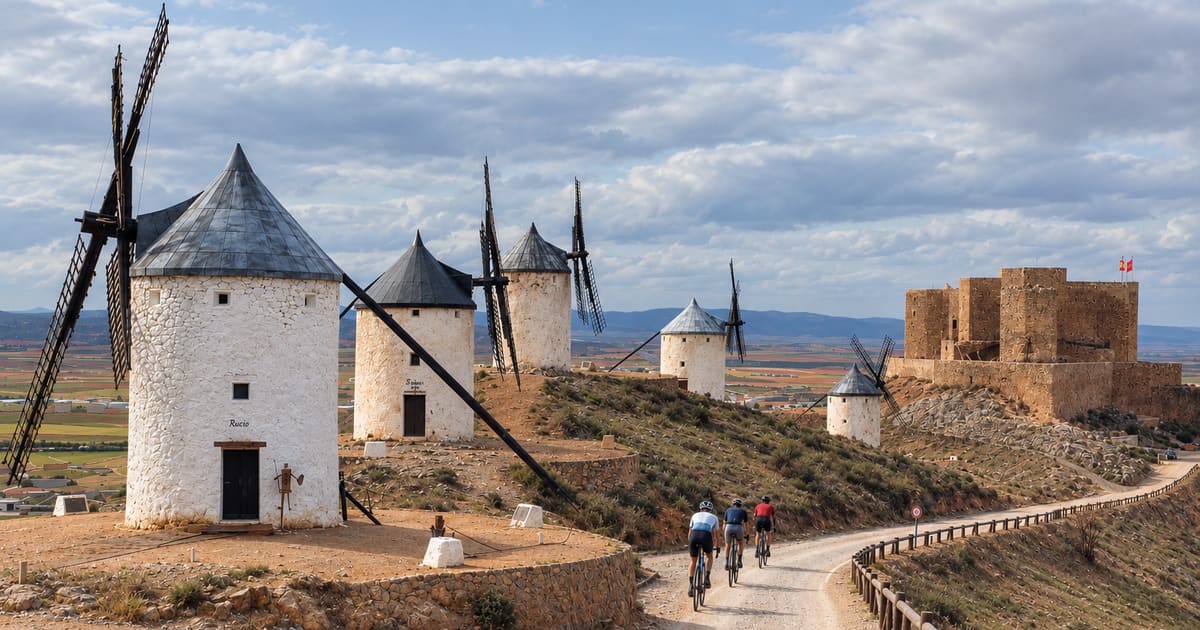
Surrounding the national park lies the Campo de Calatrava, a fascinating landscape that surprises almost every international visitor. Beneath the open agricultural plain sits one of mainland Spain's most important extinct volcanic fields, dotted with low basaltic cones and circular crater lakes called maares. Medieval knights of the Order of Calatrava built imposing stone strongholds atop these volcanic outcrops to guard the historic frontier between Christian Castile and Al-Andalus. From the saddle, the terrain unfolds in generous, unhurried stages:
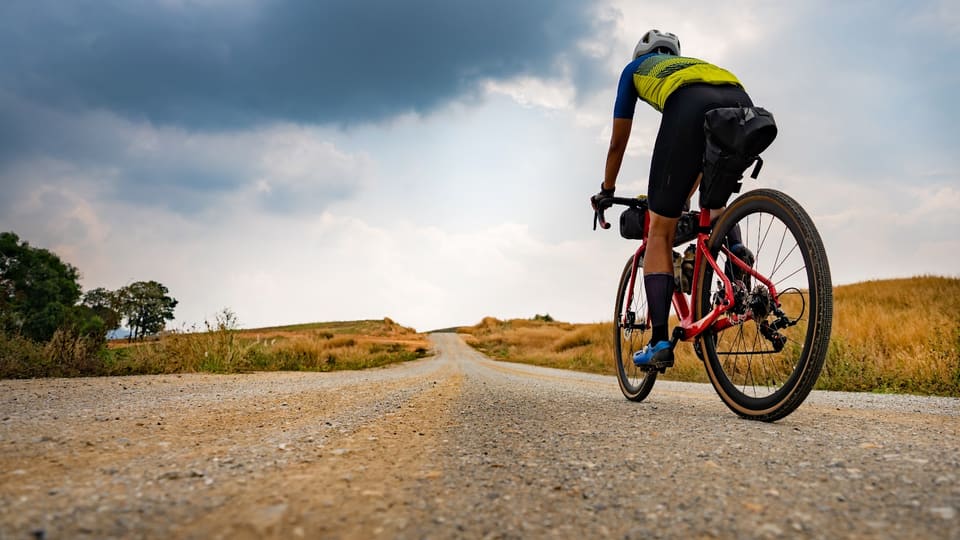
- Wide skies and quiet tarmac: Provincial backroads link Daimiel, Bolaños, Almagro, and Calzada de Calatrava with minimal traffic and long, rhythmic stretches suited to steady conversation.
- Smooth ochre gravel tracks: Compact agricultural lanes weave past vineyards, saffron fields, and stone wells without technical rock gardens or steep drops.
- Historic hilltop fortresses: Short, rewarding climbs rise to dramatic medieval ruins overlooking endless mosaics of olive trees and grain.
Gentle daily elevation means riders focus on landscape detail, photography, and local flavour rather than surviving brutal mountain passes.
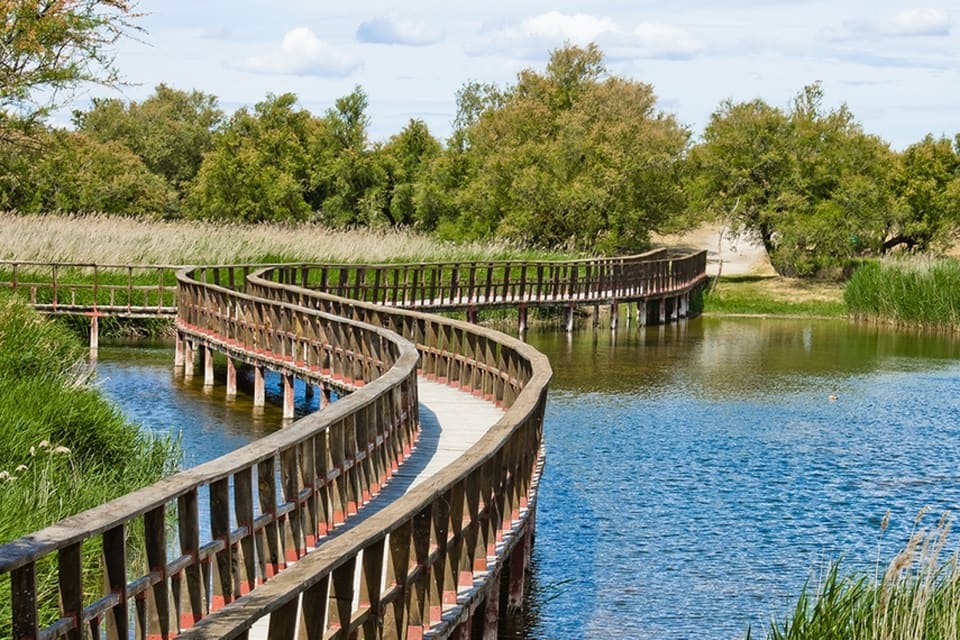
Stepping off the saddle onto the wetland boardwalks
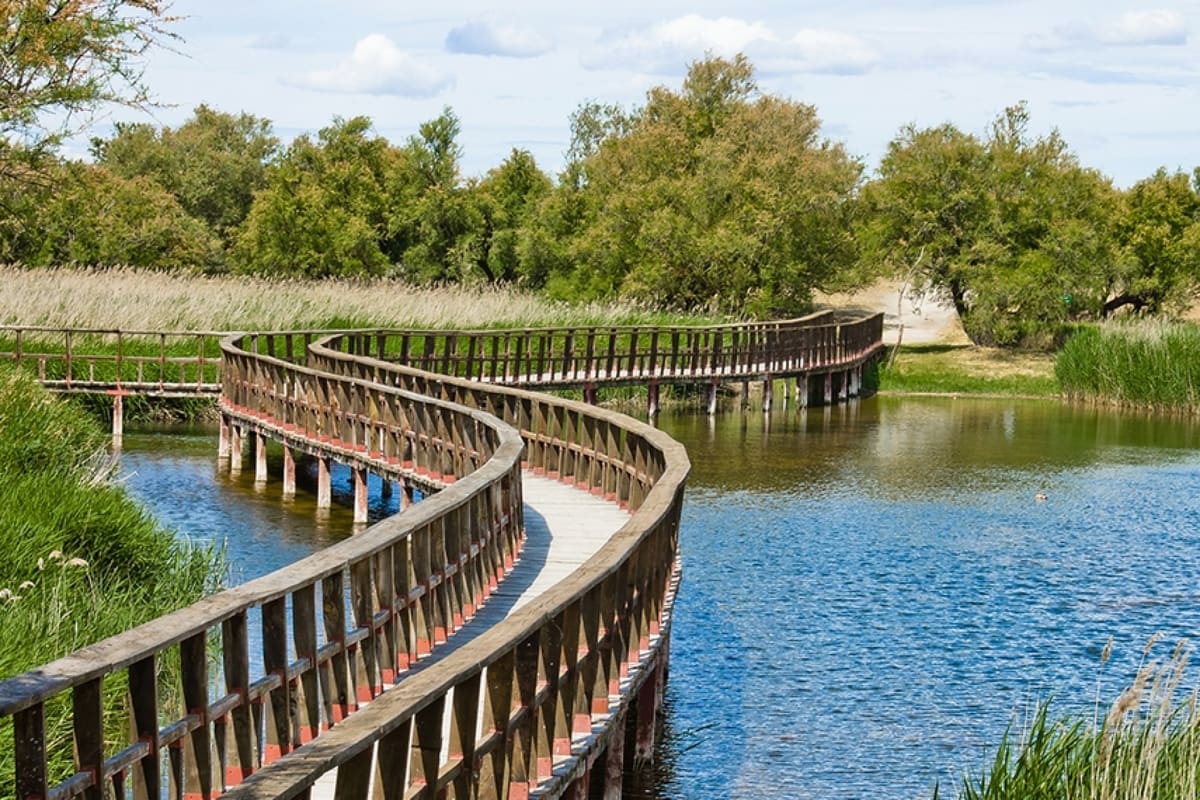
Bicycles are not permitted on the fragile wooden walkways inside the protected wetland core, which makes the transition from cycling to walking a welcome midday change of pace. Riders park securely at the park visitor centre and explore on foot along well-maintained timber bridges linking small marsh islands. Three short walking circuits unfold straight from the entrance:
- Isla del Pan Trail: The classic boardwalk loop crossing wooden footbridges over shallow channels where red-crested pochards, purple herons, and marsh harriers hunt among the reeds.
- Laguna Permanente: A shorter accessible promenade leading to elevated wooden hides overlooking permanent spring-fed pools.
- Torre de Prado Ancho: An observation tower gazing north across the widest sweep of flooded tablas and distant Manchego horizons.
Spending ninety unhurried minutes with binoculars before returning to the bikes turns a riding stage into a genuine wildlife encounter.
Integrating Daimiel into the Ciudad Real Loop
Cadencia Travel Experience anchors Tablas de Daimiel inside our seven-day Ciudad Real Loop, while neighbouring itineraries let travellers expand north towards Toledo or east into higher river canyons.
| Journey | Format & Route | Distance | Elevation Gain | Duration | Bike Options |
|---|---|---|---|---|---|
| Ciudad Real Loop | Private loop (Ciudad Real to Ciudad Real) | 291 km | +2,070 m | 7 days / 6 nights | Road · Gravel · E-bike |
| In the Footsteps of Don Quixote | Scheduled linear (Toledo to Almagro) | 365 km | +2,120 m | 6 stages | Road · Gravel · E-bike |
| From Valdepeñas to Alcalá del Júcar | Private linear (Valdepeñas to Alcalá) | 377 km | +6,590 m | Multi-stage | Road · Gravel · E-bike |
The private Ciudad Real Loop covers 291 kilometres and just +2,070 metres across seven unhurried days and six nights, linking medieval castles, volcanic Campo de Calatrava, Almagro's Renaissance theatre square, and Tablas de Daimiel National Park. Because daily distances stay calm and elevations gentle, travellers spend afternoons soaking up village plazas instead of recovering from exhaustion. Nature enthusiasts who want to experience both major Alto Guadiana wetland systems in Spain can also explore our guide to Lagunas de Ruidera in Spain, situated less than an hour east along the same watershed.
Birdwatching seasons, water levels and when to visit
Water levels inside Tablas de Daimiel fluctuate naturally with Mediterranean rainfall cycles across the upper Guadiana aquifer, making seasonal planning doubly rewarding.
- Spring (March to early June): Peak window for both cycling and wildlife. After winter rains, flooded reed beds teem with nesting herons, grebes, and storks, while surrounding Calatrava plains glow bright green with poppies and young vines.
- Autumn (October and November): Mild daytime temperatures, crisp morning mist hovering over the marshes, and the thrilling arrival of thousands of wintering cranes and wildfowl descending from northern Europe.
- Mornings and dusk: Planning your boardwalk stop early in the morning or in late afternoon brings softer light for photography and far more active birdlife than midday hours.
The Cadencia team monitors local water conditions and birdwatching seasons closely when timing private departures, pairing wetland walks with the most scenic surrounding gravel and tarmac links.
Almagro, local wine and gentle gravel touring
Southern Ciudad Real pairs wildlife with deep Castilian culture at every stop. Almagro, one of Spain's best-preserved historic towns, anchors evening stays with its unique colonnaded Plaza Mayor lined in dark-green wooden galleries and its seventeenth-century Corral de Comedias, the only intact Golden Age open-air theatre still staging classic plays today. Around the table, local gastronomy celebrates seasonal simplicity: braised berenjenas de Almagro (pickled baby aubergines), aged Manchego sheep's cheese, slow-cooked partridge, and expressive regional wines crafted across historic bodegas. Learn more about the vineyards bordering these cycling corridors in our guide to Castilla-La Mancha wine.
Road bikes glide cleanly along the quiet tarmac network, gravel bikes with 40 mm tyres open ochre tracks straight across volcanic valleys, and e-bikes make breezy plains effortless for mixed-ability pairs; explore how electric assistance elevates relaxed touring in our guide to e-bike tours in Spain. Browse all Cadencia cycling journeys or contact our team to tailor a private Ciudad Real Loop around your dates.
Frequently asked questions
Can you ride bicycles inside Tablas de Daimiel National Park?
Bicycles can ride right up to the park's visitor centre via quiet country roads and perimeter gravel tracks, where secure parking awaits. Inside the protected wetland core itself, exploration continues on foot along elevated timber boardwalks to protect nesting birds and fragile marsh vegetation.
How demanding is the Ciudad Real Loop around Tablas de Daimiel?
The Ciudad Real Loop is one of Cadencia's gentlest multi-day itineraries, covering 291 kilometres and +2,070 metres of total climbing across seven days and six nights. Leisure cyclists, couples, and e-bike travellers enjoy steady, unhurried stages with plenty of time for castles, wetlands, and Almagro's cultural evenings.
What is the easiest way to reach Ciudad Real from Madrid?
High-speed AVE trains depart Madrid Atocha frequently and reach Ciudad Real in roughly 55 minutes, offering a seamless car-free arrival from Madrid's city centre or airport connections. Cadencia coordinates local logistics, bike setup, and luggage transfers directly from your arrival.
When is the best time to see migratory birds at Tablas de Daimiel?
Spring (March to May) showcases breeding waterbirds, herons, and vivid green landscapes, while late autumn (October to November) brings wintering ducks, geese, and cranes alongside ideal cycling temperatures across La Mancha.