Guides
Alcalá del Júcar, Spain: Gorge Village by Bike
Explore Alcalá del Júcar in Spain by bicycle: limestone canyon roads, rock-cut cellars, Roman bridge, and the 377 km journey from Valdepeñas.
Cadencia team · · 6 min read
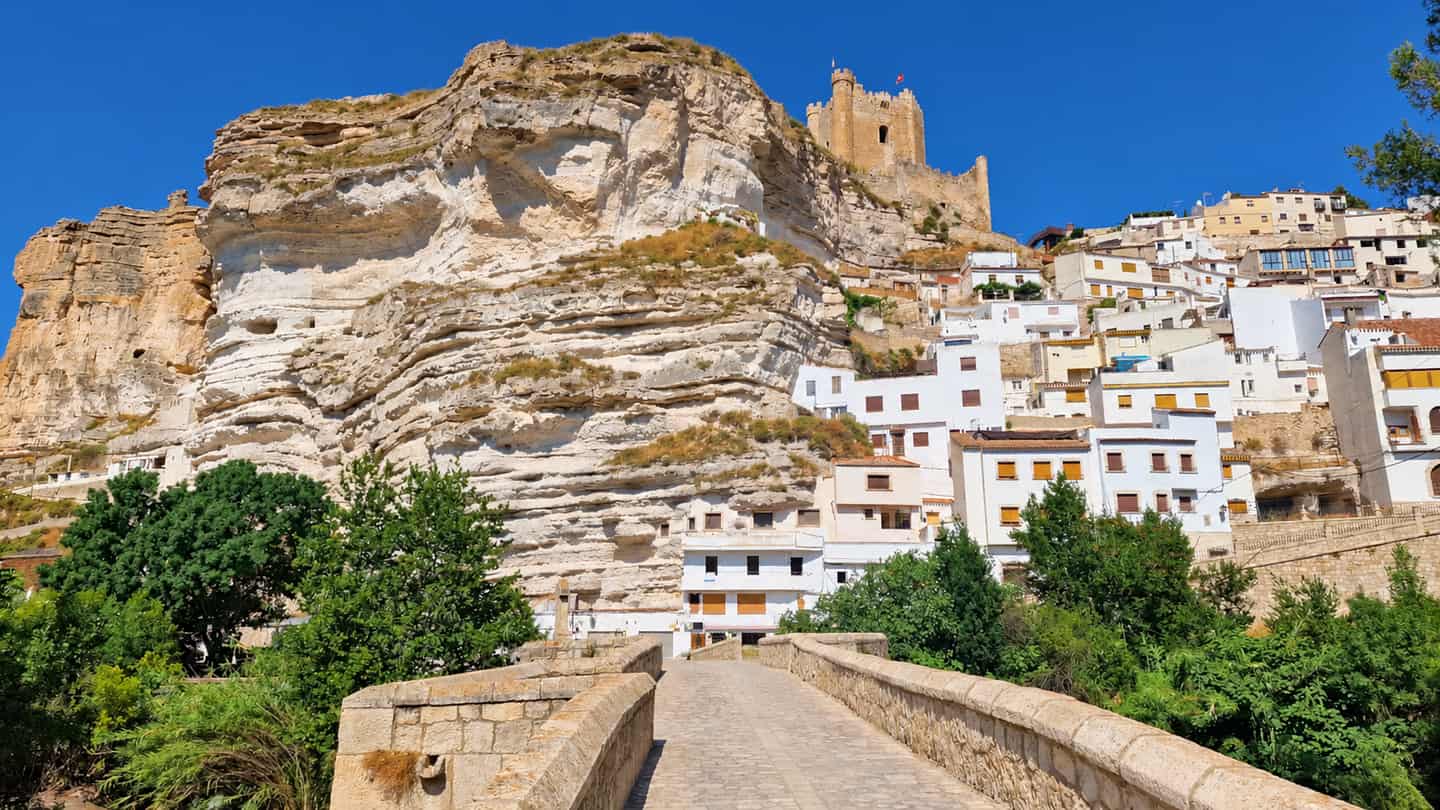
Alcalá del Júcar, Spain, is one of the most visually striking hilltop villages in the country, perched inside a deep horseshoe gorge carved by the Júcar river in northern Albacete. Arriving by bicycle reveals its layered limestone cliffs, medieval castle, and whitewashed houses gradually, turning the final descent into a memorable finish to any inland cycling holiday.
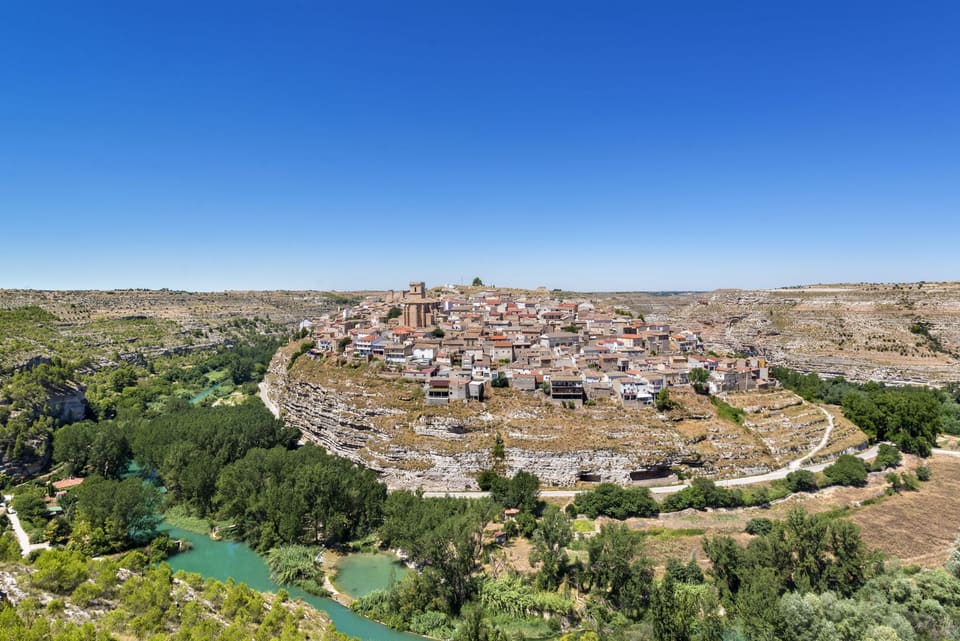
Where Alcalá del Júcar sits in the Júcar canyon
Perched on the eastern edge of La Manchuela, Alcalá del Júcar appears almost without warning when you ride off the high agricultural plateau. For kilometres the horizon looks open, dry, and gently undulating across vineyards and cereal fields, until the terrain drops abruptly into a sheer canyon cut by the river over millennia. Whitewashed homes cling directly to the rock face, stacked in tiers between the stone bridge at the water's edge and the hilltop fortress above. Many dwellings are half masonry and half cave, excavated deep into the porous limestone to insulate residents from both winter cold and August heat.
Cyclists approaching from the north or west gain a rare vantage point that motorists rushing along main highways miss completely. From the upper rim viewpoints, you see the entire river meander wrapping around the rocky spur like a natural moat.
- Elevation contrast: the surrounding plains sit near 750 metres while the river floor drops close to 540 metres, giving short, punchy ramps with expansive views.
- Traffic levels: secondary provincial roads hugging the canyon carry minimal motor traffic, especially between Monday and Friday.
- Architectural harmony: declared a Historic-Artistic Site in 1982, the village preserves its medieval layout, stone bridge, and irregular bullring carved into the hillside.
Arriving by bicycle from Valdepeñas
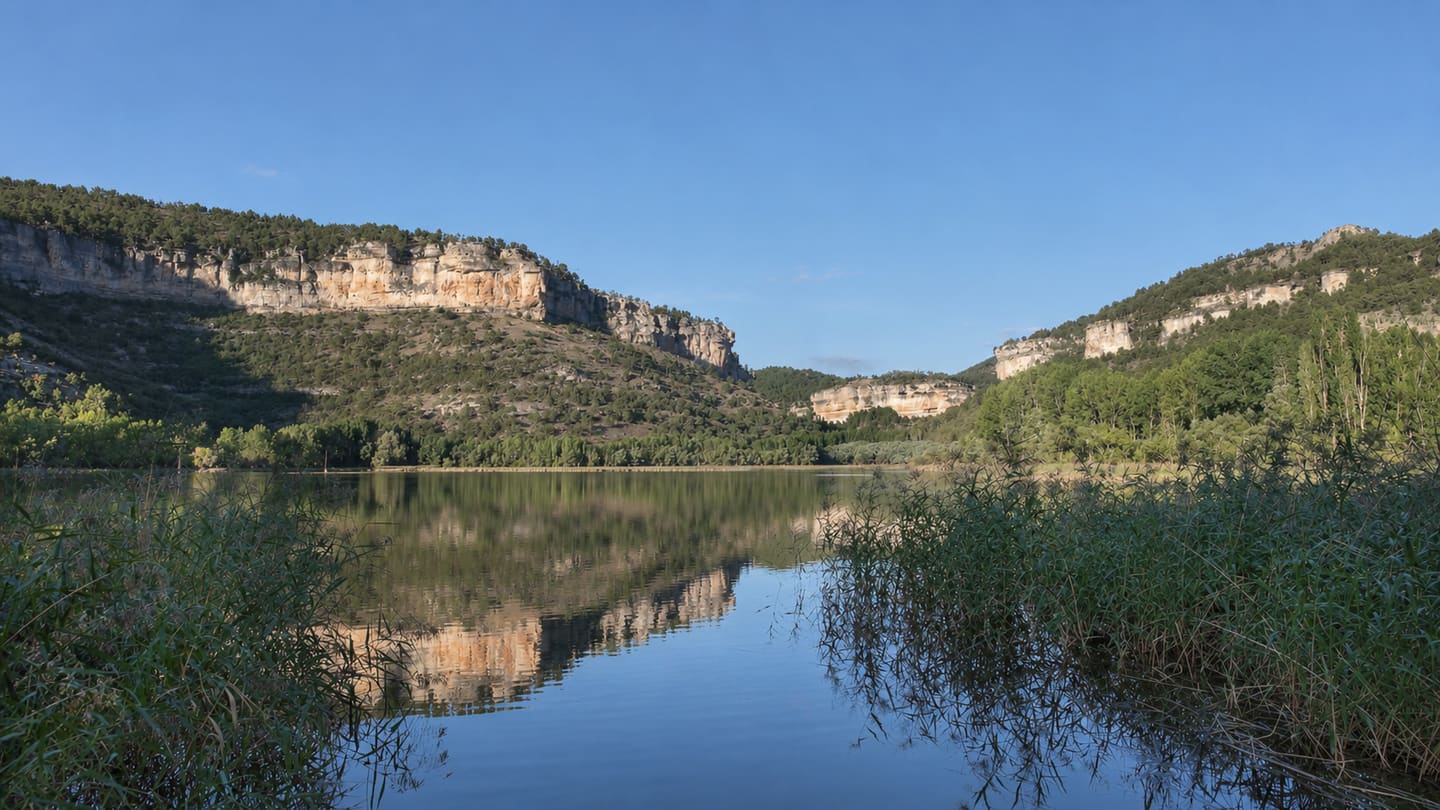
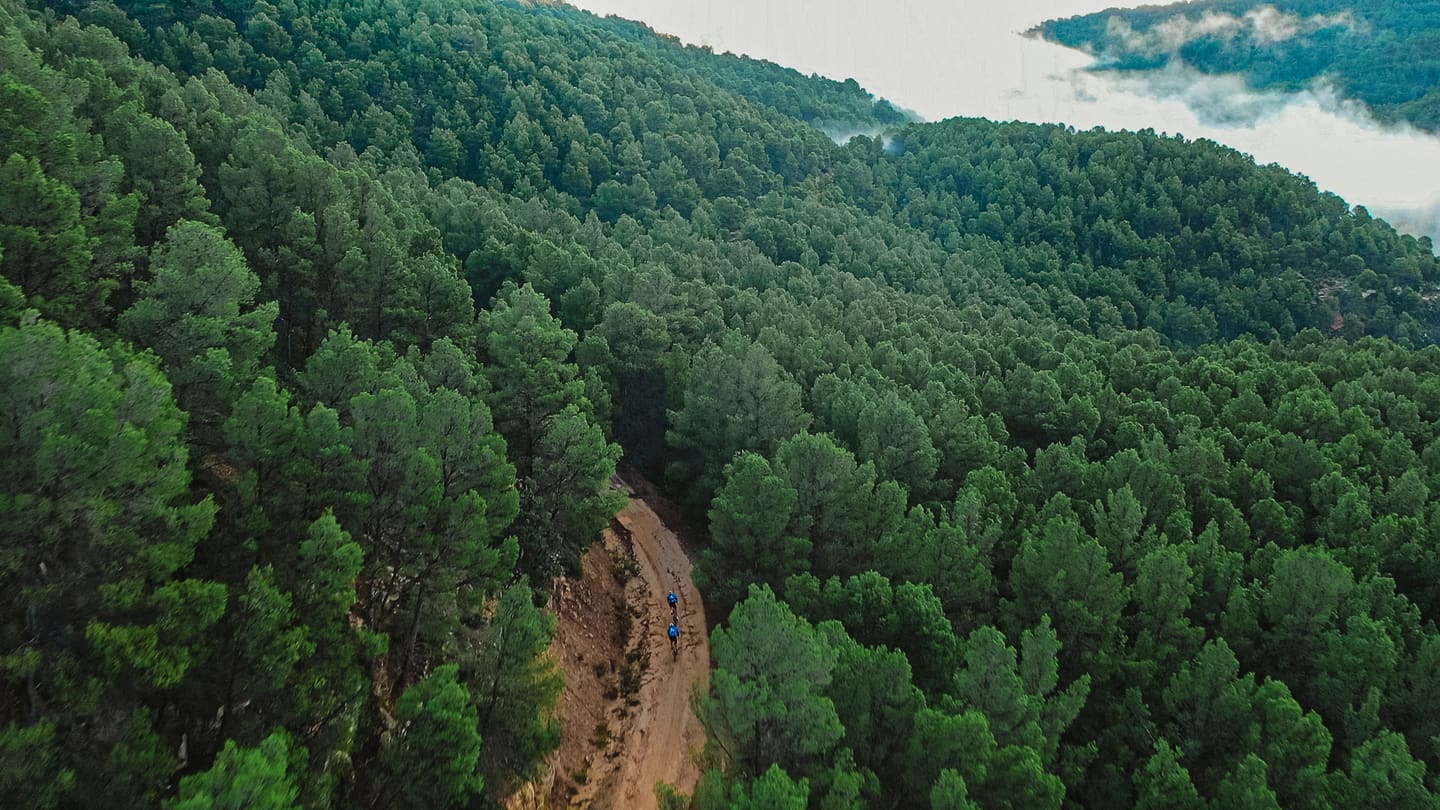
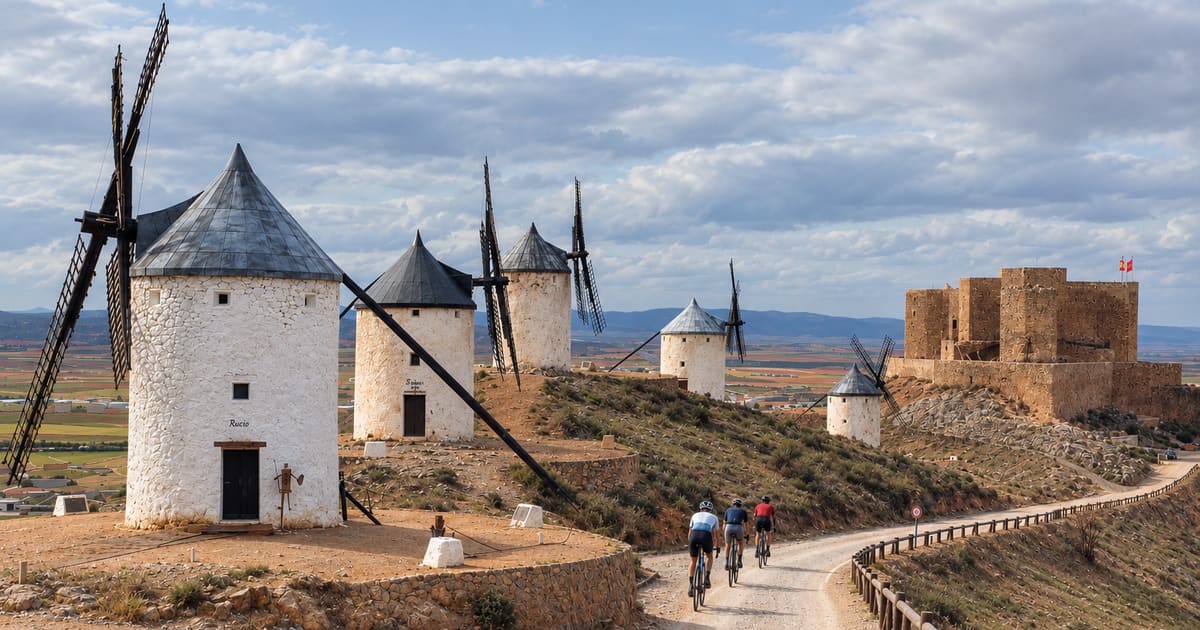
Riding straight into the gorge as the climax of a multi-day crossing elevates the arrival far beyond a quick sightseeing stop. On the private Valdepeñas to Alcalá del Júcar journey, riders cover 377 kilometres and 6,590 metres of climbing from the classic wine plains of Ciudad Real across the turquoise lakes of Lagunas de Ruidera and the forested ridges of the Río Mundo Natural Park before dropping into the Júcar canyon. Because the route welcomes road bikes, gravel bikes, and e-bikes, every cyclist can experience that gradual geographic transformation at a comfortable cadence. Early stages roll past red-earth vineyards and olive groves, middle days climb through pine-scented sierras, and the finale sweeps down smooth tarmac and quiet backroads towards the river.
Cadencia Travel Experience designs the pacing so travellers reach the gorge with fresh legs rather than exhausted muscles. Luggage travels ahead in the support vehicle, mechanical assistance stays on hand, and every stage is planned around the best light and road surfaces.
Rock-cut cellars, castle, and cobbled quarters
Walking the steep pedestrian alleys after stepping off the saddle lets you appreciate how closely geology shaped daily life here. Every corner reveals arches, whitewashed stairways, and cantilevered balconies overlooking the green strip of poplar trees beside the Júcar. Several historic landmarks stand within an easy fifteen-minute walk of the river bridge:
- The Almohad fortress: rising at the crest of the spur, the medieval castle dates back to the twelfth century and commands 360-degree views along the canyon walls.
- The Roman-style stone bridge: rebuilt across the centuries as a key customs crossing between Castile and the Levant, the bridge links the riverside promenade with the lower quarter.
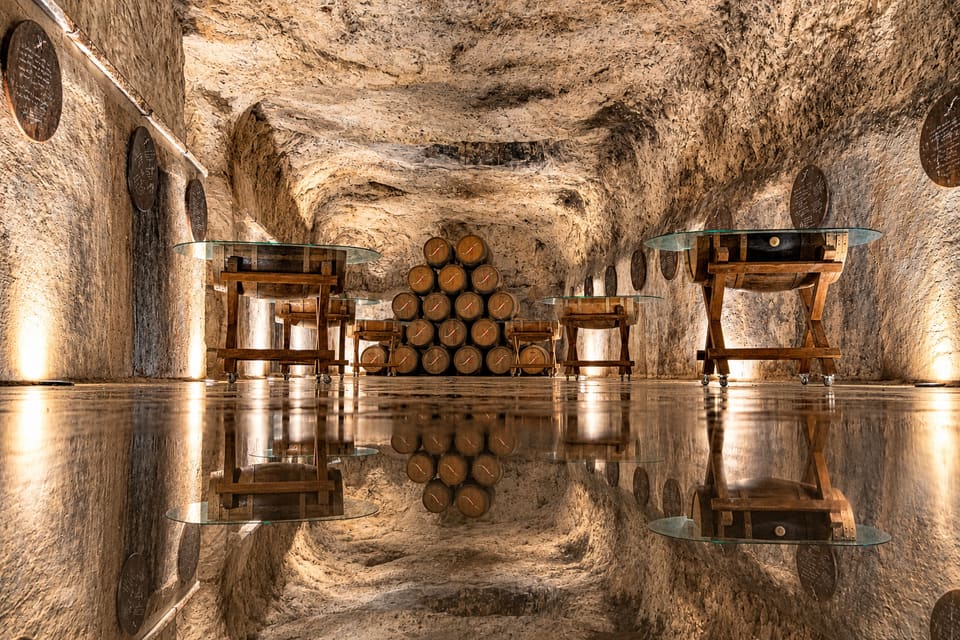
- Rock-hewn caves and tunnels: subterranean passages such as Cueva del Diablo and Cueva de Masagó bore straight through the promontory from one side of the mountain to the other, opening onto vertigo-inducing terraces above the gorge.
- Underground wine cellars: cool chambers chipped into the stone showcase how local growers stored and matured wine long before modern temperature control existed.
Exploring these cellars connects naturally with the broader story of Castilla-La Mancha wine, as neighbouring Manchuela vineyards produce expressive Bobal reds and crisp whites nourished by high altitude and limestone soils.
Best seasons and riding conditions in the Júcar gorge
Seasonal planning makes a noticeable difference in inland Spain because altitude and continental air create sharp contrasts between spring freshness and high-summer warmth. Spring and autumn consistently deliver the finest balance of daylight, mild temperatures, and vibrant canyon colours.
| Season | Typical riding feel | Canyon scenery | Recommended focus |
|---|---|---|---|
| Spring (April to June) | Crisp mornings, mild afternoons around 18 to 25 °C | Full river flow, green vineyards, wildflowers on cliff ledges | Road, gravel, or e-bike multi-day crossings |
| Early Summer (late June) | Warm midday sun, long golden evenings | Deep shadows in the gorge, bright terracotta roofs | Early starts with relaxed afternoon cave visits |
| Autumn (September to November) | Stable dry skies, cool breezes after harvest | Golden poplars beside the river, ochre vines on the plateau | Wine harvest tastings and long scenic climbs |
| Winter (December to February) | Cold mornings, crisp sunny middays | Quietest streets, stark limestone contrast | Short private winter escapes with warm layers |
Midday July and August heat can feel intense on exposed plateau stretches before you drop into the shaded valley. Travellers preferring effortless comfort on warm climbs often opt for an e-bike, keeping heart rates steady across the 6,590 metres of cumulative elevation without losing the satisfaction of pedalling every kilometre.
Linking Alcalá del Júcar with a longer Castilla-La Mancha tour
Alcalá del Júcar shines brightest when woven into a broader itinerary rather than treated as an isolated day trip. Because the village sits roughly two and a half hours southeast of Madrid by road or under an hour from Albacete's high-speed AVE train station, international travellers can step off a train from Madrid or Valencia and begin riding with minimal transfer time. Gravel enthusiasts drawn to quiet white-stone tracks can pair the eastern canyons with broader gravel cycling in Spain, exploring empty agricultural lanes and limestone ridges across Castilla-La Mancha. Road riders looking for punchy climbing and low-traffic asphalt can combine the southern route with northern mountain loops through the Serranía de Cuenca or Alto Tajo.
Browse our complete collection of curated cycling journeys to compare linear crossings and circular loops across the region. When you are ready to tailor dates, bike selection, and private guiding around your group, reach out via our contact page to begin shaping your itinerary directly with our team.
Frequently asked questions
How difficult is cycling to Alcalá del Júcar?
Cycling into Alcalá del Júcar involves rolling terrain and short, steep ramps around the canyon rim rather than Alpine-length mountain passes. On the private Valdepeñas to Alcalá del Júcar journey, the 377 kilometres and 6,590 metres of climbing are divided into balanced stages, with road, gravel, and e-bike options available to match different fitness levels.
What are the must-see landmarks inside Alcalá del Júcar?
Visitors should not miss the medieval castle crowning the rock spur, the stone bridge spanning the Júcar river, and the subterranean rock-cut caves tunnelling straight through the cliff. The whitewashed alleys leading up to the church of San Andrés and the hillside viewpoints looking back across the meander complete the walk.
When is the best time of year to visit Alcalá del Júcar by bicycle?
April through June and September through early November offer the most enjoyable cycling conditions, combining comfortable daytime temperatures with clear visibility across the gorge. Autumn brings the added reward of golden poplar foliage along the riverbanks and post-harvest calm in nearby Manchuela vineyards.
How do international travellers reach Alcalá del Júcar from Madrid?
High-speed AVE trains connect Madrid Atocha with Albacete in roughly ninety minutes, placing riders within a straightforward private transfer of the gorge or the Valdepeñas start point. Cadencia Travel Experience coordinates all private transfers and luggage logistics so travellers move smoothly from train station to saddle.