Deep dives
Cycling Holidays in Spain: Complete Planning Guide
Plan unforgettable cycling holidays in Spain: seasons, regions, terrain, bike choices, packing and curated Castilla-La Mancha itineraries from Madrid.
Cadencia team · · 6 min read
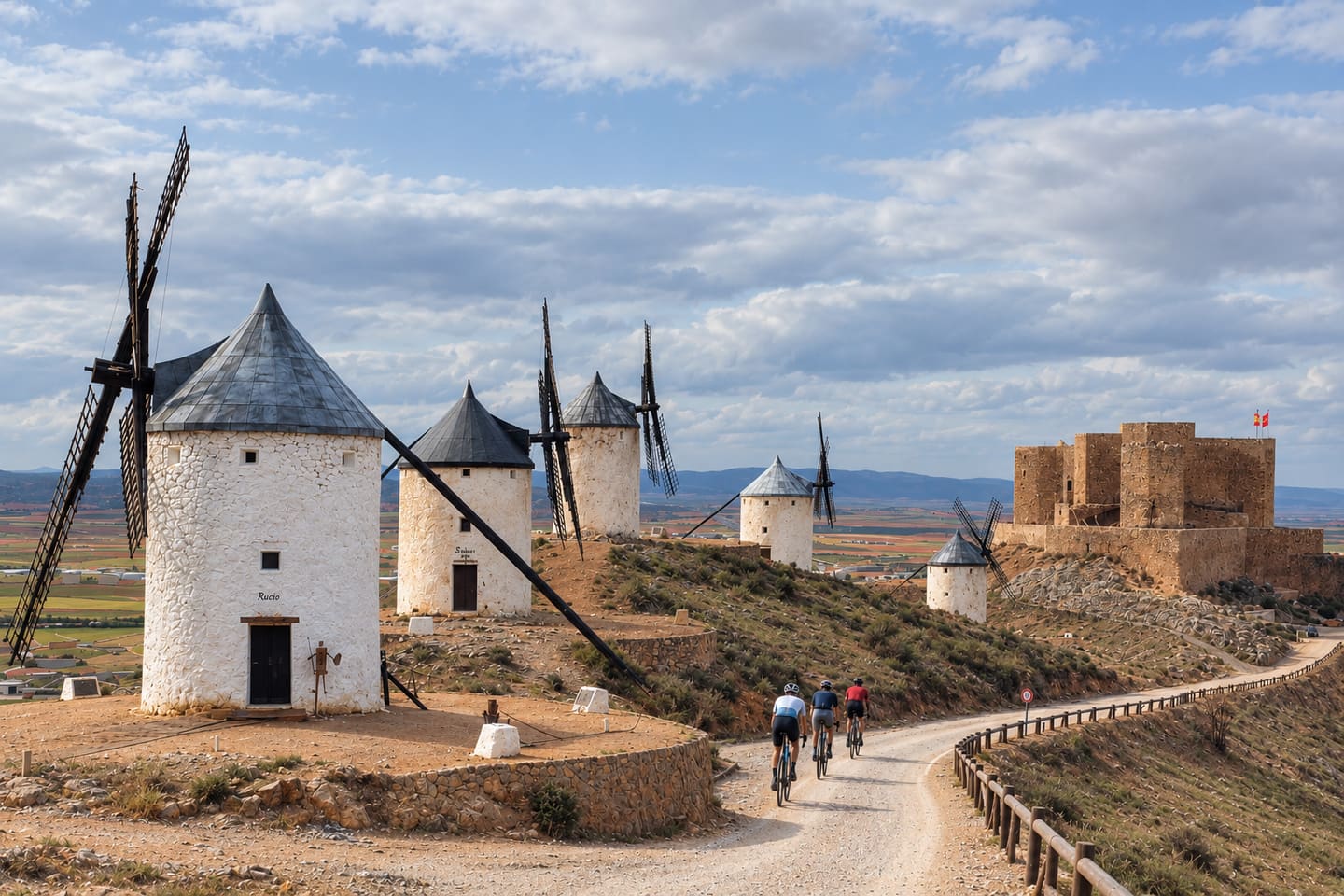
Cycling holidays in Spain combine dry Mediterranean light, quiet backroads, varied terrain and deeply rooted food culture across spring, autumn and mild highland summers. While coastal islands draw crowds, central Spain's Castilla-La Mancha gives international riders immediate access from Madrid to medieval towns, volcanic valleys, limestone gorges and traffic-free road and gravel networks.
Why central Spain deserves top billing on your calendar
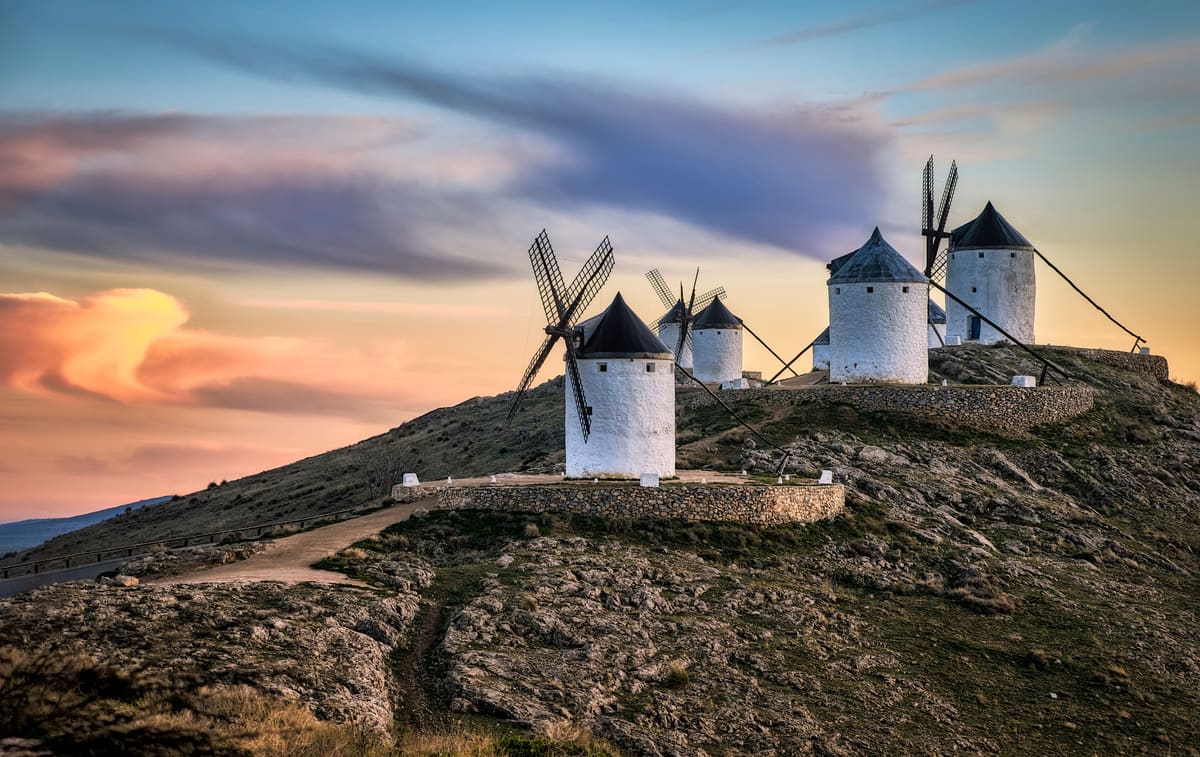
Most cyclists planning a Spanish holiday look straight at Girona, Mallorca or Andalusia. Those places have their charms, yet anyone who rides just sixty to ninety minutes south or east of Madrid discovers a quieter, far more surprising country. Castilla-La Mancha spans dramatic shifts in elevation and geology. One morning you glide beneath the hilltop windmills of Consuegra on In the Footsteps of Don Quixote; two days later you could be tracing 200-metre limestone canyons inside Alto Tajo Natural Park, a 105,721-hectare UNESCO Global Geopark.
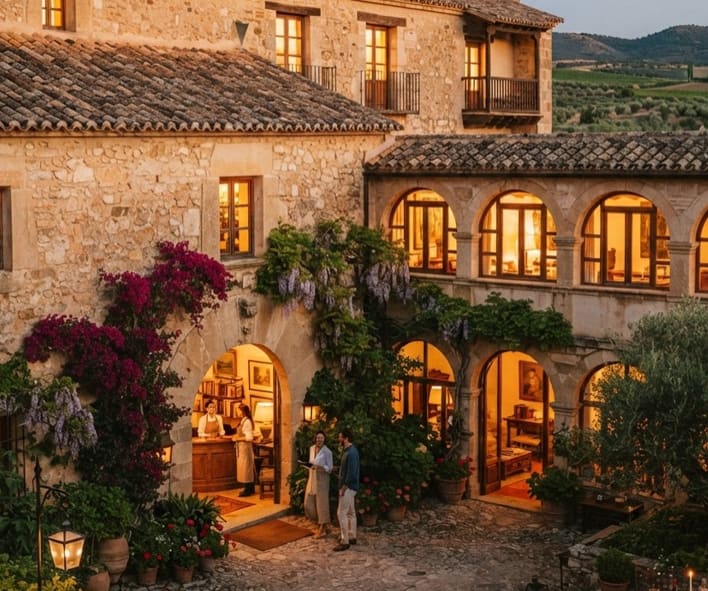
Traffic levels remain strikingly low across rural provincial roads, and drivers across Spain observe mandatory wide overtaking clearances with calm courtesy. Paired with crisp dry air and expansive horizons, days in the saddle settle into an unhurried rhythm. Local design also shapes every detail of the riding day. Rather than stringing together main highways between big hotels, Cadencia routes stages along backroad ridgelines, quiet river valleys and hard-packed limestone tracks where cafés still serve fresh orange juice and toasted bread with olive oil to village neighbours.
Seasons, temperatures and wind across the Iberian plateau
Elevation governs the weather in interior Spain, keeping humidity low and evenings pleasantly cool even after sunny afternoons. Choosing the right window lets you match daylight hours and floral seasons to your preferred terrain.
| Season | Typical Conditions | Landscape Highlights | Best Matching Journeys |
|---|---|---|---|
| Spring (April to June) | Mild mornings, warm sunny afternoons | Green plains, full lagoons at Ruidera, wildflowers | Don Quixote, Ciudad Real Loop |
| Early Summer (Late June to July) | Warm dry days, cool highland mornings | Brihuega lavender bloom, long daylight | Alcarria Tour, Alto Tajo |
| Autumn (Mid-Sept to Nov) | Crisp starts, golden afternoon sun | Grape harvest in Valdepeñas, russet canyon poplars | Sigüenza to Cuenca, Valdepeñas to Alcalá del Júcar |
| Late Autumn / Mild Winter | Bright dry days, cool mornings | Quiet historic cities, crisp visibility | Private custom short escapes |
Wind occasionally sweeps across open La Mancha plains, which is where thoughtful route direction pays off. Locally designed itineraries like those curated by the Cadencia Travel Experience team align stage starts and coffee stops with typical afternoon breezes and shaded climbs.
Comparing Spain's classic cycling regions with Castilla-La Mancha
Understanding how central Spain compares with better-known hubs helps you choose the holiday style that fits your travel goals. Rather than base-camp loops returning to the same coastal resort hotel, Cadencia favours point-to-point journeys and deep regional loops where the scenery evolves every afternoon.
- Terrain variety: Flatter cultural stages such as the Ciudad Real Loop (291 km, +2,070 m over seven days) sit alongside serious mountain playgrounds like Serranía de Cuenca (231 km, +5,860 m across three days), home to Priego, the birthplace of 1973 Tour de France winner Luis Ocaña.
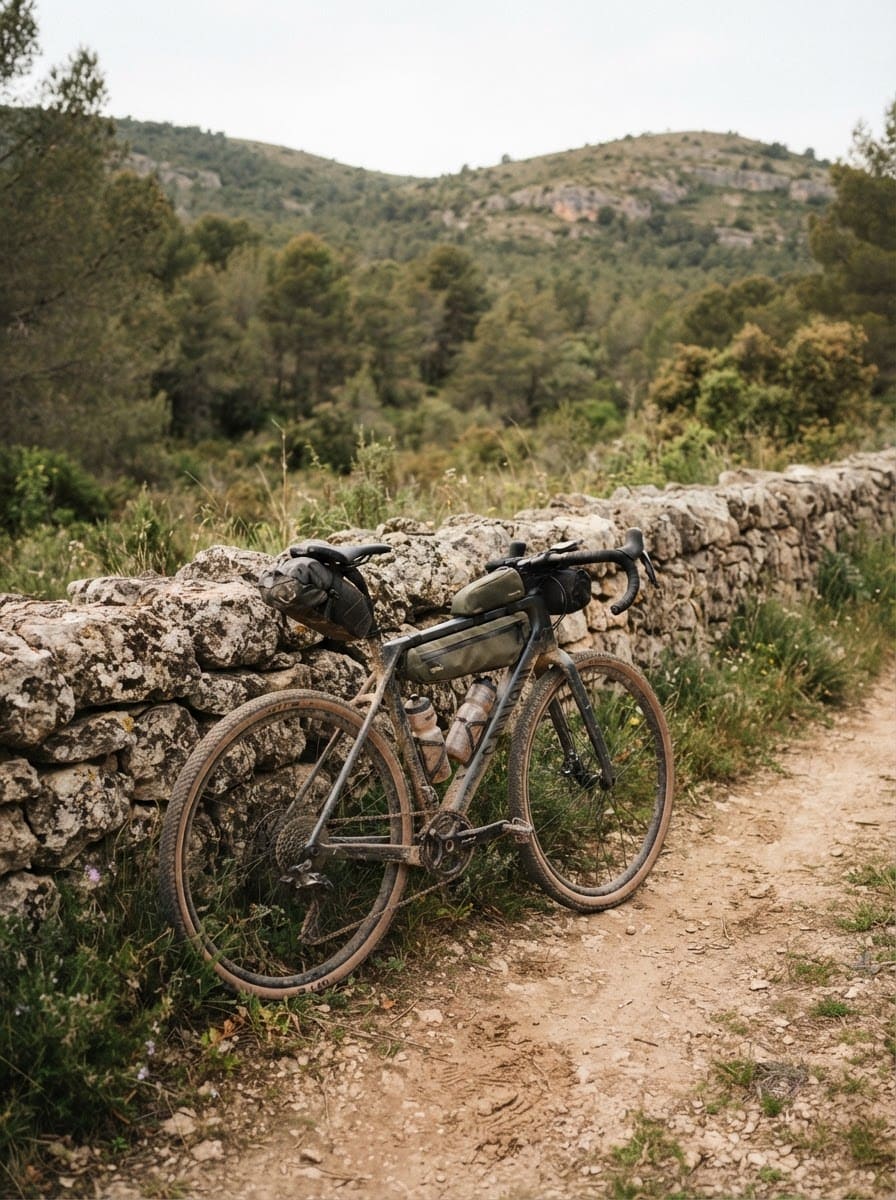
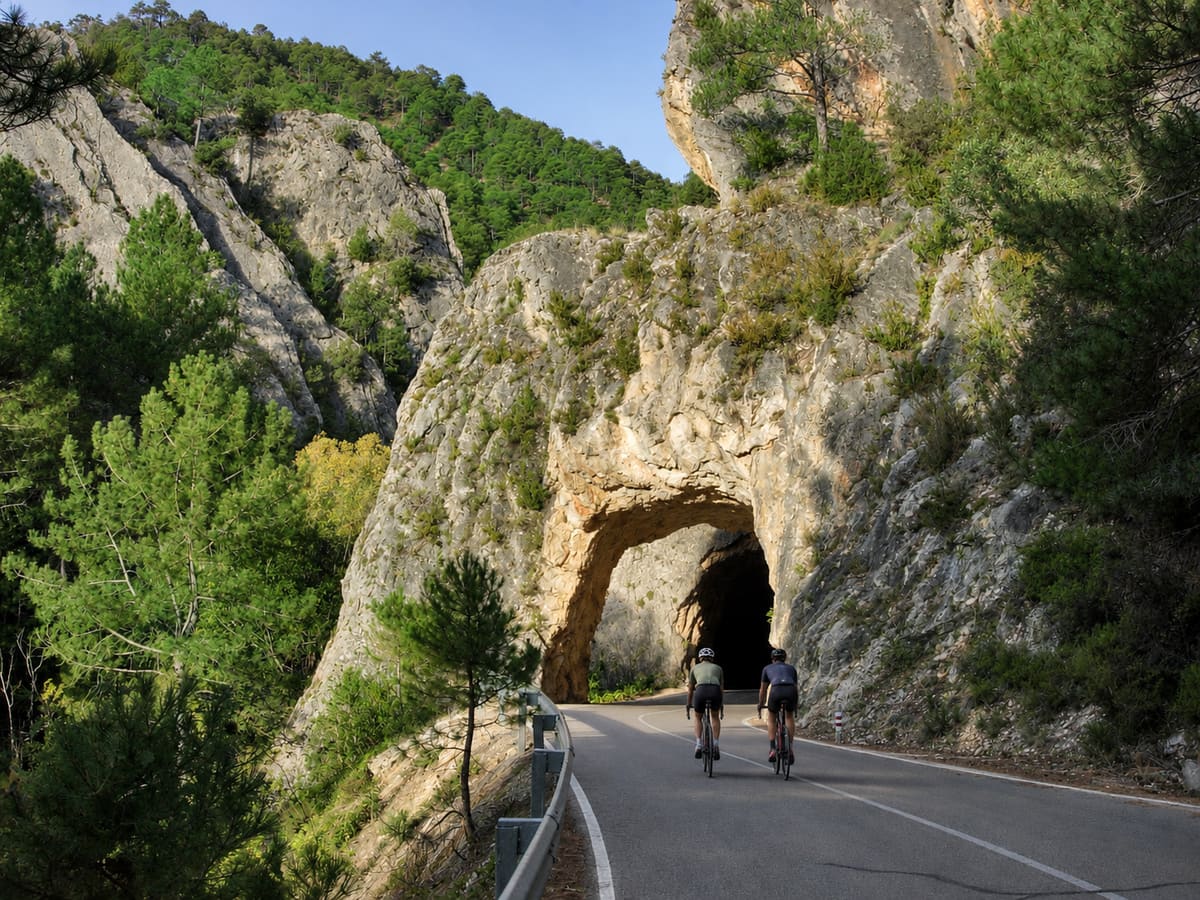
- Bike versatility: Road cyclists enjoy immaculate mountain tarmac through rock-cut tunnels, while gravel enthusiasts link endless hard-packed tracks. Decide between tyres and frame styles with our gravel bike vs road bike for touring guide.
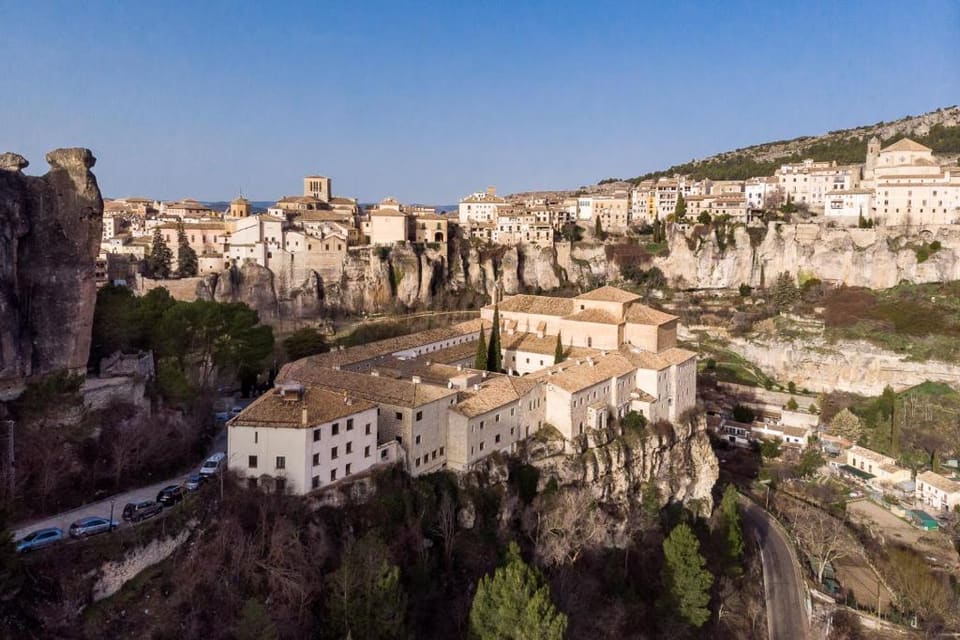
- Authenticity without crowds: Villages feel lived-in rather than staged for tourists. Plaza squares fill with neighbours at dusk, and historic towns such as Almagro, Sigüenza and Cuenca reward slow evening walks.
Looking for inspiration across specific routes? Browse our complete collection of journeys or read how cycling near Madrid turns even a four-day break into a real expedition.
From Madrid airport to the first pedal stroke
International connectivity makes central Spain remarkably straightforward for guests flying in from London, Northern Europe, the United States, Canada or Australia. Madrid Barajas Airport offers direct long-haul arrivals without awkward island ferry links or secondary domestic flights. High-speed AVE trains connect central Madrid to Toledo, Cuenca and Ciudad Real in under an hour, while road transfers reach Brihuega, Sigüenza or Trillo swiftly. Riders avoid losing two full holiday days to airport shuttles and bike box queues.
Preparation stays simple too. Layering a lightweight gilet and arm warmers handles cool plateau mornings before skies warm up by eleven o'clock. Check our practical cycling tour packing list so nothing essential stays behind and nothing unnecessary weighs down your bag.
Typical days follow a relaxed Mediterranean cadence. Breakfast begins unhurriedly around eight, bags roll into the support van before departure, and cyclists set out during the crispest morning light. Mid-morning brings a village coffee stop, early afternoon delivers you to your next historic town for lunch and rest, and evenings unfold slowly over local wine and regional dishes.
Vineyards, castles and evenings that complete the ride
Cycling across Spain works best when every stage ends somewhere worth exploring on foot. Castilla-La Mancha packs centuries of architecture, literature and winegrowing into towns that retain human scale. On In the Footsteps of Don Quixote, riders travel 365 kilometres from imperial Toledo to Almagro's green-galleried Plaza Mayor, pausing at Argamasilla de Alba's Cueva de Medrano and swimming beside the travertine lakes of Lagunas de Ruidera. Further south, De Valdepeñas a Alcalá del Júcar links historic wine estates with Río Mundo Natural Park before dropping into cliff-carved Alcalá del Júcar.
Evening hospitality anchors each journey. Handpicked properties include the Parador de Cuenca, the Parador de Molina de Aragón (opened in 2025) and Real Balneario Carlos III de Trillo. On Cuenca routes such as Serranía de Cuenca to Molina de Aragón, guests celebrate with dinner at Casas Colgadas, where chef Jesús Segura holds a Michelin star. Support vans carry luggage daily, keep drinks cold and handle mechanical tweaks silently behind the scenes. To explore regional vintages before you fly, see our Castilla-La Mancha wine guide, or request a bespoke itinerary dossier through the Cadencia contact page.
Frequently asked questions
How many days should I allow for a cycling holiday in Spain?
Long weekends of three to four days work brilliantly for compact loops such as the Alcarria Tour (174 km) or Alto Tajo (220 km) thanks to quick transfers from Madrid. For a deeper point-to-point journey across changing landscapes, five to seven days lets you settle into the rhythm of the territory.
What daily distances are typical on a Cadencia cycling holiday?
Daily stages generally range between 45 and 80 kilometres depending on elevation gain and cultural stops. Routes are paced so riders finish by early or mid-afternoon with generous time for lunch, historic sightseeing and rest before dinner.
Should I bring my own bicycle or use a locally provided bike?
Riders are welcome to bring their own trusted bike or choose a properly fitted road, gravel or e-bike arranged locally. Travelling without a bulky bike box simplifies rail connections in Madrid and works especially well if you combine cycling with city sightseeing.
Are cycling holidays in Castilla-La Mancha suitable for non-racing leisure cyclists?
Leisure cyclists form the core of Cadencia's guests. Journeys focus on landscape, gastronomy and personal rhythm rather than average speed, with gentler itineraries like Don Quixote (+2,120 m) and e-bike options ensuring steep highland routes stay enjoyable for everyone.