Comparisons
Gravel Bike vs Road Bike for Touring: How to Choose
Gravel bike vs road bike for touring in Spain: compare comfort, speed, gearing, luggage and terrain across Castilla-La Mancha's roads and tracks.
Cadencia team · · 6 min read
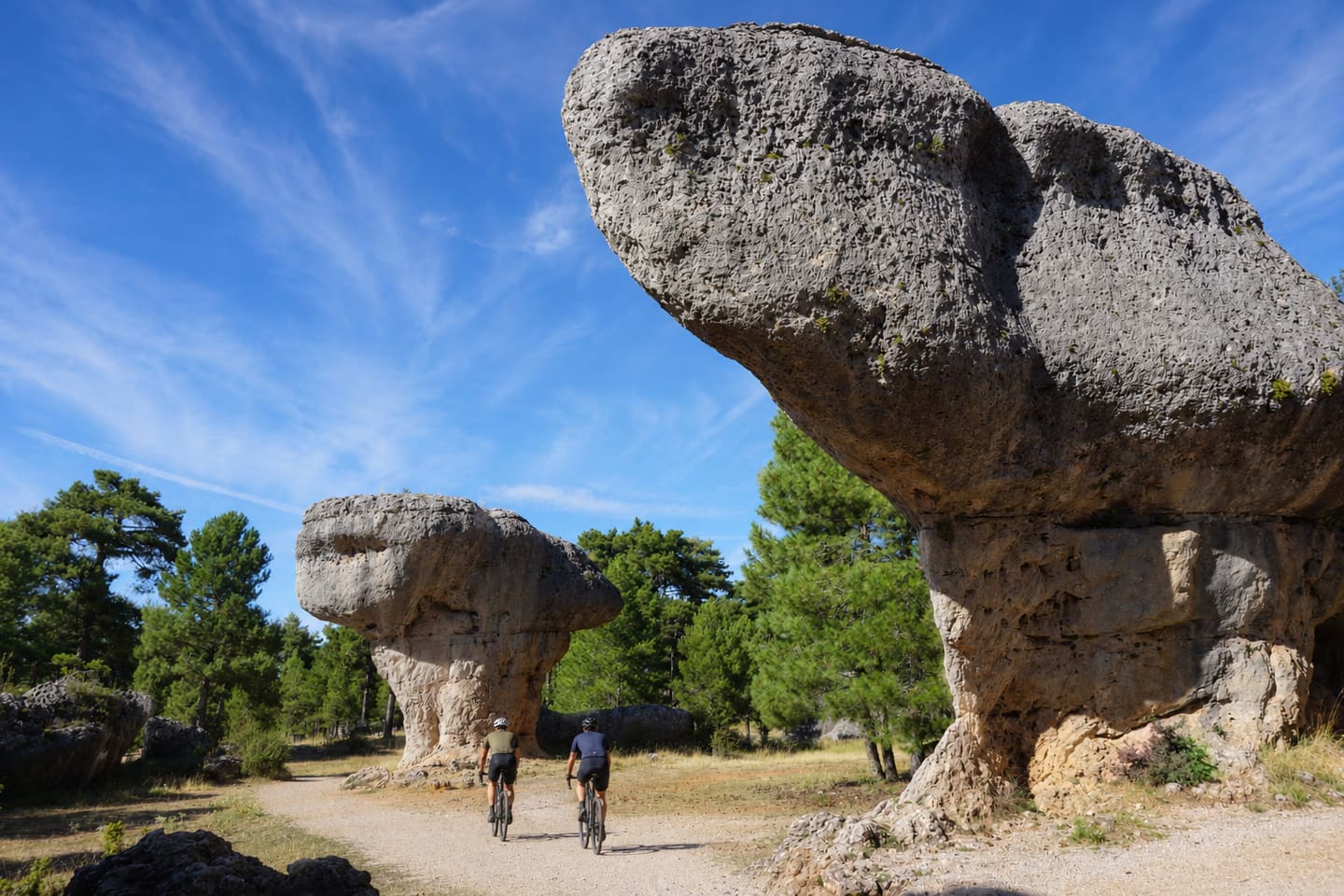
Choosing between a gravel bike and a road bike for touring comes down to surface variety, daily distance and how much vibration you want to absorb over consecutive days in the saddle. Road bikes deliver crisp climbing efficiency on smooth tarmac, while gravel bikes unlock forestry tracks, wider gearing and extra all-day comfort without feeling slow.
What actually separates a gravel bike from a road bike
Modern endurance road bikes and race-oriented gravel frames share drop handlebars, hydraulic disc brakes and relaxed head angles, yet four mechanical choices produce a noticeably different ride across a five-day tour.
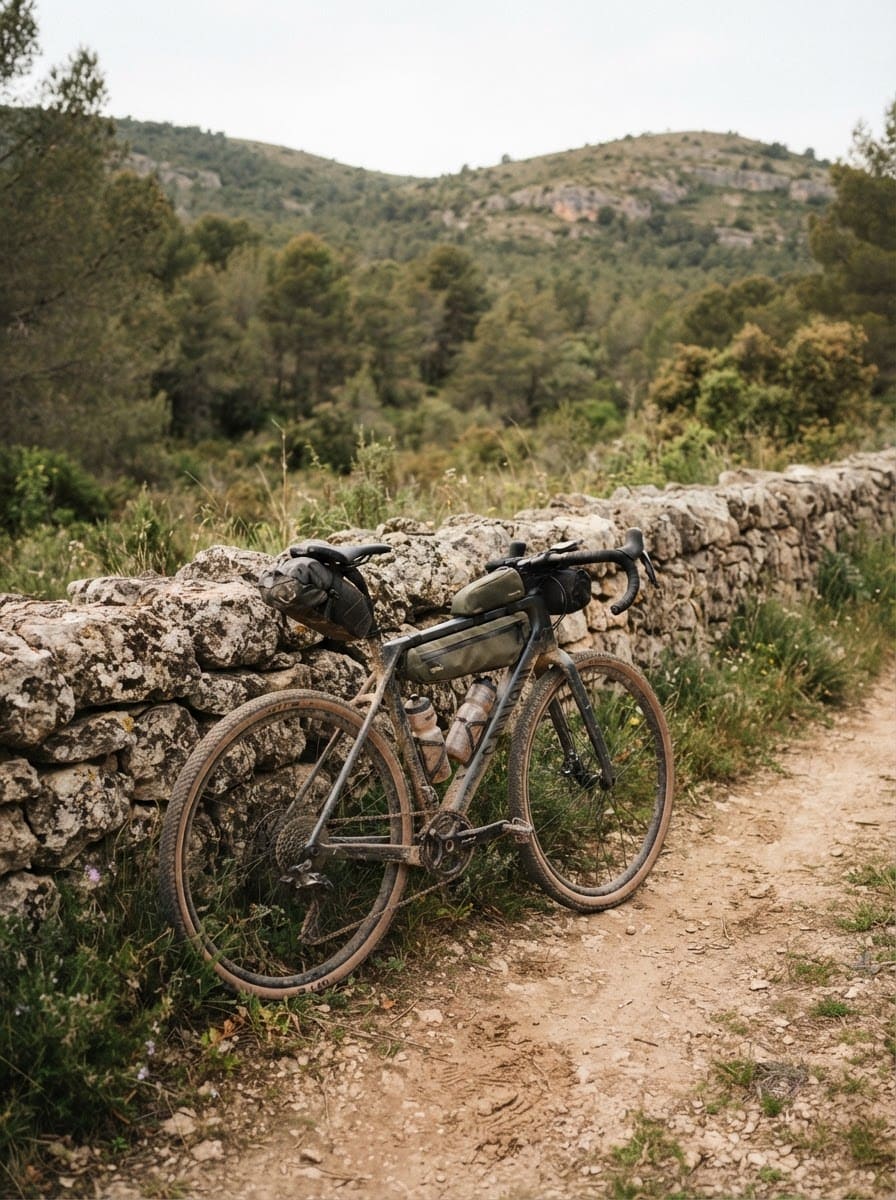
- Tyre clearance: Road bikes typically accept 28 mm to 34 mm tyres. Gravel frames clear 40 mm to 50 mm rubber, allowing much lower pressures over rough chip-seal, cobbles and limestone tracks.
- Frame geometry: Gravel designs use a slightly longer wheelbase, lower bottom bracket and slacker fork angle for calm, predictable tracking when loose stones appear mid-corner.
- Drivetrain range: Touring road setups favour closer gear jumps such as 50/34T paired with an 11-34T cassette. Gravel bikes push easier ratios down to 1:1 or lower so steep dirt ramps stay seated and smooth.
- Mounting options: Gravel forks and frames carry extra bosses for third bottle cages or top-tube packs, useful even on supported tours when villages sit far apart.
Side-by-side comparison for multi-day touring
Evaluating each platform across real touring conditions clarifies the trade-offs faster than brochure weight claims. The table below weighs both bikes across seven practical dimensions.
| Touring Factor | Gravel Bike (40 to 45 mm tyres) | Endurance Road Bike (28 to 32 mm tyres) |
|---|---|---|
| Rolling speed on smooth tarmac | 1 to 2 km/h slower at equal effort | Fastest and liveliest acceleration |
| Comfort after 5+ hours | High vibration damping on rough surfaces | Crisp on good tarmac, firmer on broken lanes |
| Climbing gearing | Very wide range, forgiving on 12%+ pitches | Tighter cadence steps on steady 5 to 8% climbs |
| Surface freedom | Tarmac, limestone tracks, cobbles, forestry roads | Paved highways and secondary tarmac only |
| Descending confidence | High grip on dust, grit and damp corners | Razor-sharp line holding on clean asphalt |
| Luggage and bottle capacity | Extra frame bosses and stable loaded handling | Best kept light with vehicle luggage support |
| Ideal Cadencia fit | Cuenca to Molina, Alto Tajo, Alcarria, Quixote | Alto Tajo by Road, Serranía de Cuenca, Sigüenza to Cuenca |
When a road bike is the smarter touring choice
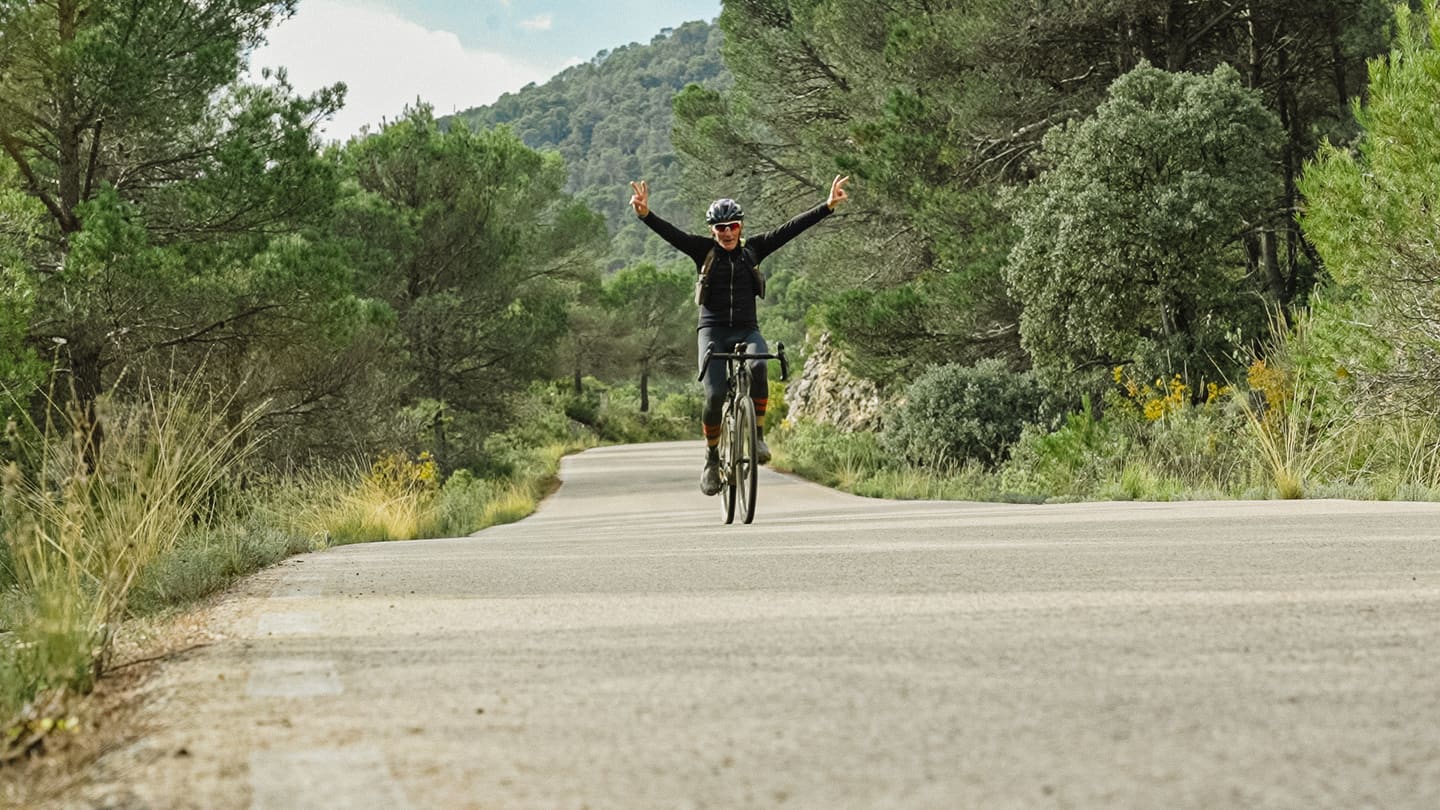
Pure tarmac riders who relish rhythmic cadence, effortless speed on rolling valley roads and sweeping mountain descents remain happiest on an endurance road bike. Where local asphalt is quiet and well surfaced, carrying chunky knobbly tyres adds rolling drag you do not need.
Inland Spain rewards road purists surprisingly well. On Alto Tajo by Road, 218 km and +2,950 m of silky provincial tarmac wind past the Puente de San Pedro between the Real Balneario Carlos III de Trillo and two consecutive nights at the Parador de Molina de Aragón. Every kilometre stays paved, letting 30 mm slicks sing through pine canyons. Read our broader guide to road cycling in Spain for more paved mountain itineraries.
Endurance road frames also suit high-elevation climbing weeks where saving a kilogram on the bike feels tangible by afternoon three. Pairing 32 mm tubeless road tyres with an 11-34T cassette softens rural Spanish chip-seal while preserving unmistakable road-bike snap.
When a gravel bike transforms the journey
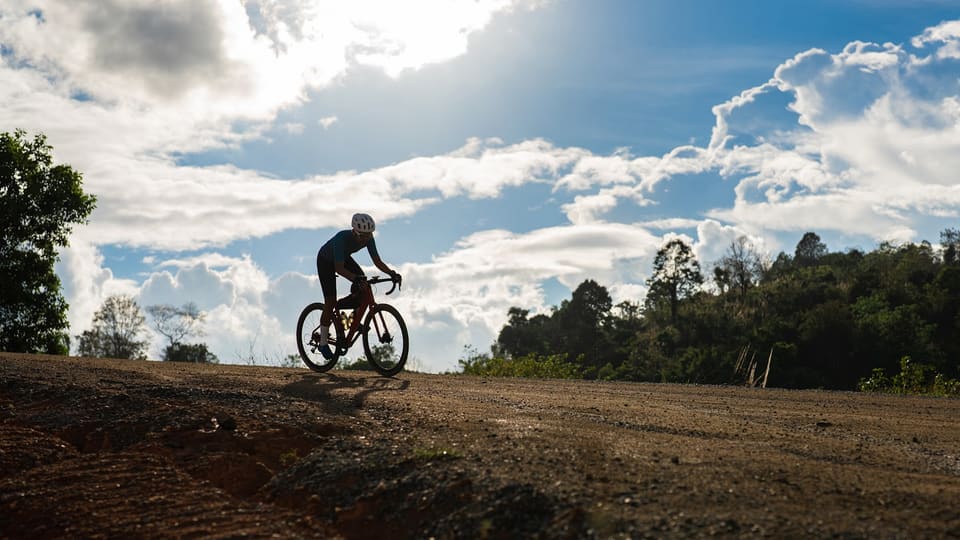
Gravel bikes earn their place the moment an itinerary weaves between medieval cobblestone streets, vineyard tracks, river forestry roads and secondary lanes. Rather than stopping when tarmac ends, you roll straight into landscapes cars never reach. Nowhere is that contrast clearer than on Serranía de Cuenca to Molina de Aragón. Covering 198 km and +5,290 m across 5 days and 4 nights, the journey links the Parador de Cuenca, Michelin-starred dinner at Casas Colgadas by Jesús Segura, the Ventano del Diablo, Ciudad Encantada, the source of the Río Cuervo and two nights in Peralejos de las Truchas before reaching the Parador de Molina de Aragón. Riding a gravel bike here lets you drop onto quiet karst forest tracks beside the river while still climbing paved mountain passes comfortably.
Similarly, the 174 km Alcarria Tour from Brihuega and the 365 km In the Footsteps of Don Quixote traverse from Toledo to Almagro show off their deepest character off-tarmac. For surface tips and tyre pressure guidance, see our complete guide to gravel cycling in Spain.
How route design, luggage support and e-bikes change the equation
Vehicle luggage transfers change traditional touring rules dramatically. Without heavy rear panniers swaying on out-of-the-saddle climbs, both road and gravel bikes stay nimble, playful and far easier on knees and wrists.
Mixed-ability couples and groups face a second decision: pedal speed versus shared enjoyment. High-range road and gravel e-bikes bridge fitness gaps effortlessly without altering the route's visual rhythm. A rider on an assisted gravel bike can hold conversation up karst climbs beside a lifelong racer on a carbon road machine. Explore how assisted touring works in our overview of e-bike tours in Spain.
Eight of Cadencia's nine curated cycling journeys offer road, gravel and e-bike variations scouted on the ground by our team, while Alto Tajo by Road is purpose-built for road and road e-bike riders. In practice, that means your bike choice shapes the exact track selected each morning rather than forcing a single compromise.
A quick decision checklist before you book
Answering four honest questions before reserving your bike eliminates doubt on day one.
- Ask where you smile most: If clean switchbacks and brisk 28 km/h pacelines excite you, choose an endurance road bike. If pine forest tracks, river crossings and zero traffic sound better, choose gravel.
- Check your climbing comfort: Riders who prefer spinning a light gear over grinding steep ramps immediately appreciate gravel's lower gearing.
- Look at stage elevation: On dense climbing routes above +1,200 m per day, weigh whether a lighter road setup or an e-bike protects your energy for evening heritage walks.
- Think about your travel companions: Matching bike capabilities across a pair or small group keeps everyone arriving together for coffee and lunch.
Unsure which machine fits your target dates and routes best? Share your riding background via our contact page and our team will recommend the ideal frame, tyre setup and gearing.
Frequently asked questions
Is a gravel bike much slower than a road bike on a multi-day tour?
With fast-rolling 40 mm semi-slick tyres inflated properly for asphalt, a gravel bike averages roughly 1 to 2 km/h slower than an endurance road bike at steady touring effort. Over a relaxed 65 km stage with scenic stops, the difference amounts to around ten minutes.
Can I put road tyres on a gravel bike for a paved Spanish tour?
Fitting 32 mm to 35 mm slick road tyres onto a gravel bike works brilliantly for paved touring and creates an exceptionally comfortable endurance machine. The wider rim profile adds grip on mountain descents while maintaining lively rolling speed.
Which bike is better for older cyclists or riders with back and wrist sensitivity?
Gravel bikes generally reduce hand, shoulder and lower-back fatigue thanks to upright endurance geometry and higher-volume tyres running lower pressures. Road riders wanting similar comfort should look for frames accepting at least 32 mm tubeless tyres.
Does Cadencia let different riders in one private group mix gravel, road and e-bikes?
Private Cadencia departures can combine road, gravel and e-bikes whenever parallel scenic links allow riders to reunite at viewpoints and lunch stops. On dedicated gravel itineraries, pairing acoustic gravel bikes with gravel e-bikes keeps every cyclist together on the exact same forest tracks.