Guides
Road Cycling in Spain: Quiet Tarmac in Inland Castile
Trade crowded Mallorca climbs for silent Spanish tarmac. Discover road cycling in Spain across Alto Tajo, Cuenca and La Alcarria with Cadencia.
Cadencia team · · 6 min read
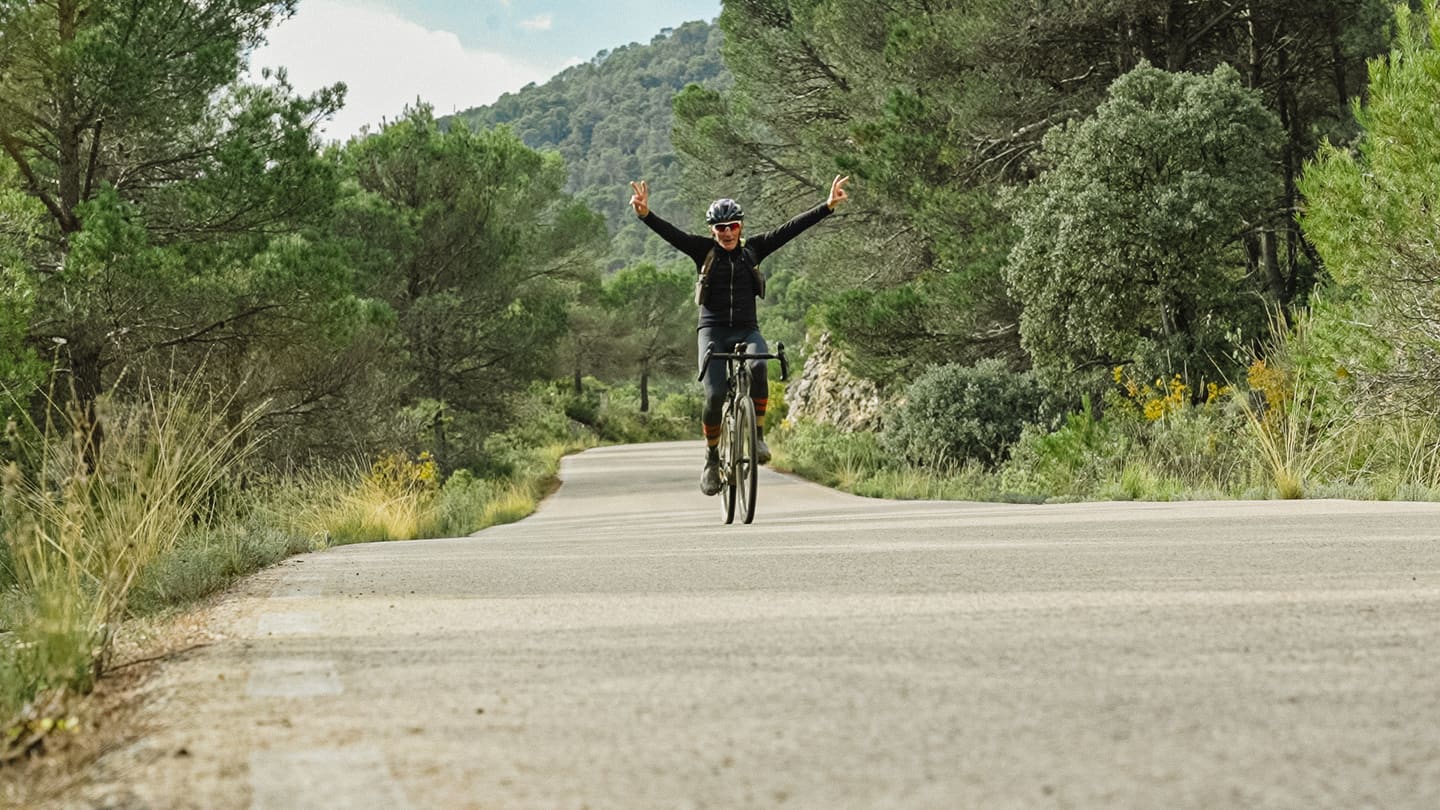
Road cycling in Spain does not have to mean sharing switchbacks with tour buses in Mallorca or weaving through commuter traffic around Girona. Ninety minutes east of Madrid, Castilla-La Mancha unfolds into silent ribbons of well-kept secondary tarmac threading pine canyons, historic Paradores and the training roads of Tour de France champion Luis Ocaña.
Beyond Mallorca and Girona: the case for inland tarmac
International riders flock to Spain for reliable sunshine, respectful driving culture and long mountain climbs. Yet most visitors cluster into two coastal hubs while missing the extraordinary secondary road network of the central plateau and Iberian System. Provincial roads across Guadalajara, Cuenca and Albacete carry remarkably little traffic. Smoothly resurfaced tarmac links stone hill villages separated by twenty-kilometre stretches of pine forest and limestone gorges. You hear wind in the pines, rushing canyon rivers and the hum of your own tyres rather than overtaking coaches.
Transfer simplicity strengthens the case for riding inland. High-speed trains reach Cuenca, Toledo and Ciudad Real from central Madrid in under an hour, while the spa town of Trillo sits within easy road reach of Madrid-Barajas Airport. Our guide to cycling near Madrid explains how quickly you can trade terminal queues for mountain air.
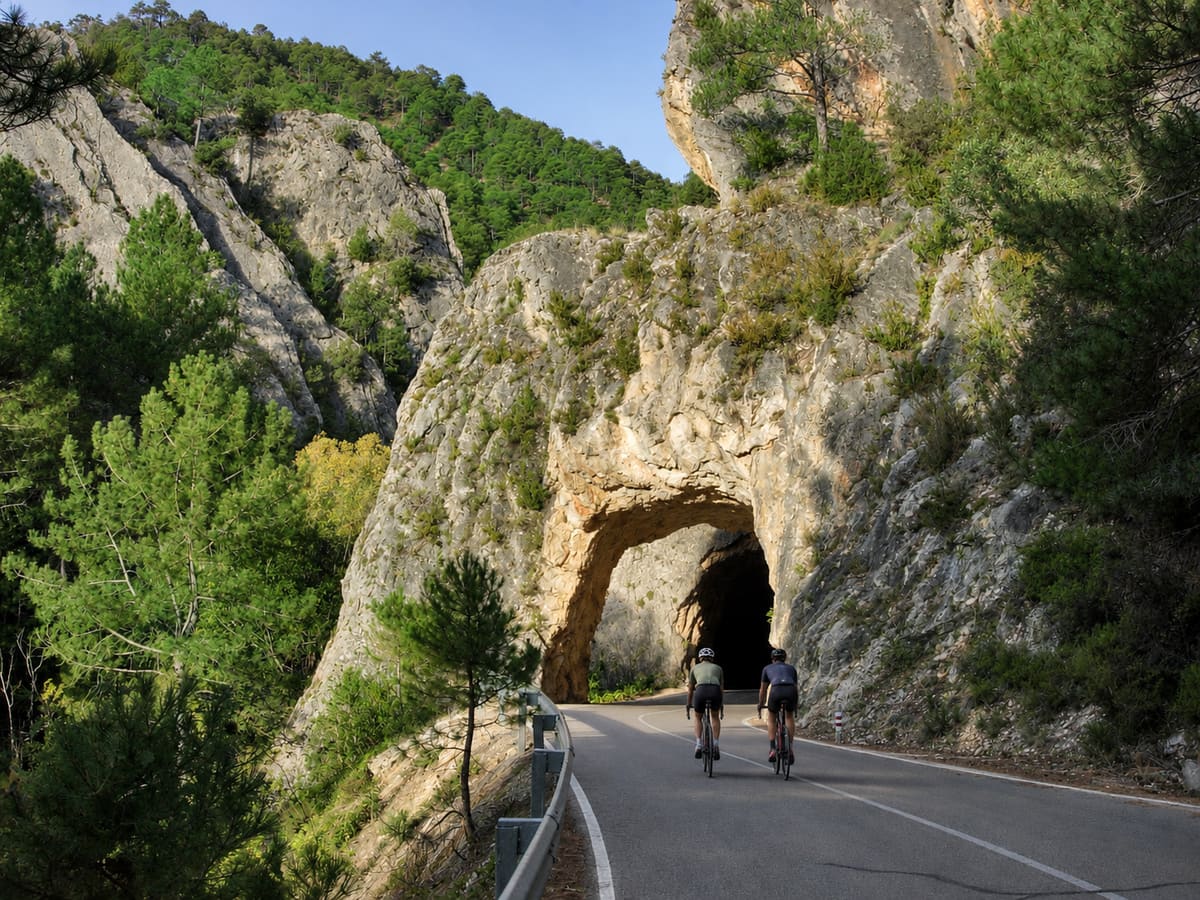
Alto Tajo by Road: canyons, spas and zero repacking
Few road cycling loops in Europe pack as much geological drama and quiet comfort into four days as Alto Tajo by Road. Designed as a private 218 km loop with +2,950 m of climbing across 4 days and 3 nights from Trillo, the route follows smooth mountain roads deep into the 105,721-hectare Alto Tajo Natural Park and UNESCO Global Geopark. Stages glide past the iconic Puente de San Pedro, where turquoise waters of the Tagus and Gallo rivers converge beneath towering reddish sandstone and limestone cliffs. Gradients stay rhythmic and sustainable rather than punishing, allowing you to spin comfortably through pine-scented hairpins and sweep across high sunlit plateaux.
Hospitality sits at the heart of the itinerary. Riders start and finish beside the thermal waters of Real Balneario Carlos III de Trillo, then spend two consecutive nights at the Parador de Molina de Aragón, opened in 2025 beneath a hilltop medieval fortress. Two nights in the same room eliminate mid-trip repacking so afternoons belong entirely to recovery, castle walks and slow Castilian dinners.
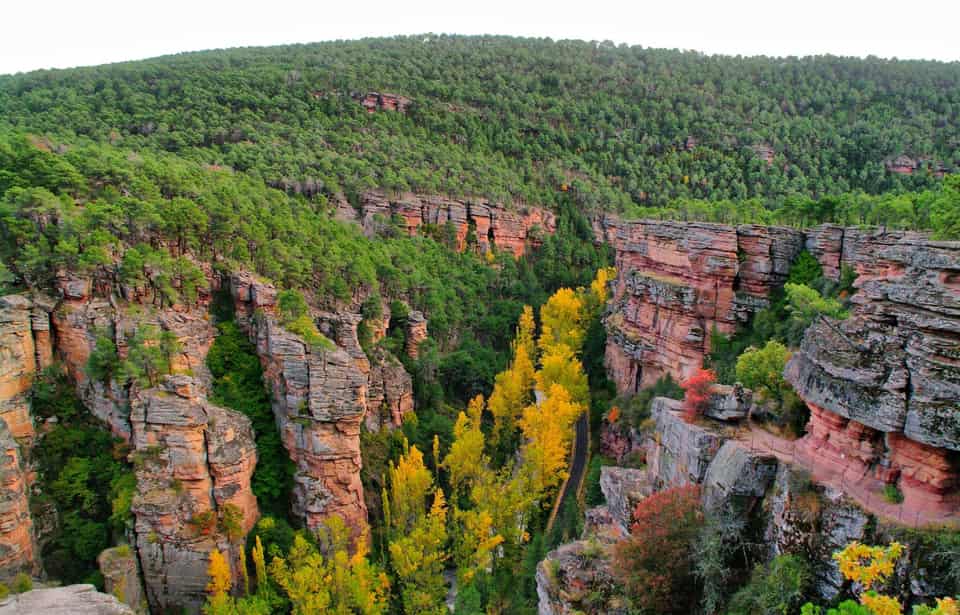
Luis Ocaña's roads and the climbs of Serranía de Cuenca
Just south of Alto Tajo rises the rugged karst landscape of the Serranía de Cuenca, home to some of Spain's most storied tarmac. Priego, a pottery town tucked beneath the mountain wall, is the birthplace of Luis Ocaña, winner of the 1970 Vuelta a España and the 1973 Tour de France. Riding these narrow gorge roads makes it obvious how he forged his fearless climbing stamina.
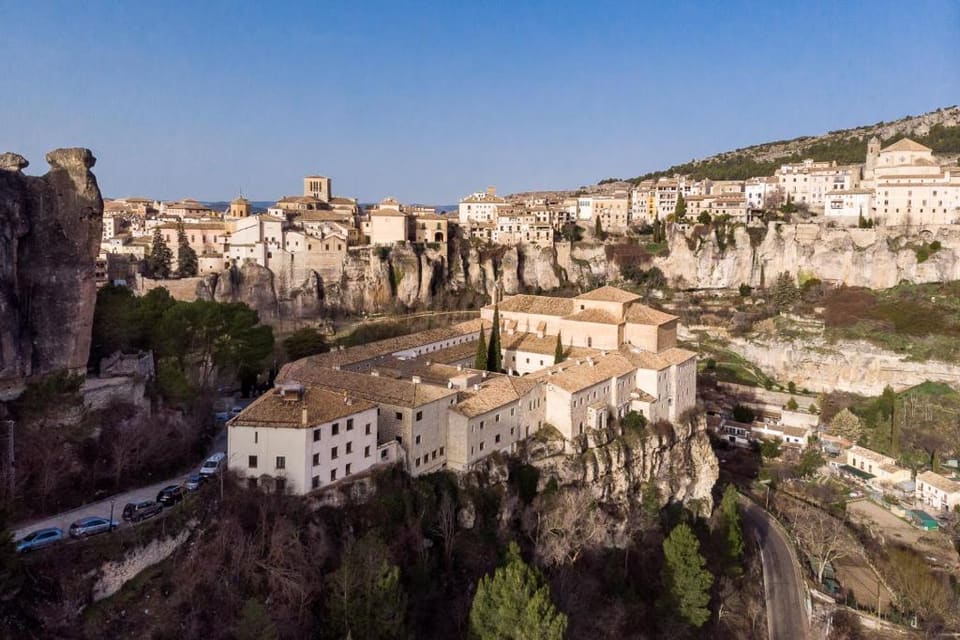
Cadencia's 3-day, 2-night private loop from Cuenca covers 231 km and +5,860 m of elevation gain. Riders carve through rock-cut tunnels along the Hoz de Beteta, pass the historic mineral spring valley of Solán de Cabras and spend two nights in quiet mountain Beteta before returning to the Parador de Cuenca for a farewell dinner at Casas Colgadas, where Michelin-starred chef Jesús Segura reinterprets regional gastronomy above the Huécar gorge. Dive deeper into the area with our Serranía de Cuenca travel guide.
Comparing Spain's quietest inland road itineraries
Inland Spain adapts easily to weekend escapes, focused climbing camps or week-long grand tours. The table below compares five standout Cadencia road journeys.
| Journey | Format & Base | Distance | Elevation Gain | Defining Character |
|---|---|---|---|---|
| Alto Tajo by Road | Private loop · Trillo (4 days / 3 nights) | 218 km | +2,950 m | Canyon tarmac, thermal spa, 2 nights at Parador de Molina |
| Serranía de Cuenca | Private loop · Cuenca (3 days / 2 nights) | 231 km | +5,860 m | Dense climbing, Hoz de Beteta, Luis Ocaña country, Casas Colgadas |
| From Sigüenza to Cuenca | Scheduled linear · Sigüenza to Cuenca | 320 km | +6,360 m | Epic traverse across La Alcarria and the Mar de Castilla |
| Valdepeñas to Alcalá del Júcar | Private linear · Valdepeñas to Alcalá del Júcar | 377 km | +6,590 m | Vineyards, Lagunas de Ruidera, Río Mundo and cliffside finish |
| Ciudad Real Loop | Private loop · Ciudad Real (7 days / 6 nights) | 291 km | +2,070 m | Gentle rolling roads through volcanic Campo de Calatrava and castles |
Every route in our curated journeys catalogue can also be ridden on high-performance road e-bikes, letting riders with different climbing speeds enjoy the same mountain passes side by side.
Road quality, traffic manners and gearing for the meseta
Spanish road law requires motorists to leave at least 1.5 metres when overtaking cyclists and permits crossing solid centre lines to pass safely. In rural Castilla-La Mancha, local drivers honour that rule patiently, often waiting calmly behind a group until a clear straight opens. Tarmac on regional CM- and GU- roads is generally smooth and predictable, though remote mountain lanes occasionally feature coarse chip-seal and shaded hairpin dampness in spring. Fitting 28 mm to 32 mm tubeless road tyres at slightly lower pressures improves comfort and cornering grip without sacrificing speed.
Gearing should respect sustained mountain climbing rather than flat-land ego. A compact 50/34T chainset paired with an 11-32T or 11-34T cassette keeps your cadence lively on 8 percent ramps above Beteta and during long days along the From Sigüenza to Cuenca traverse. Riders deciding whether to pack pure road rubber or wider gravel treads can consult our guide on gravel bike vs road bike for touring.
When to book your road cycling week in Spain
Spring and autumn deliver the finest road cycling weather across central Spain, with clear skies, comfortable daytime warmth and vivid seasonal colours.
- May and June: Long daylight hours, green river gorges and mild highland temperatures between 18 and 26 degrees Celsius suit big climbing days in Cuenca and Alto Tajo.
- September and October: Harvest energy fills Valdepeñas and La Mancha while golden poplars transform the sandstone canyons around Puente de San Pedro.
- July and August: High elevation above 1,100 metres keeps early-morning canyon rides surprisingly fresh, though afternoon heat builds on lower plains.
Every Cadencia road departure is curated by our team, with full support vehicle backup, luggage transfers, mechanical care and handpicked stays. Start planning your private dates or ask about scheduled departures via our contact page.
Frequently asked questions
Is road cycling in inland Spain safe regarding traffic?
Secondary roads across Alto Tajo, La Alcarria and the Serranía de Cuenca carry minimal vehicle traffic compared with coastal resorts. Combined with Spain's strict 1.5-metre overtaking law and wide visibility on rural stretches, riding conditions feel calm and unhurried.
How steep are the climbs in Alto Tajo and Serranía de Cuenca?
Most canyon and plateau climbs average between 4 and 7 percent over 5 to 12 kilometres, rewarding steady rhythm rather than brutal gradients. Short ramps near rock-cut gorges in Cuenca can touch 10 percent, so compact gearing with a 32T or 34T rear sprocket is strongly recommended.
Can I ride Alto Tajo by Road on an e-bike?
Alto Tajo by Road is fully available on road e-bikes as well as traditional carbon road bikes. Assisted bikes make the 218 km distance and +2,950 m of climbing accessible to partners or friends who want to ride together without stress.
Why does Cadencia include two consecutive nights in Molina de Aragón?
Staying two nights at the Parador de Molina de Aragón removes the daily chore of packing and unpacking suitcases mid-journey. Riders can spin out light on a dedicated canyon loop day and return to the same quiet room, fortress views and dinner table.